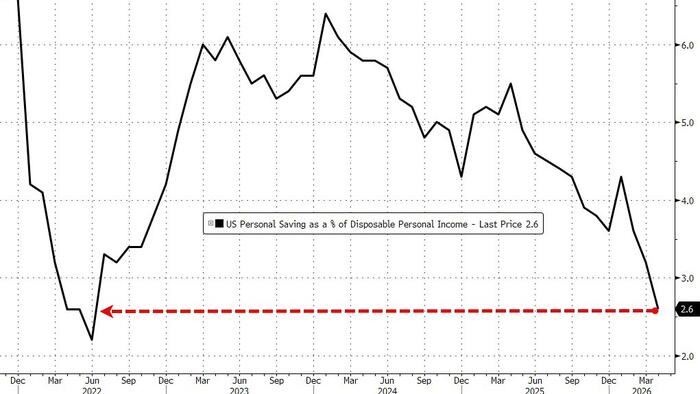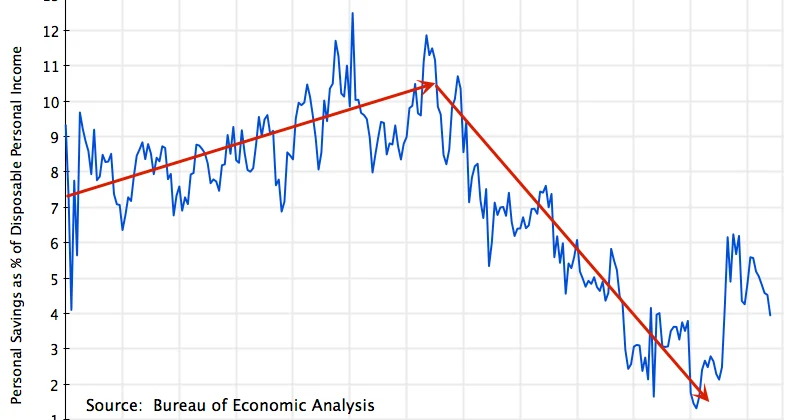
Americans are stashing away less money than at almost any point in modern history. The US personal savings rate has been sliding steadily in 2026, falling from 4.5% in January to 3.9% in February and then to 3.6% in March, according to Bureau of Economic Analysis data.
That’s less than half the long-run average of roughly 8.4% dating back to 1959. And while the current rate hasn’t quite touched the all-time low of 1.4% set in July 2005, the trajectory is raising eyebrows among economists and investors alike.
The numbers in context
Here’s the thing about the savings rate: it tells you what percentage of after-tax income Americans are putting aside rather than spending. When it drops, it means consumers are either spending more, earning less in real terms, or both.
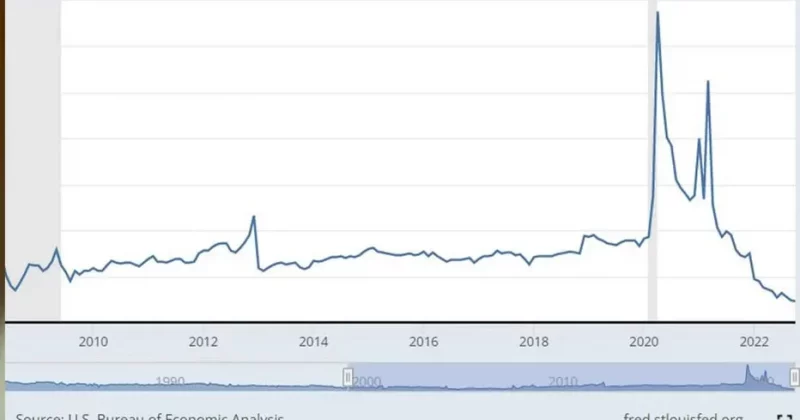
During the pandemic, the savings rate spiked to an almost absurd 31.8% in April 2020. Stimulus checks were flowing in, and there was basically nothing to spend money on.