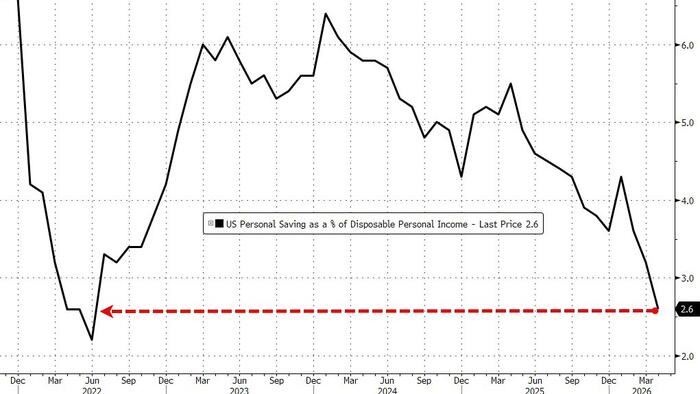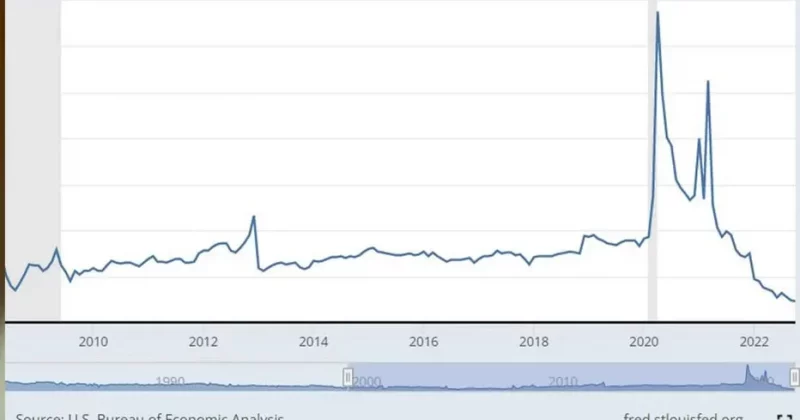
Americans are saving almost nothing. The US personal savings rate has fallen to 2.6% in recent months, putting it within striking distance of the all-time low of 1.4% recorded back in July 2005.
To put that in perspective: during the peak of COVID-19 lockdowns in April 2020, the savings rate hit roughly 31.8% as stimulus checks piled up and there was nowhere to spend them.
The numbers tell a clear story
Data from the Bureau of Economic Analysis shows a consistent downward trend throughout early 2026. The savings rate stood at 4.5% in January, slipped to 3.9% in February, and dropped further to 3.6% in March. The most recent readings suggest it has continued sliding to 2.6%.
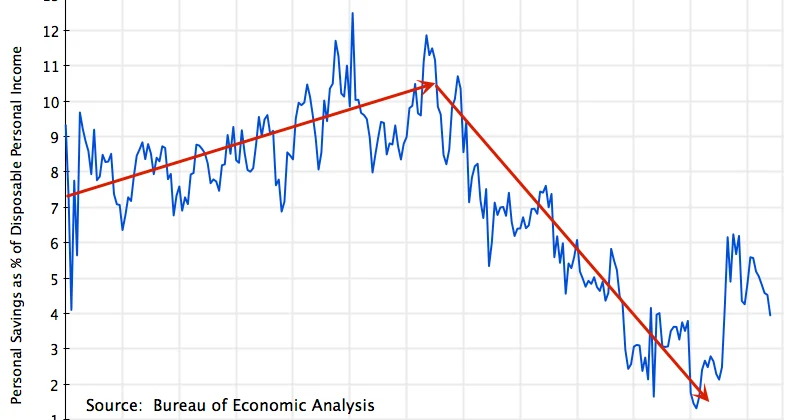
The long-term trend has been moving in one direction for decades. In the 1970s, Americans were socking away 10-13% of their disposable income. By the late 2000s, that had eroded to around 3-4%. The pandemic created a temporary spike, with the savings rate reaching as high as 33.7% at its peak, creating a massive financial buffer for households. That buffer has now largely been spent down.