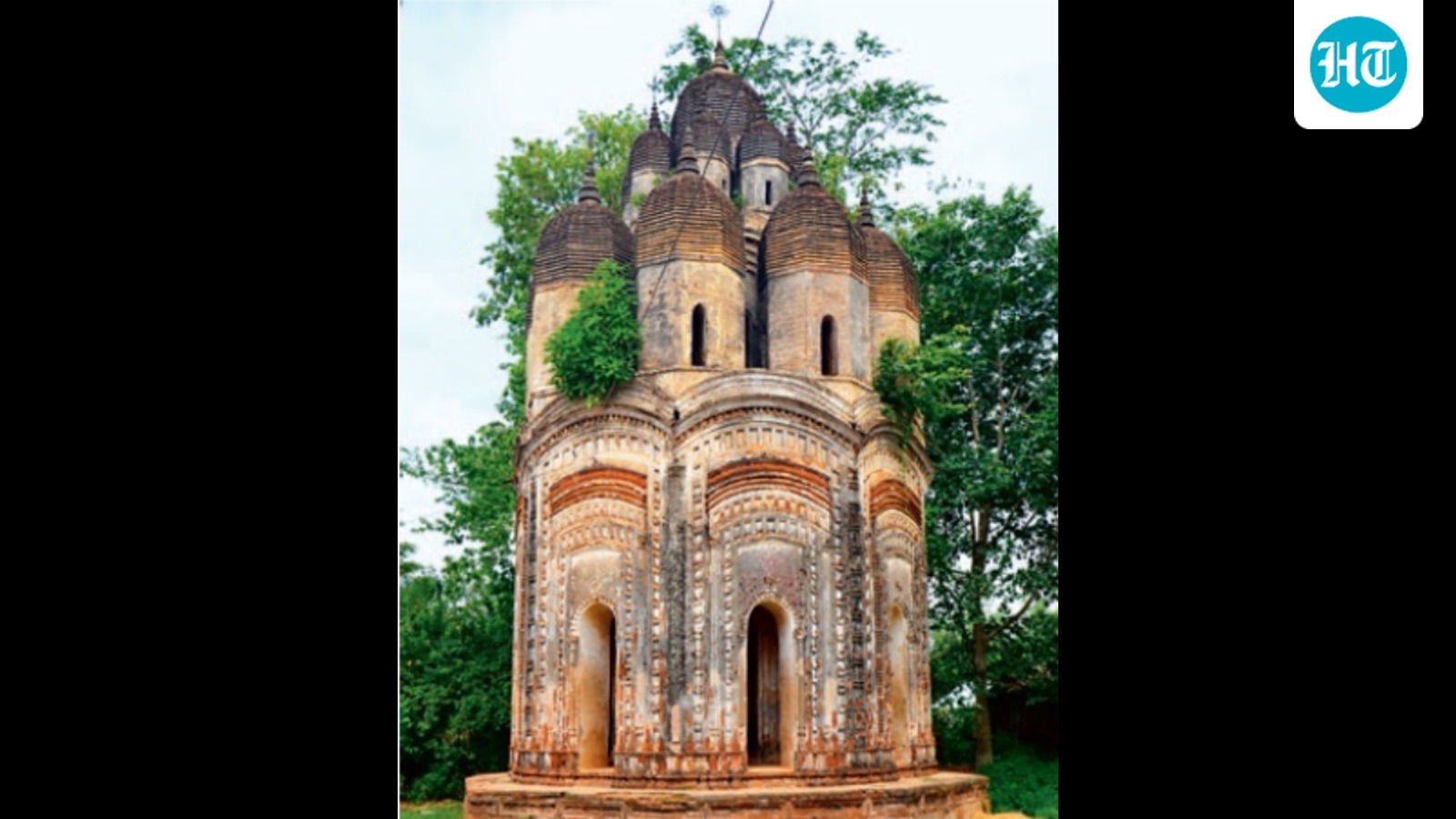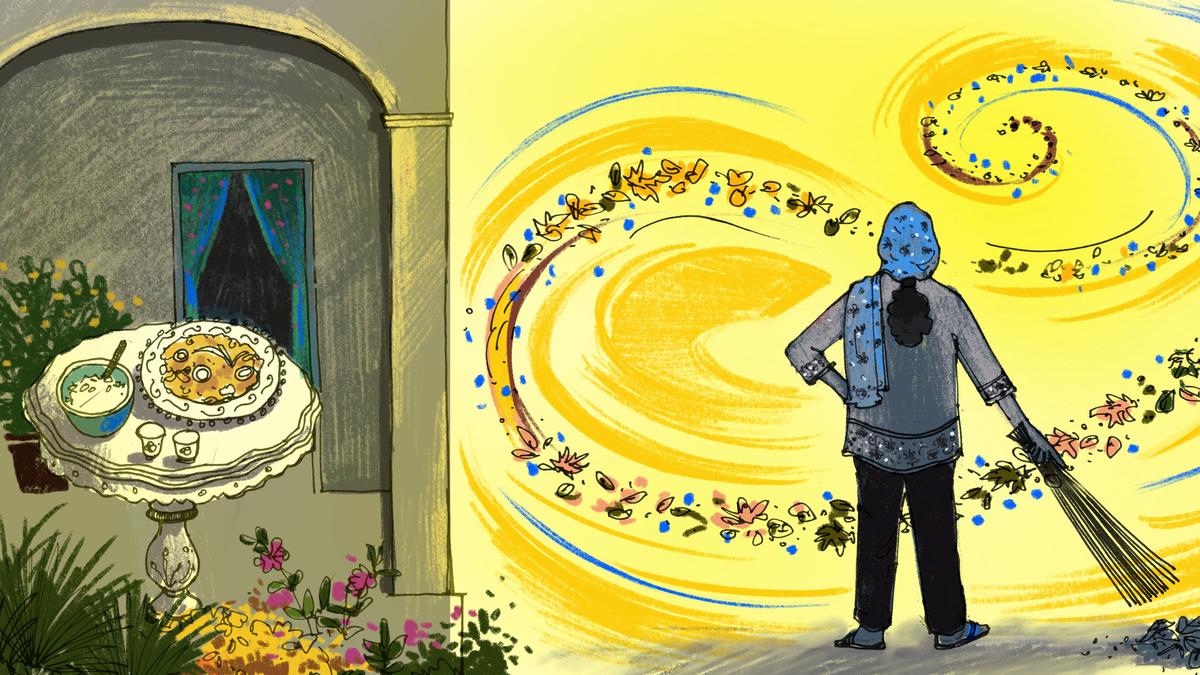
Two potter families lived on the riverbank of a village. They gathered clay from the river, put it in moulds and made dolls and sold them in the market. They had done this forever and this is how they had clothes on their backs and food in their bellies. The women finished their different tasks, fetched water, cooked and fed their husbands and sons, and then dug out the baked clay figures from the ash-heap, dusted them with the ends of their sarees and handed them to the men to paint. Shaktinath had made a place for himself with these potters, who were of the Kumbhokar caste. This sickly Brahmin boy gave up his friends, games and studies and attached himself to these clay dolls. He washed the bamboo chisels, cleared the clay out of the moulds meticulously, and in great distress, watched the figures being painted carelessly. The eyebrows, eyes and lips of the dolls were drawn with ink. Some would have thick eyebrows, some merely half a brow and there would be ink stains below the mouths of others. “Sarkar dada, why are you drawing so haphazardly?” asked Shaktinath.“Bamunthakur, if I draw carefully, I’ll need to charge more,” replied Sarkar dada, the artisan. “Who’s going to pay? Will anyone pay four paise for a clay doll? No, one paisa is all they’ll pay.”They had discussed this simple thing many times, but Shaktinath had only half understood it. A doll would sell for one paisa whether it had an eyebrow or not. It would sell for one paise even if the eyes were uneven. So why work hard unnecessarily? A child would buy the image and play with it, take it along everywhere and sing it to sleep, and then, after a few days, throw it away. Simple. Every morning, Shaktinath bundled up some muri and murki in his dhuti and left home. On his way back, he munched on the leftovers, eating some and scattering the rest. No one was there when he returned to their crumbling home. His old, frail father was at work – doing his priestly duties at the zamindar’s – praying to Lord Madanmohan. He would return with soaked rice, bananas and vegetables that had been offered to the gods and cook them for himself and his son. The courtyard was full of plants and flowers – kundoful, korobi and shefali. The house was a wilderness because it lacked a woman’s touch; there was no order and neatness. Modhusudon, the old priest, somehow carried on from one day to the next. Shaktinath wandered about, distracted – plucking flowers, shaking trees, tearing leaves – and waited for his father. Shaktinath went to the potter’s every day. He was now allowed to paint the figures.“There, Dadathakur, draw,” said Sarkar dada and handed him the best figure. Dadathakur spent half a day painting one doll. It looked lovely, perhaps, but didn’t fetch more than one paisa. However, when Sarkar dada came home, from the market, he said that Bamunthakur’s doll sold for two paise. Shaktinath was beside himself with joy.The zamindar of that village was a Kayastha. He was overly devoted to the gods and Brahmins. On a silver throne, in an immense temple, nestled their family deity Madanmohan, made of black stone, with Radha next to him, painted in gold. The walls of the temple were decorated with wondrous pictures of Vrindavan Leela, Krishna’s doings in Vrindavan. A chandelier with a hundred lights hung from a brocade canopy. All the offerings were placed on a marble platform and the heavy scent of sandalwood and flowers hung in the air. It was as if these scents embodied divinity and beauty and had, therefore, assumed an important place in the rituals; these pleasant odours had collected in the layers of the atmosphere and generously scented the temple air.I am talking of a long time ago. I am talking of that day when the zamindar, Rajnarayanbabu reached middle age and realised that much of his life had been lived; when he understood for the first time that his days as a zamindar were numbered as was his time for enjoying his wealth and power; the first day that he stood in the temple and shed tears of repentance. His only daughter, Aparna, was then but a child of five. Standing with her father, she watched engrossed as Modhusudon Bhattacharya, the priest, decorated the black idol with sandalwood paste, placed flowers around the throne of the gods and the soothing smells of sandalwood and flowers seemed to touch and bless him. Every evening, the little girl would come to the temple with her father and was entranced as she watched the auspicious ritual of aroti. As Aparna grew up she began to internalise the idea of God, like all other Hindu girls. Also, in her work and play, she set out to prove that her father’s beloved temple was also her lifeblood. She spent her whole day near the temple and couldn’t bear it if a blade of grass or a single withered fruit was left lying carelessly in the temple. If a drop of water fell somewhere, she would wipe it off carefully with the end of her saree. People had often felt that Rajnarayanbabu was excessively devoted to the gods but Aparna’s zeal outdid his devotion. The original tray for offering flowers proved insufficient – they had to get a new one. The old bowl for sandalwood paste was changed. The amount of rice, vegetables and fruit offered had increased greatly. The elderly priest often felt put upon because he had to make elaborate arrangements for different rituals and prayers. “The Lord has sent Lakshmi to my home so that He may be served well. Please, don’t stop her,” Rajnarayanbabu said.Aparna was married off at the appropriate time. Her smile left her as she realised that she would have to go far away from her beloved temple. They were looking for the right date to send her to her husband’s home. Just before rain, clouds often stand still against the sky bearing the weight of lightning within; standing similarly still, Aparna learnt that the day for her departure was there. “Baba,” she said to her father. “I have made arrangements to serve the Lord. Please see they are not tampered with.”“Yes, Ma,” said her father in tears. “Everything will be done exactly as you wish.”Aparna was silent. She didn’t have a mother and so, she couldn’t cry. Her elderly father’s eyes were full of tears. How would she stop them? And then, like a warrior swiftly leaving on horseback, hiding his brave, wounded heart behind a manly smile, she climbed into a palanquin and left her village with the weight of new duties on her head. As she wiped her gushing tears, she remembered that she had not wiped away her father’s tears. Aparna’s heart was racked with pain, and when, passingly, she heard the bells and sounds of evening prayers from a village, and those ever-familiar sounds of aroti, she felt a searing despair. Impulsively, she flung open the doors of the palanquin and stared into the evening darkness and imagined that behind a casuarina tree she saw a familiar temple standing tall, and she began to weep uncontrollably. “Bouma, stop,” said the maidservant who had come from her husband’s home. “Don’t cry so, my dear. Every girl must go to her husband’s home.”Aparna covered her face with both her hands, stopped crying, and shut the palanquin door.At the same time, her father stood in the temple next to Lord Madanmohan, amidst the noise of the bells and the smoke from the incense, and through his tears, he saw his beloved daughter in the enchantingly beautiful face of an unnamed goddess.Excerpted with permission from ‘The Temple’ in Saratchandra Chattopadhyay: Selected Stories, translated from the Bengali by Anchita Ghatak, Westland.
Short fiction by Saratchandra Chattopadhyay: Who will conduct the prayers after Aparna leaves?
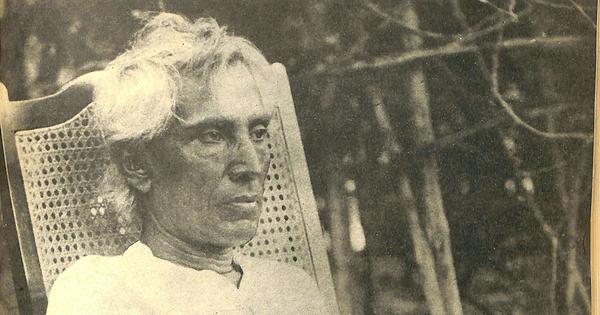
An excerpt from ‘The Temple’ in ‘Saratchandra Chattopadhyay: Selected Stories’, translated from the Bengali by Anchita Ghatak.
1,322 words~6 min read