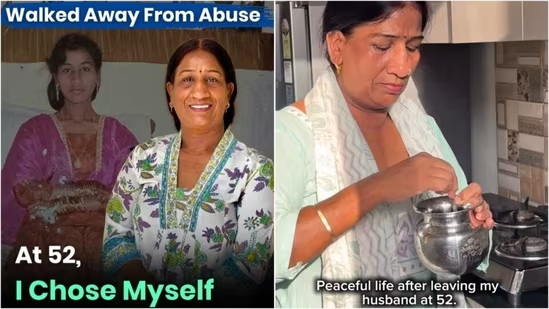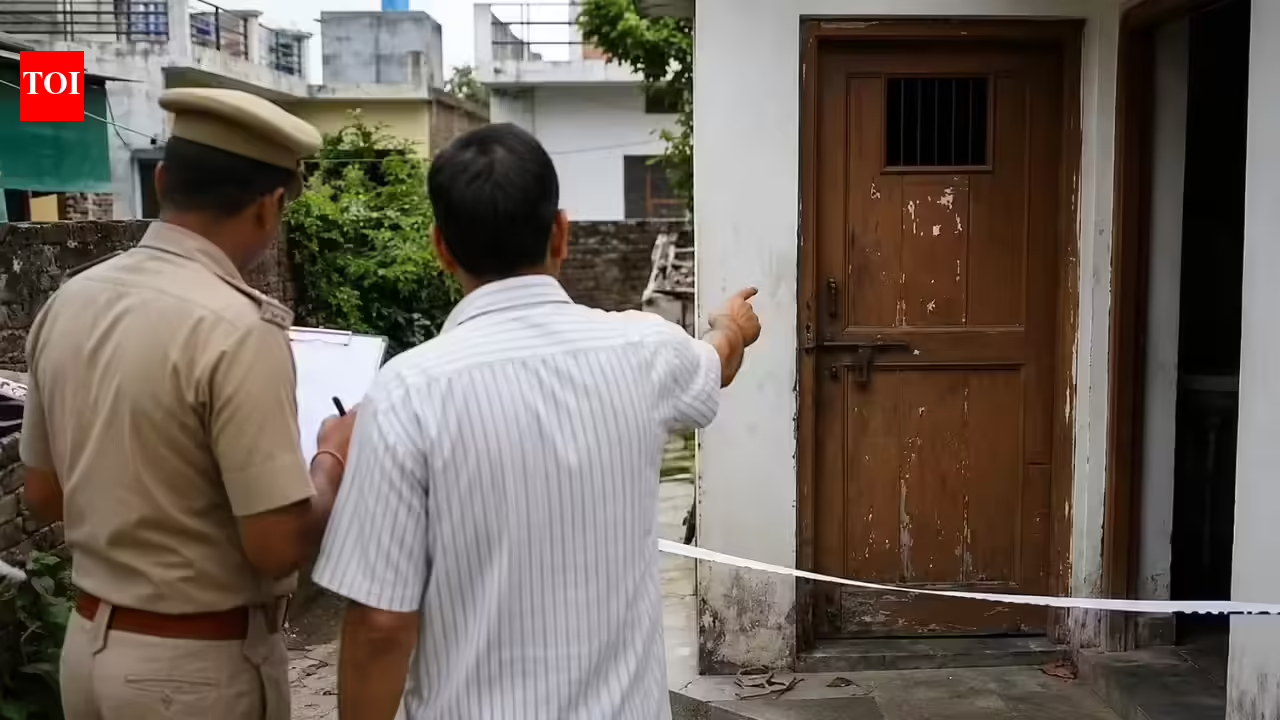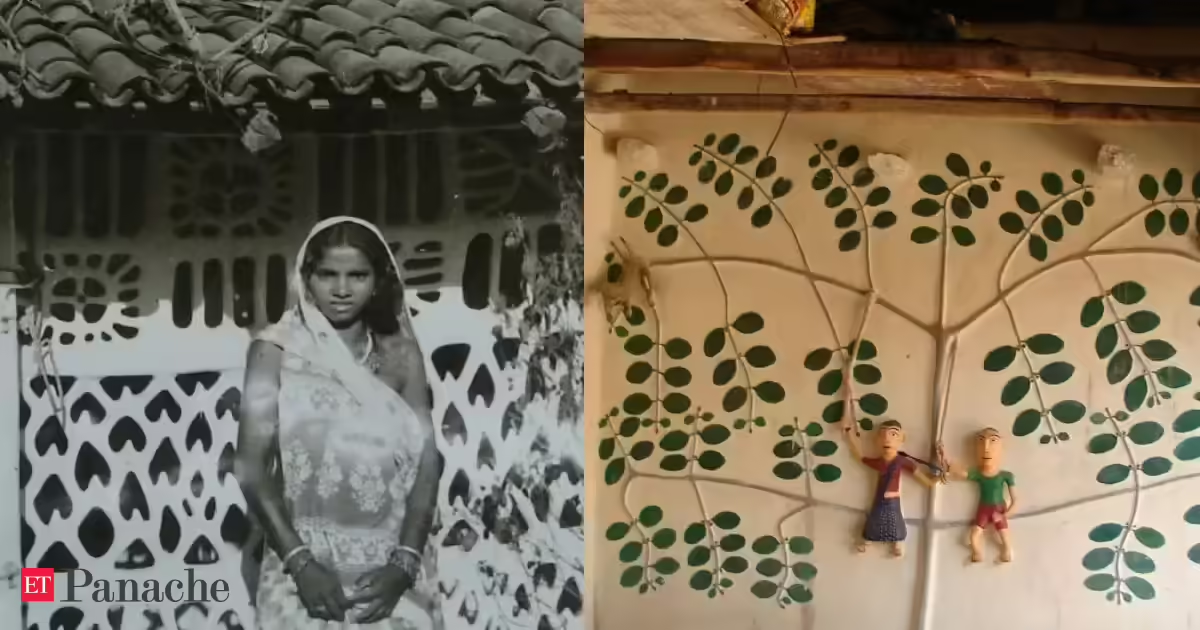
For Sonabai Rajawar, art was not just a way to express her creative talents, it was the only escape from the prison she was confined to… for not fault of her own. Relegated from society and incarcerated in a windowless house at the age of 25, by her own husband, her silent agony and yearning for freedom eventually gave birth to several masterpieces. According to a Better India report, Sonabai was married off to a man ten years her senior and spent nearly 15 years as a captive in her own home, forgotten by humanity. She had no artistic training. What began as a mother’s attempt to entertain her son with handmade toys soon became a collection of exquisite masterpieces. She dug clay from the edge of her well and made figurines from them. Soon her home was filled with breathtakingly beautiful sculptures. Her art was not just limited to sculptures. Determined to obliterate the stifling summer heat in her home- she hit upon an ingenious way to beat the heat - clay lattices. According to an article published in Raw Vision, she transformed leftover bamboo stems into thin slivers. These strips were bent into rounded shapes, woven together into mesh-like patterns, and secured between the pillars surrounding her courtyard. Once the framework was in place, she coated it entirely with clay, pressing and shaping the earthen layer around every curve and opening. The finished screens formed perforated panels that filtered sunlight into delicate patterns across the deeper corners of the house while also allowing passing breezes to flow through, bringing shade, ventilation, and a sense of natural comfort to the interior spaces.She even came up with pigments to beautify the lattices and sculptures by herself. Sonabai grinded spices, herbs and minerals and transformed them into natural pigments. She eventually transformed her prison into a haven- sculpted lattices placed between columns, bas reliefs filling empty spaces etc. She became a national icon after her home was discovered by a group of field researchers from Bharat Bhavan in 1983. She received Tulsi Samman that same year. Sonabai passed away in 2007. Her home still stands strong, a symbol of her quiet rebellion and resilience. She proved that art can flourish even without patronage, in most unwelcoming and oppressive of environments. With the help of her immense talent she transformed her limitation into a lasting legacy.
Her jealous husband locked her for 15 years in a windowless house. But she fought loneliness by transforming her house into a haven for art
Confined to her home for 15 years, Sonabai Rajawar found solace and expression through art. Using clay and natural pigments, she sculpted figurines and created innovative clay lattices to beautify her surroundings and provide ventilation. Her remarkable talent transformed her prison into a haven, eventually leading to national recognition and a lasting legacy.
394 words~2 min read