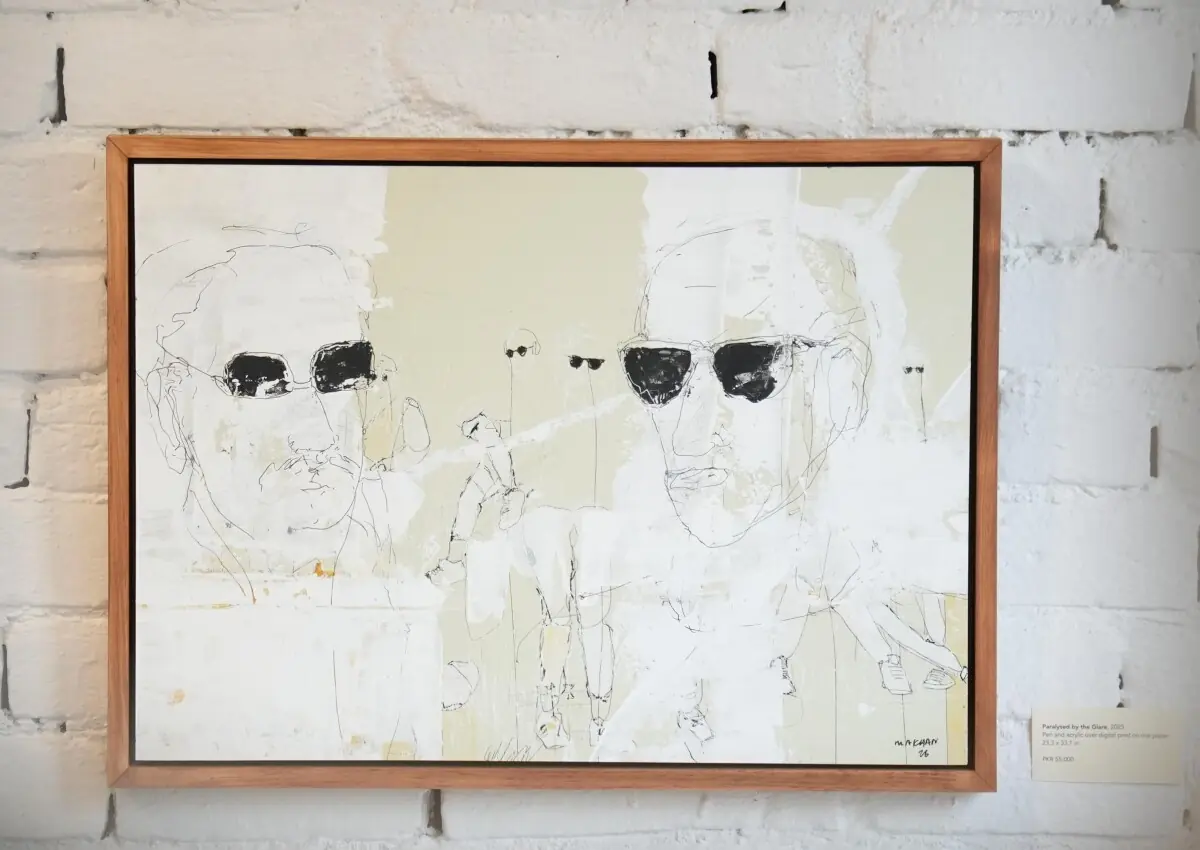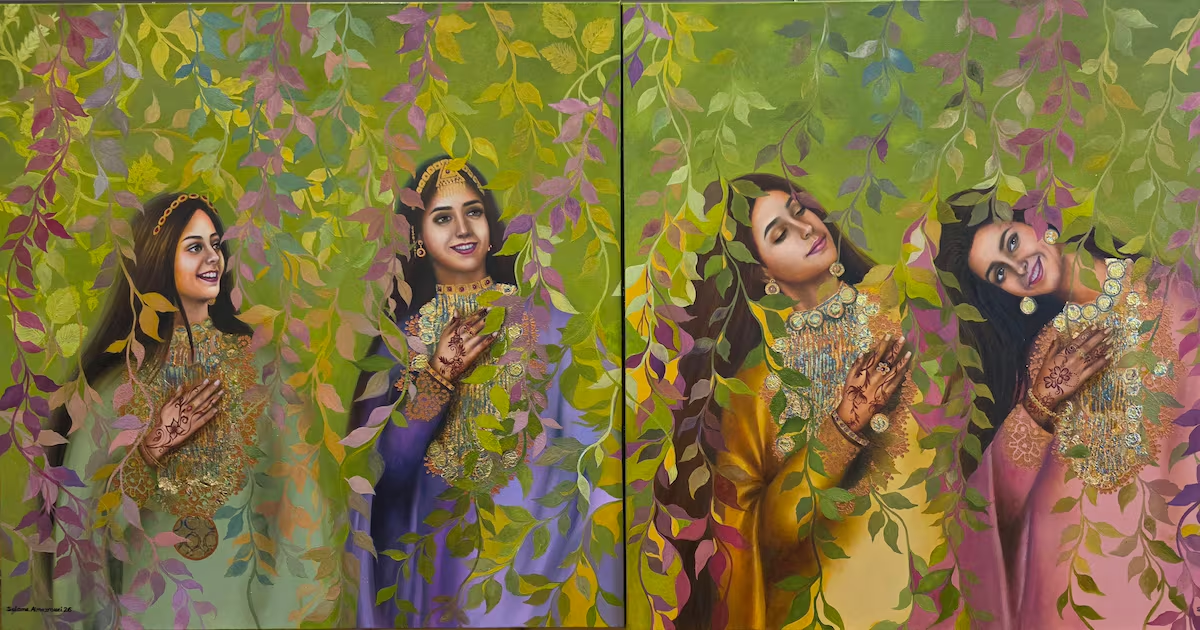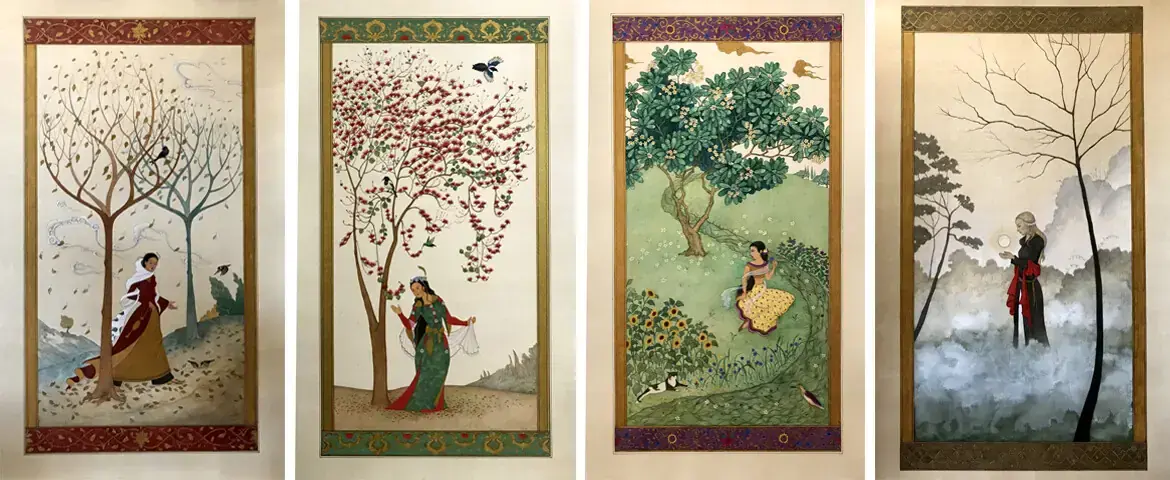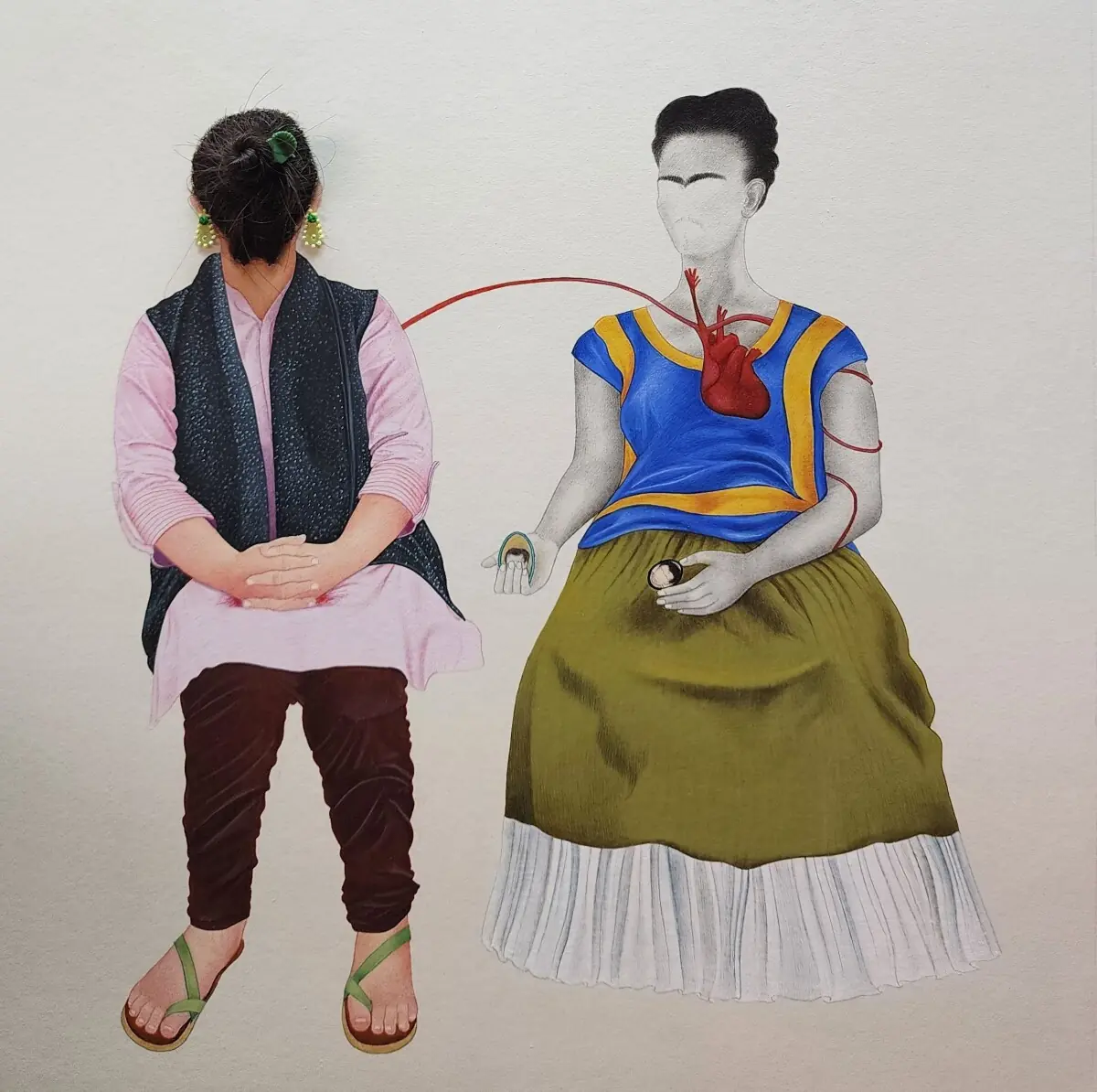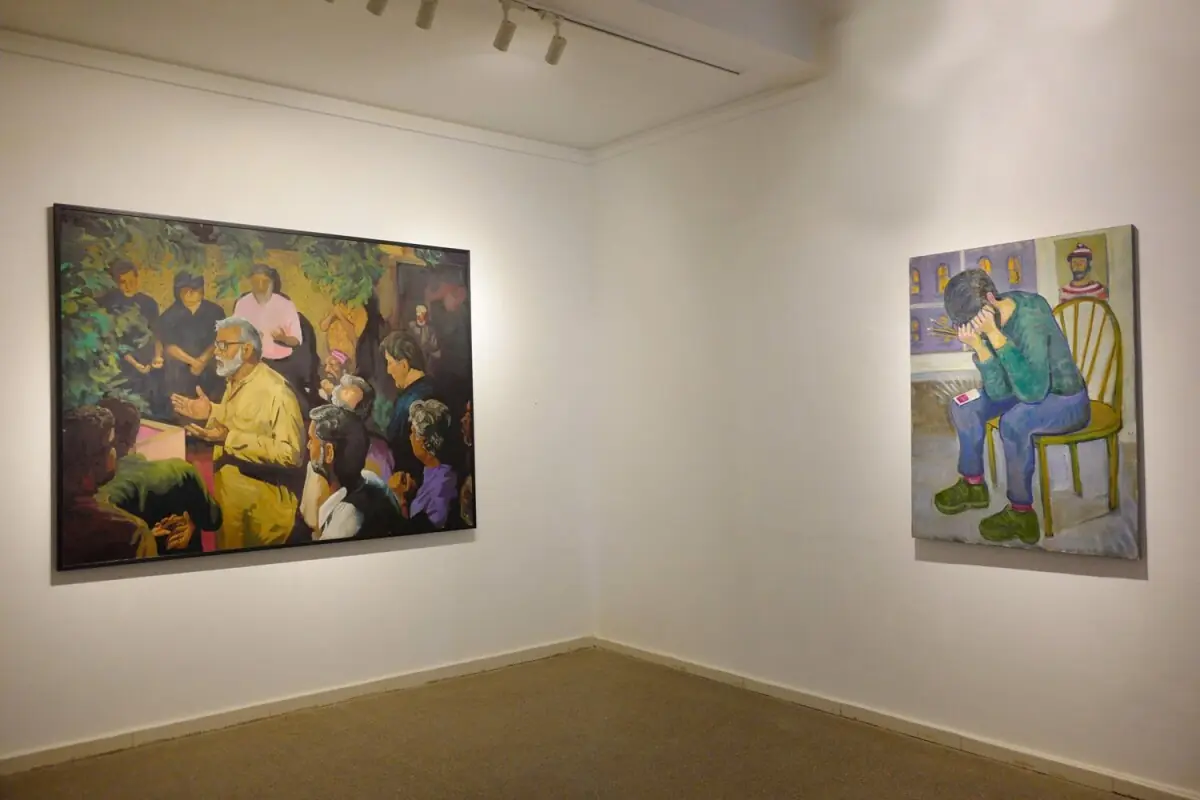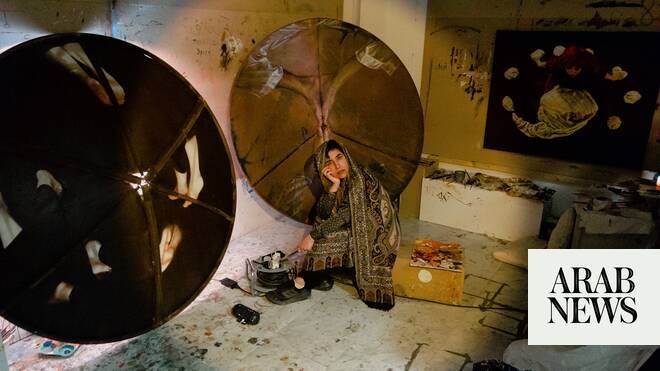
Amna Rahman’s practice situates itself within the evolving language of contemporary figurative painting in Pakistan, yet it resists easy alignment with overtly socio-political narratives. Instead, her work turns inward, staging the self as a site of fragmentation, doubling and quiet negotiation. The figures that populate her canvases are rarely stable, instead seeming suspended between states — observed and observing, present and dissolving — suggesting an ongoing inquiry into perception and identity.
Her surfaces are layered, with forms emerging and receding through controlled yet expressive brushwork. A tension persists between clarity and obscurity: faces are partially withheld, bodies cropped or multiplied, gestures interrupted. This withholding becomes central to her visual syntax, inviting the viewer not to resolve the image, but to inhabit its ambiguity.
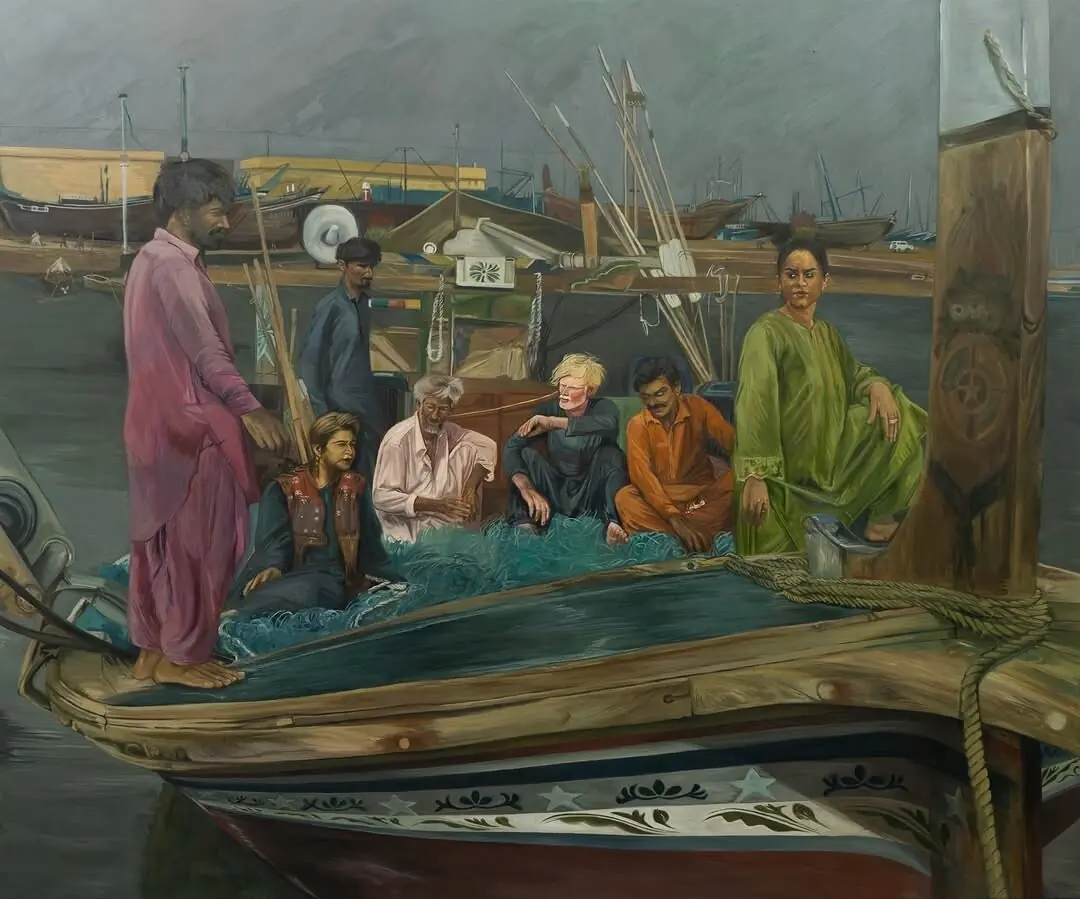
For her solo exhibition ‘Locus: Where Eyes Settle’ at Karachi’s Chawkandi Art Gallery, the artist has displayed only six paintings, yet each carries a striking sense of intensity and conceptual weight. The exhibition focuses on surveillance, gendered labour and Karachi’s masculine-coded public spaces, examining how women navigate sites shaped by water politics and ecology. Reimagining female presence in male-centric environments such as dhabas in Ibrahim Hyderi Fishing Village, Rahman employs surveillance as a critical lens.