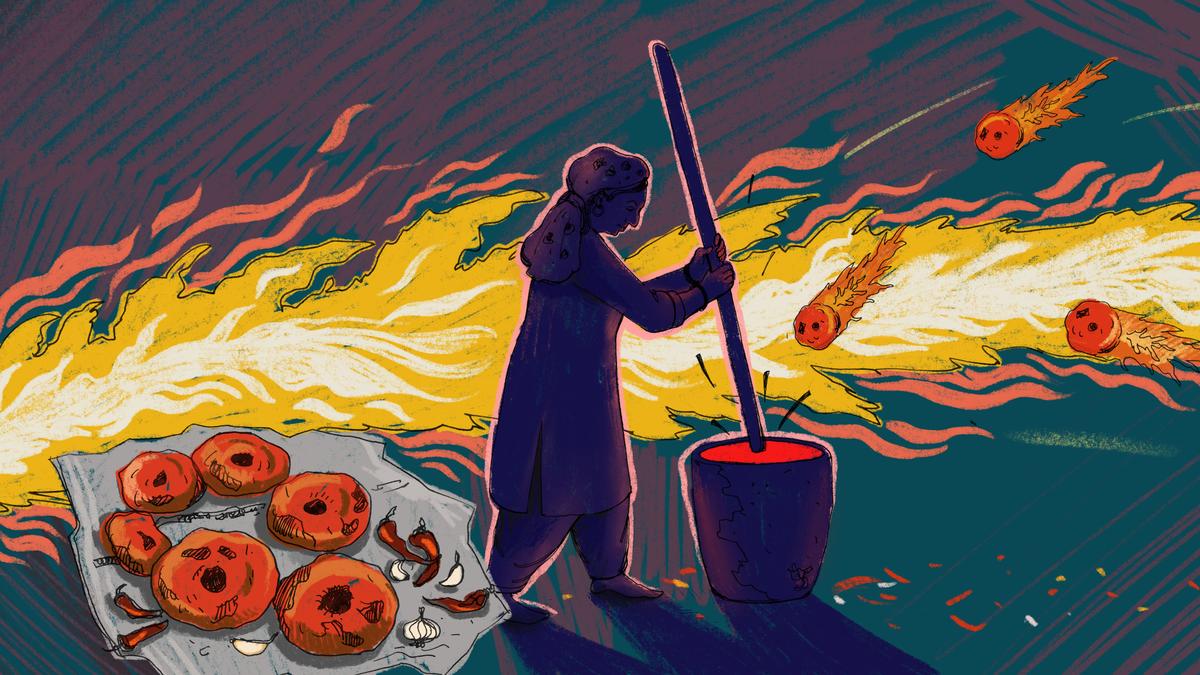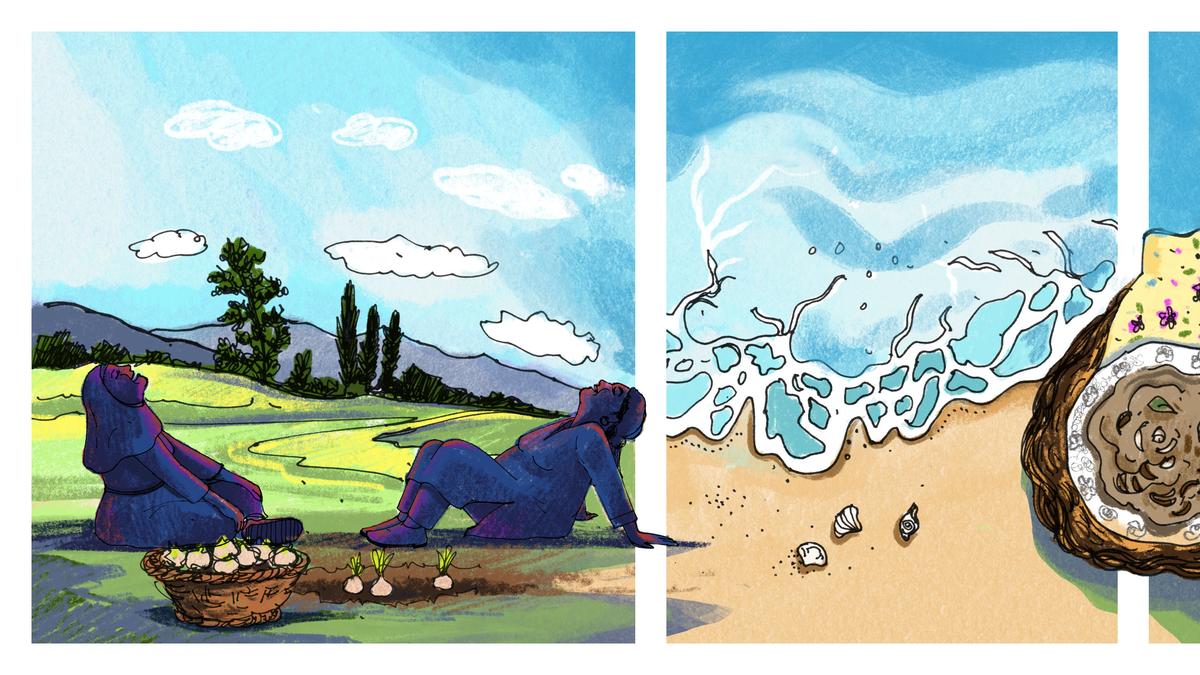
It was a warm, bright day in early April. After a heavy breakfast, I found myself unable to move. Phuphee had fed everyone, including Maetonji, her friend and a nun who ran the local missionary hospital, generous portions of haerseh. She’d been preparing the slow-cooked mutton delicacy since yesterday’s breakfast.Phuphee would make haerseh (or hareesa) in the winter and early spring, and for as long as I could remember, Maetonji would be present when she made it, just like that morning’s breakfast. After she had washed the food down with a cup of hot kehwe, she looked at Phuphee and said, ‘Ta-heee-ra, may Jesus bless your hands for making such wonderful haerseh for us all. You may have to get Ramzaana [a local tanga waala] to bring his cart and a rope to get me to move.’‘Thav waen, tche kyoath pyoont akh [leave it, you ate so little],’ replied Phuphee, smiling at her friend. ‘Bae dimai thoda syieth [I will give you a little to take with you].’‘Now, now, Ta-heee-ra, we both know that’s not true. If I don’t eat for the rest of the week, I think I shall be perfectly alright. But I shan’t say no to your offer,’ said Maetonji, winking at Phuphee.An hour or so later, I had, with great effort, managed to move my person from the kitchen to the verandah, where I had plopped myself onto a couple of cushions. From my supine position, I could see Phuphee and Maetonji sitting by a freshly dug flower bed. They were planting tulip bulbs.I watched them as they talked, joked and worked together. Every few minutes, they would break into peals of laughter and then one would poke the other to start working again. It was wonderful watching these two women together.As far as I could remember, Maetonji and Phuphee had been . I had never known one without the other. Though they were in their 60s now — one in her pheran and scarf, and the other in her black and white habit — I could very easily imagine them as school girls, holding hands, running around, playing their girlhood games.They were not the likeliest of friends. I had heard from others in the village that they had met four decades ago. Just a few months after Phuphee got married, Maetonji had arrived to set up the local clinic. They had met when Phuphee was expecting her first child and had severe morning sickness. Having found no relief with the local herbalist, and on advice from her maternal grandmother, she had gone to see Sister Gabriella, or Maetonji as she would come to be known in the village. They had an instant connection.I have always wondered what had brought them together and how they had made it through the trials and tribulations of life while navigating such different lives, such different faiths. It was a question I often asked Phuphee, to which she would reply, ‘You need to ask Maetonji.’ When I asked Maetonji, she would reply, ‘You need to ask Ta-heee-ra.’They climbed up the steps to the verandah and sat down beside me. It seemed like an excellent opportunity to ask the questions they always evaded.‘Well, child,’ said Maetonji, ‘it was her cooking. I tasted her haerseh and knew I had to keep her close,’ and burst out laughing.‘Gub-reeela, asye paezyi amyis poz dapun [Gabriella, we should tell her the truth],’ said Phuphee rather solemnly, but I could see laughter straining at the corners of her lips.Maetonji sat up, trying her best to be serious, and said, ‘Well, we became great friends when I stopped trying to convert Ta-heee-ra to Christianity and she stopped trying to turn me into a Muslim.’‘Though, to be honest,’ Phuphee interrupted, ‘the idea of having to spend one’s entire life without a man [as a nun] did entice me somewhat.’ And she laughed.It was impossible to get an answer out of them, so I gave up. Instead, I watched as they helped themselves to cups of kehwe from the samovar and went back into the garden to plant tulip bulbs.Watching them reminded me of something I had witnessed years ago, at the seaside. On a calm, beautiful day, I had been mesmerised by the rhythmic ebb and flow of waves gently washing up on the shore. So it was with these two. Like the sea and the shore, they existed individually, but together they made more sense. Maybe that’s what friendship was: making sense to each other.Saba Mahjoor, a Kashmiri living in England, spends her scant free time contemplating life’s vagaries.
Column by Saba Mahjoor | When a nun and a seer became friends
Explore the unique friendship between a nun and a seer, Phuphee and Maetonji, highlighting their bond through food, faith, and laughter.
762 words~3 min read