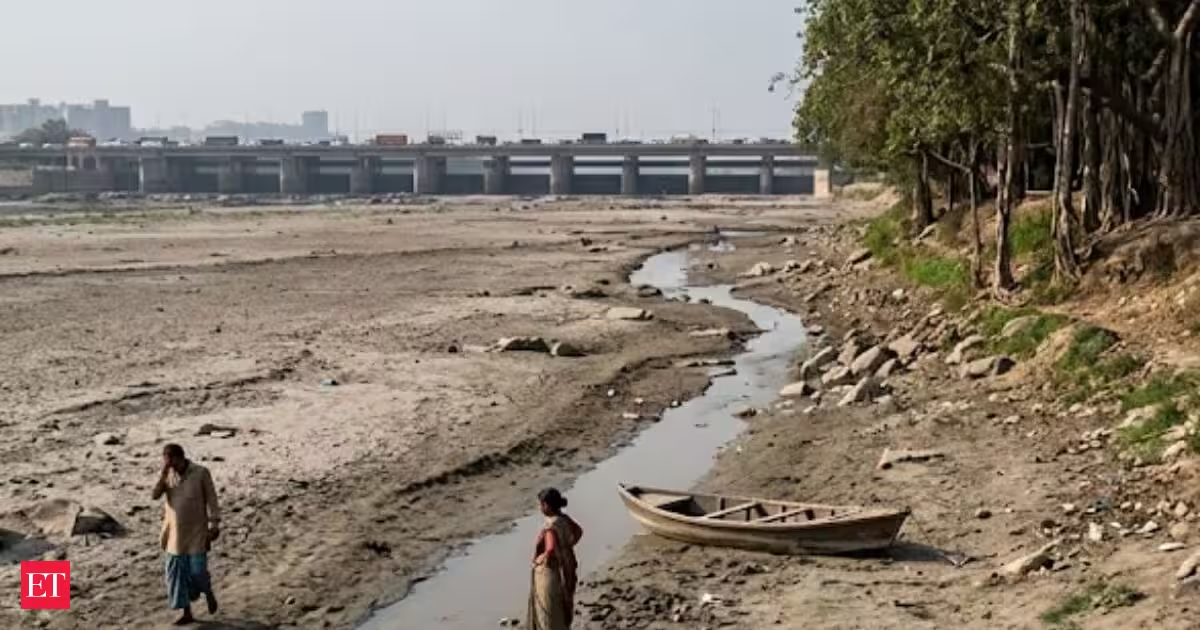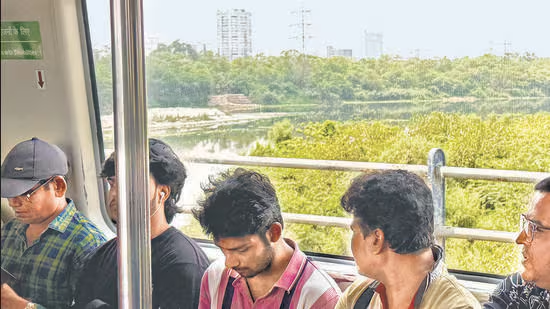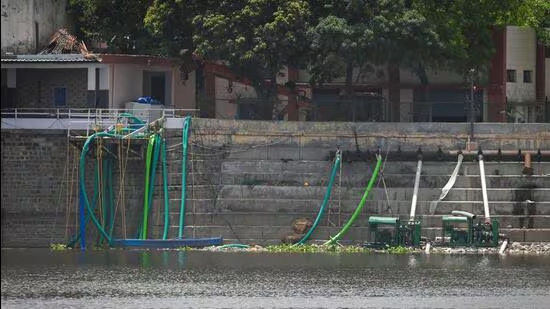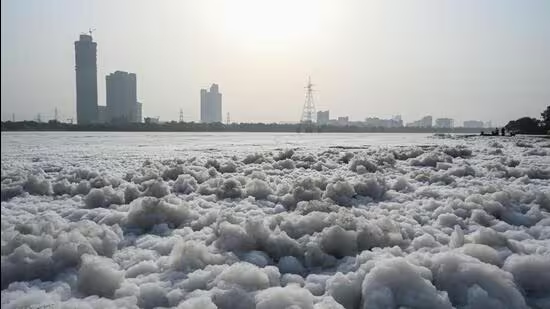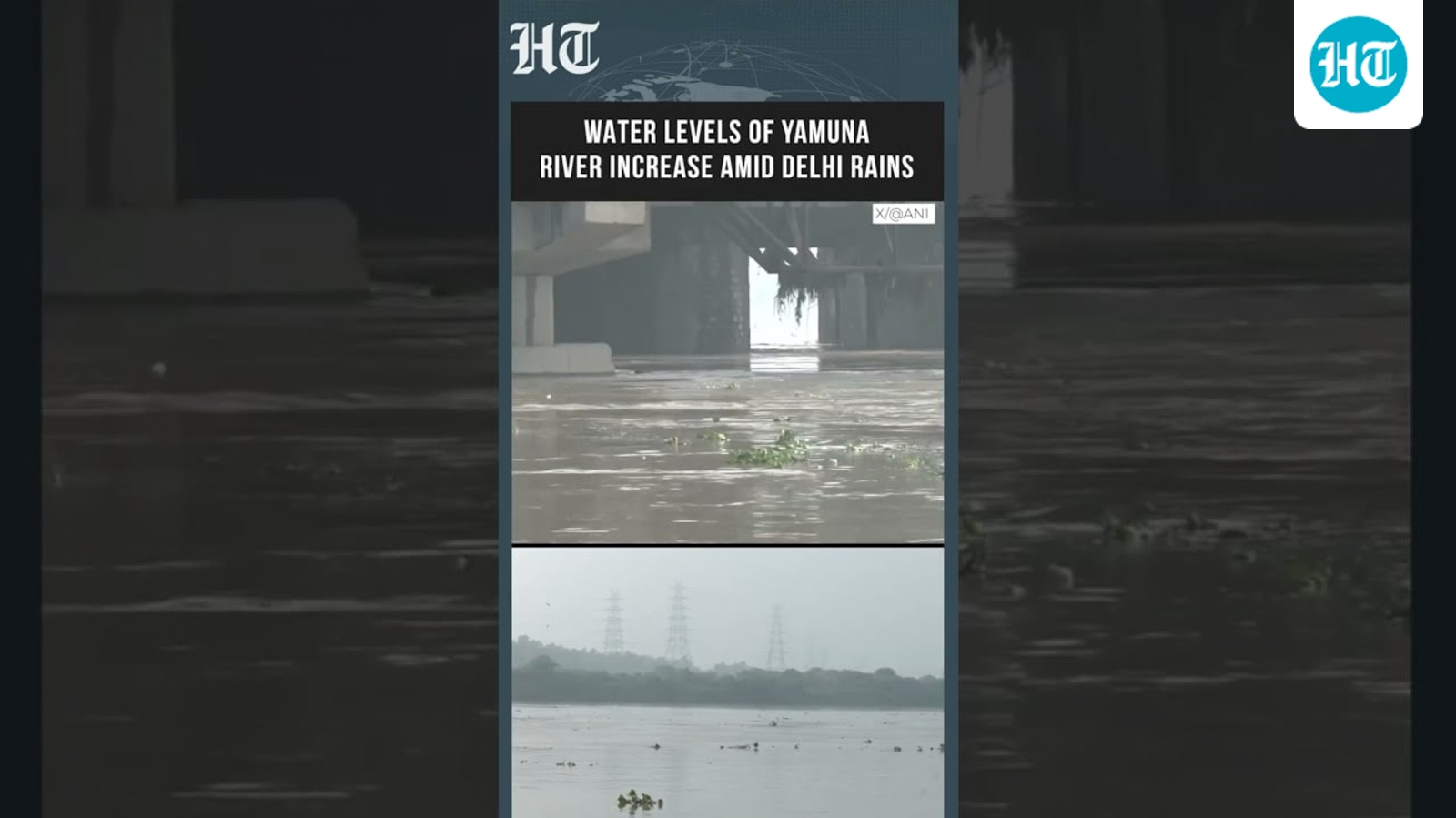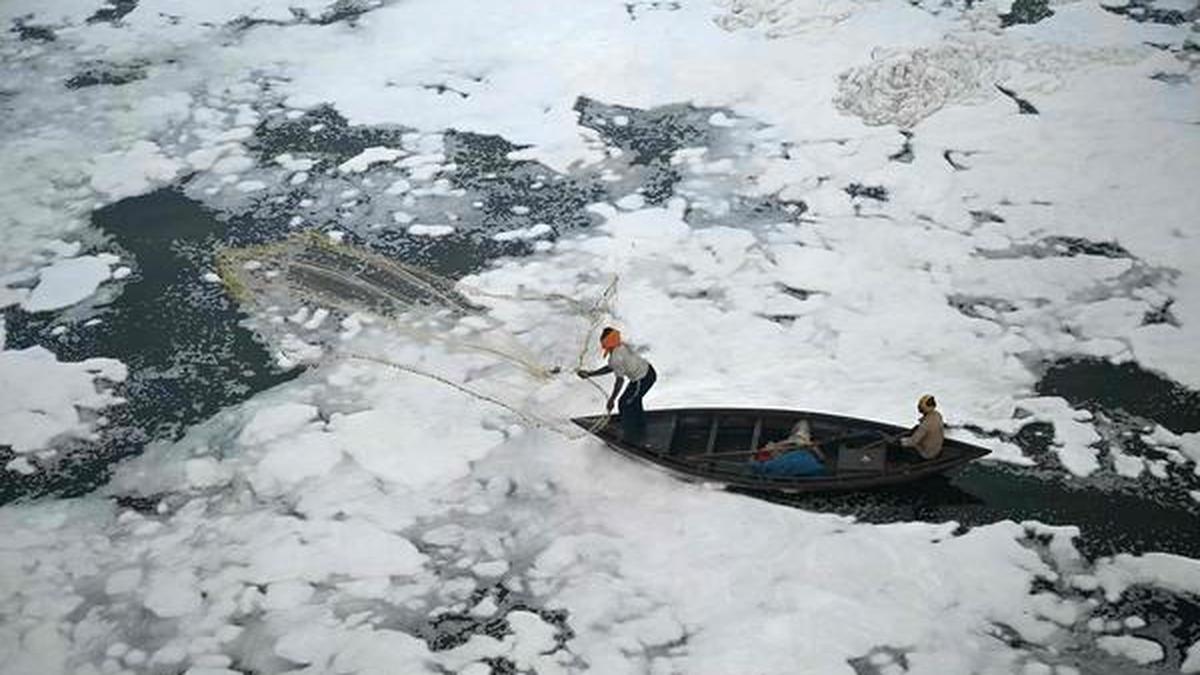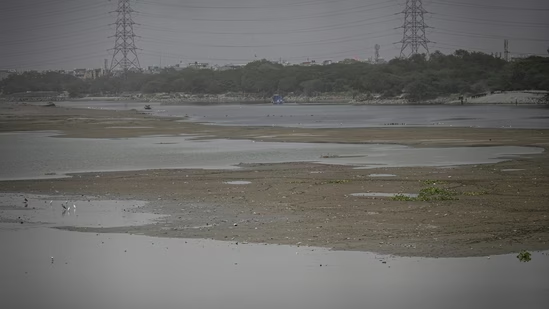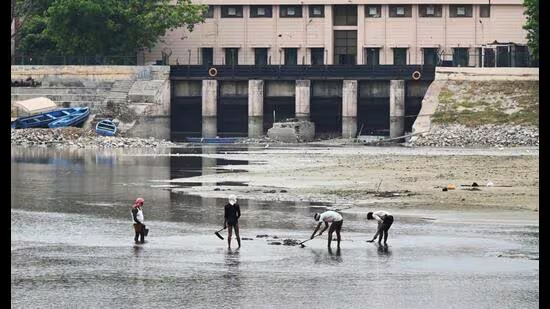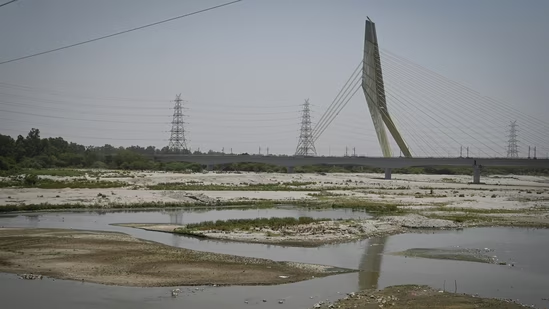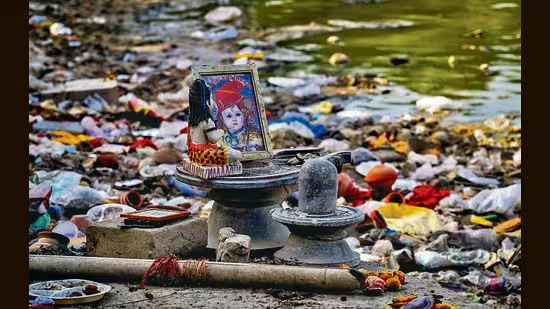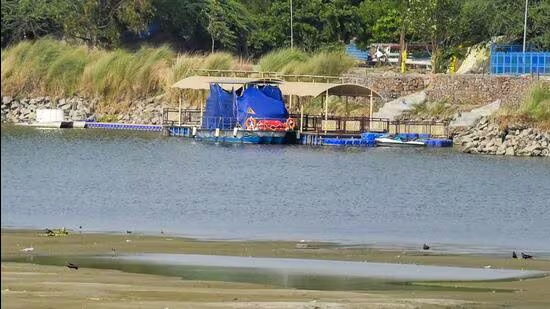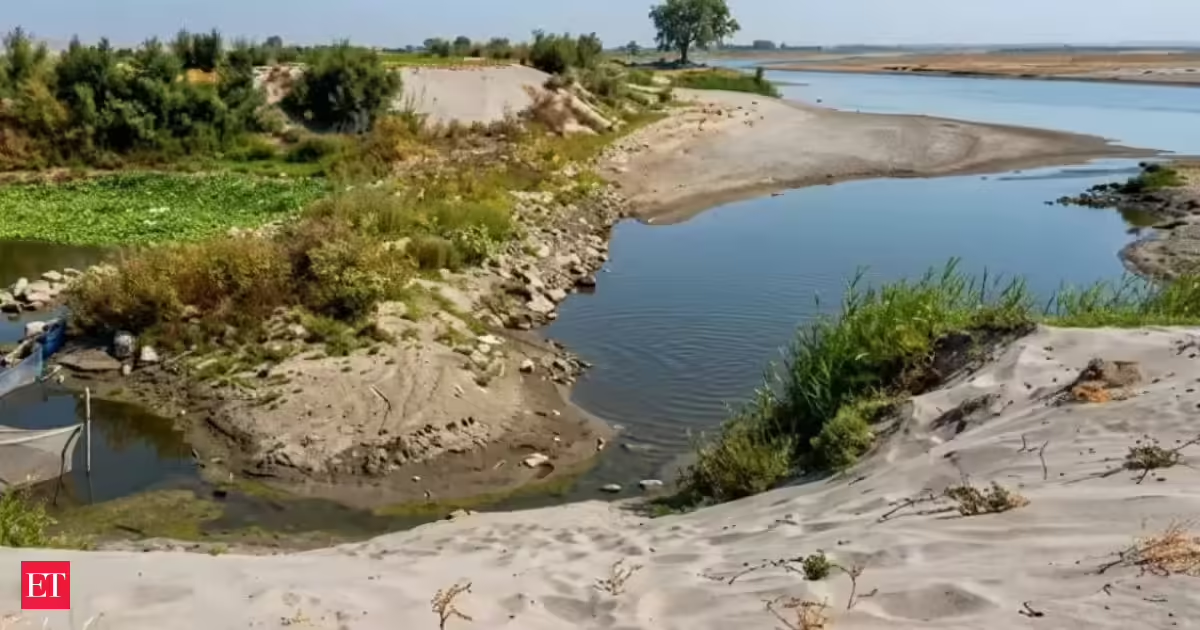
At the point where the Yamuna enters Delhi from Haryana, the river has narrowed into a shallow brown stream with large patches of exposed sand and dry riverbed. In North Delhi’s Palla village, people are now crossing the river on foot from Delhi and Haryana into Uttar Pradesh, something locals say has become common during summer months, a TOI report stated.Children were seen wading through knee-deep water using a narrow channel to move between villages, while bullock carts loaded with farm produce travelled across the dried-up river path connecting Palla and Haryana’s Dahisara village with UP’s Sankroud.For residents living along the riverbanks, the shrinking Yamuna has become a yearly reality.A river that now looks seasonalLocals say the Yamuna begins shrinking sharply between late winter and early summer, turning what should be a flowing river into scattered pools and thin water channels.“Every year, it is reduced to a thin channel around this time of the year. Haryana’s drain number eight releases water into the river only during monsoon. With limited amount of water released into it from Haryana in summer, Yamuna no longer resembles a river,” said Rajpal Singh (71), a retired beldar from Delhi’s irrigation and flood control department.According to official norms, Haryana’s Hathnikund Barrage is currently releasing 9.9 cumecs of water into the river. Environmental experts say the amount is too low for the Yamuna to survive in its natural form during peak summer.“However, this is too little and cannot meet the ecological needs of the river. Also, this water can travel barely 10 kilometres downstream in summer through the vast stretches of the floodplains, factoring in percolation and evaporation,” said Bhim Singh Rawat, Yamuna activist and associate coordinator of South Asia Network on Dams Rivers and People.He added that a 2019 study by the National Institute of Hydrology had recommended a flow of 23 cumecs during the lean season.Pollution and low flow worsen the crisisThe Yamuna flows for around 52 kilometres through Delhi, and officials have identified nearly half of that stretch as severely polluted.Experts say the river appears fuller near bridges only because water collects in natural depressions and pits.“Natural depressions and pits have formed upstream of bridges, creating a false impression of the water level being satisfactory. Yamuna no longer resembles a river in the summer season as it is deprived of sufficient water level round the year, barring monsoon,” said Rawat.He also said governments across the Yamuna basin have spent crores on cleaning drives without fixing the core issue of maintaining ecological flow during dry months.Manu Bhatnagar, principal director of INTACH, linked the worsening condition this year to low snowfall and extreme heat.“During the lean season, it receives water from melting snow in Himalayas and from groundwater seepage. However, snowfall was on the lower side this winter. Also, the ongoing heatwave is causing evaporation losses, making the situation worse than usual.”‘The river has been dying slowly’Standing near the muddy water at Palla, Rajpal Singh remembered a very different Yamuna from decades ago.“However, I haven’t seen a single fish in this stretch for years now. Even two decades ago, Yamuna’s water was largely clean. However, it is so dirty now that I can’t see anything. The river has been dying slowly,” said Singh, who lives in Bakhtawarpur village.The Delhi government did not respond to queries on the river’s shrinking flow and deteriorating condition.Recent water quality checks painted a worrying picture. Samples collected on April 7 showed that Palla had the cleanest water among eight monitoring locations. However, the final monitoring point at Asgarpur, after the Shahdara and Tughlakabad drains merge into the river, recorded the highest pollution.Dissolved oxygen levels, necessary for aquatic life, met the required standard only at Palla. Six other locations showed zero dissolved oxygen.Fecal coliform levels, which indicate untreated sewage contamination, rose sharply from 2,800 MPN/100 ML at Palla to 3,10,000 at Asgarpur, far above safe limits.Villagers say life around the river has changedPeople dependent on the Yamuna say daily life has changed drastically over the years.“We grew up drinking Yamuna’s water but it is impossible to do so now. In summer, we used to take a bath in the river for hours to beat the heat. But we have discontinued the practice for several years because of its polluted water,” said farmer Vinod Kumar.Ironically, the same river that becomes shallow enough to cross on foot during summer swells dangerously during monsoon.The water level at Delhi’s Old Railway Bridge stood at 200.9 metres on Wednesday afternoon, but last September it had climbed to 207.4 metres, the third-highest flood level recorded in the city.Recalling last year’s floods, Devendra Singh from Palla village said rising water destroyed his ridge gourd and paddy crops after the river overflowed into his fields.
From river to muddy trail: Yamuna in Delhi is now just a shallow brown stream, Villagers walk across the dry river bed
The Yamuna River in Delhi has shrunk to a shallow, brown stream, with locals now walking across its dry bed. This yearly phenomenon is attributed to low water release from Haryana and extreme heat, exacerbating pollution and making the river resemble a seasonal water body rather than a flowing river.
785 words~4 min read