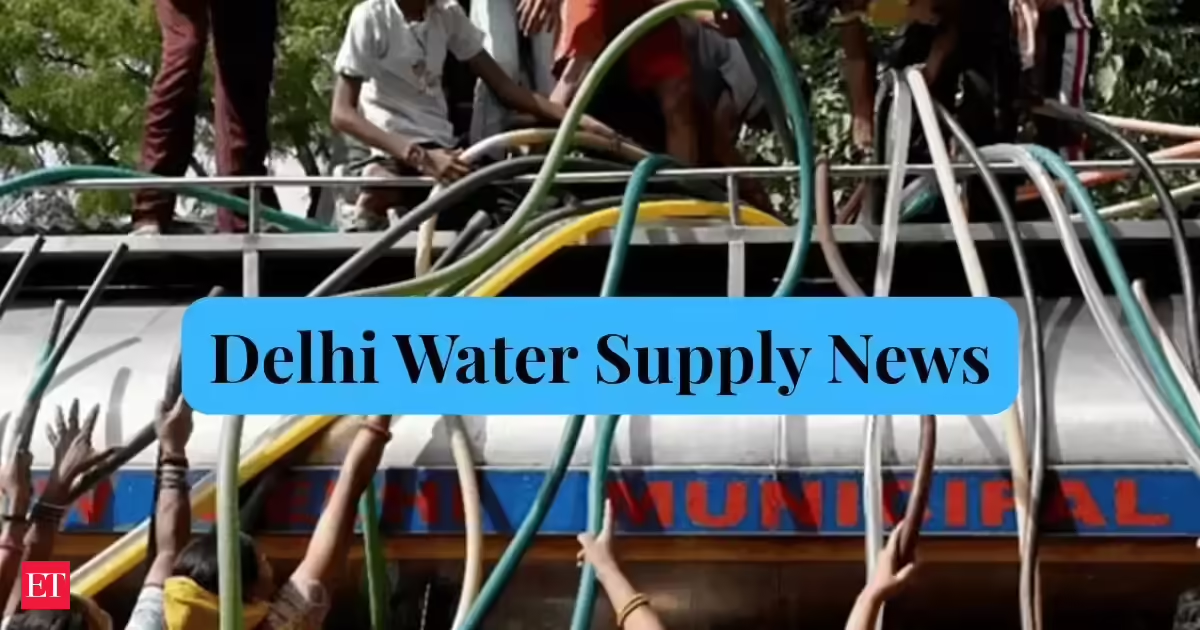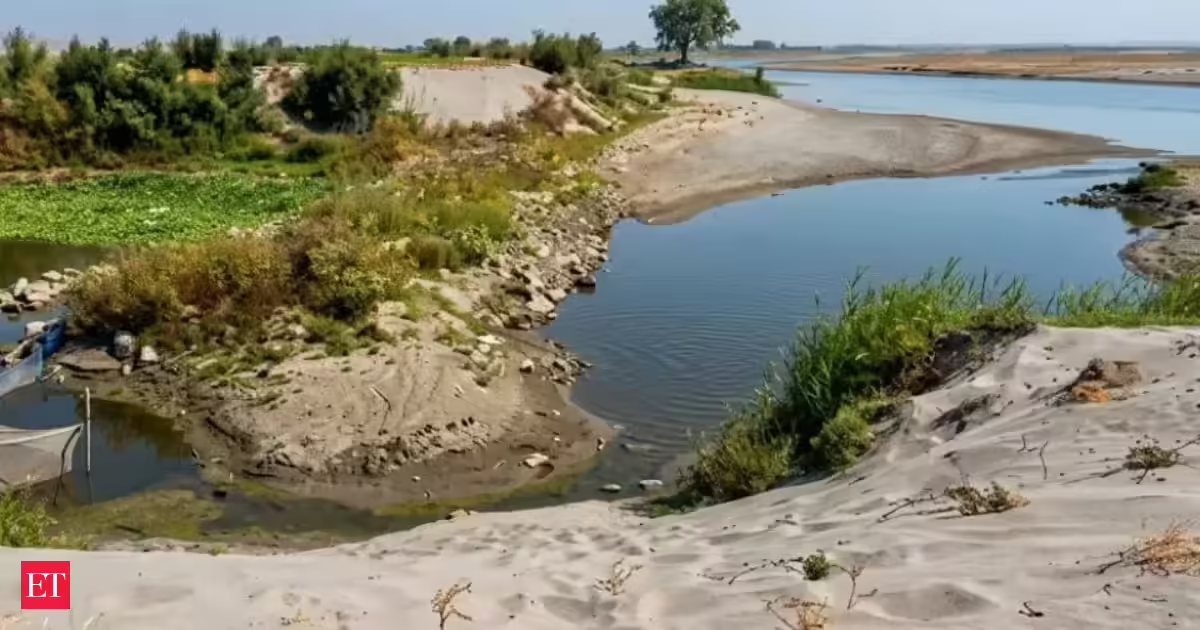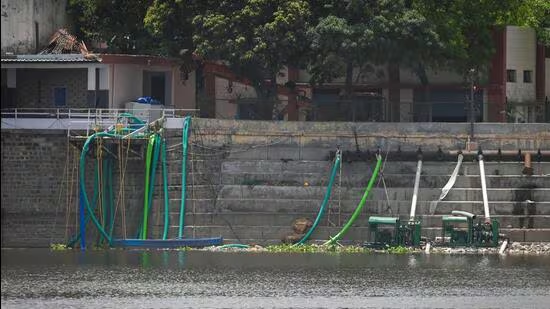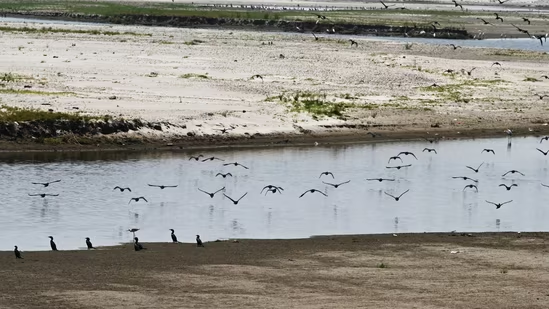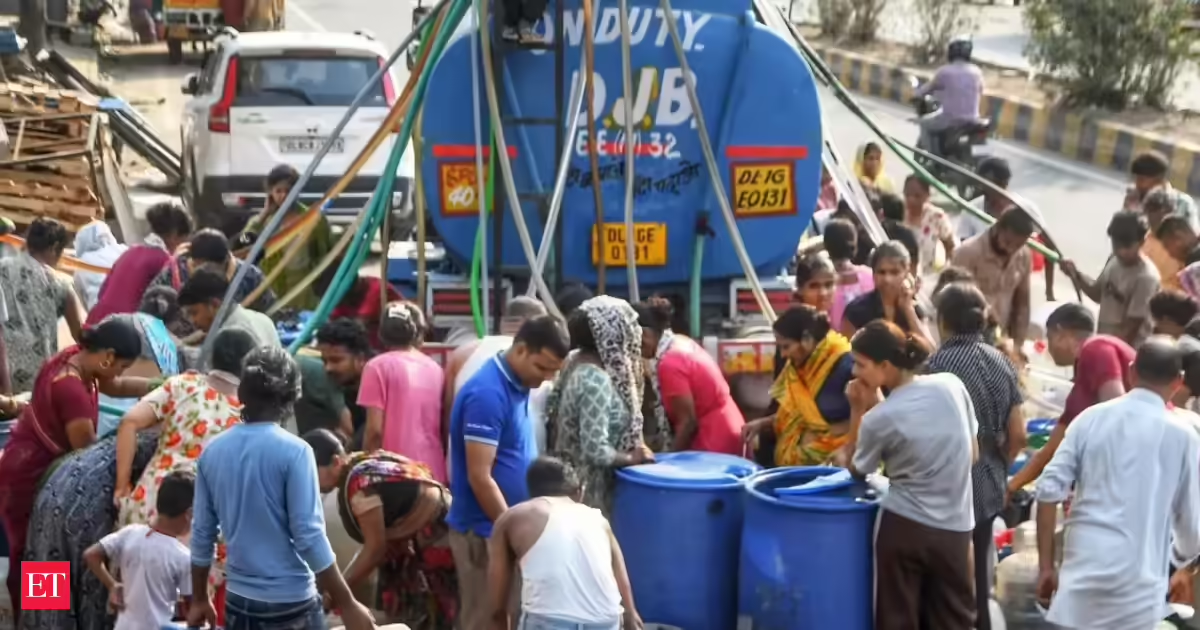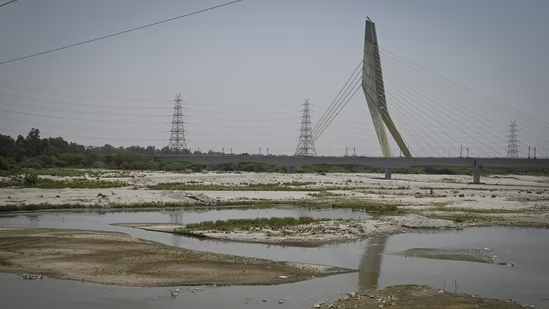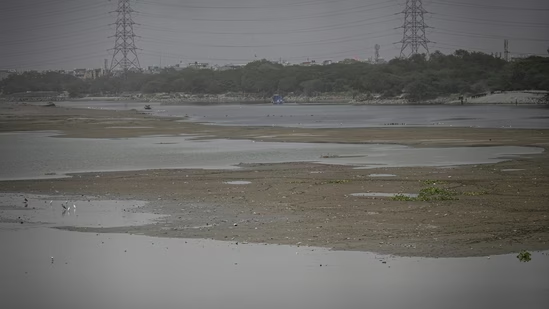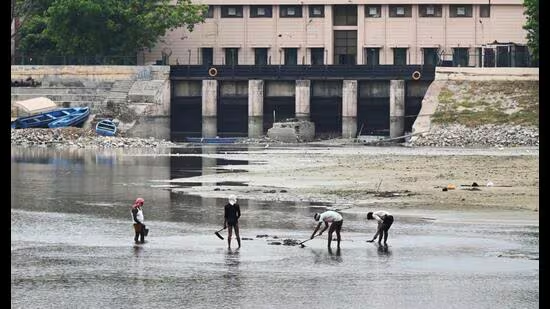
New Delhi: Parts of Delhi continued to remain parched on Sunday, the 10th day, with truncated water supply in several areas of central, north, northwest, and south Delhi on account of the dry Yamuna being unable to provide raw water to the city’s largest water treatment plants – Wazirabad and Chandrawal – for producing drinking water.The Yamuna level has dropped to 268 feet, 6.5 notches below the normal level and close to a historic low (Arvind Yadav/ HT)Despite a light rain forecast on Monday and Tuesday due to a fresh western disturbance, the situation is unlikely to resolve unless more water is released in the Yamuna via the Hathnikund barrage or the Somb channel, both in Haryana, according to Delhi Jal Board (DJB) officials.The Yamuna level has dropped to 668 feet, 6.5 notches below the normal level and close to a historic low of 667ft recorded in 2021.As a desperate measure to ensure that the Wazirabad water treatment plant functions, DJB workers were seen on Sunday manually digging channels in the riverbed to scrape off the last remaining pools of water near the Sonia Vihar edge and redirect it to the WTP.The water level has gone below the water uptake point at Wazirabad. Excavators are deployed along the edges, but the channels in the riverbed have to be dug manually because heavy machinery can get stuck. Only a trickle of water has actually managed to reach the plant through these channels,” an official said.A second official said the Irrigation and Flood Control Department is likely to construct the necessary channels using its specialised master dredging machines.“Starting Monday, a larger and deeper channel will be excavated utilising the machinery provided by the Irrigation Department,” the official said.At 268ft, water availability in Waziraabad becomes negligible, as 55% siltation in the barrage area has already reduced the water-holding capacity to half.DJB normally receives around 209 cusecs of water from the Yamuna at the receiving point in Wazirabad, but the dry Yamuna is barely able to supply any water through the river channel. “The water receipt from Munak canal has marginally increased, but it is not enough to meet the 210 cusec shortfall in Yamuna,” the official added.To sustain water production at Wazirabad, 80–90 cusecs of water—drawn from the supply originally intended for the Haiderpur, Nangloi, Dwarka, and Bawana WTPs via the Munak Canal—has been diverted to the Wazirabad plant through a dedicated “twin line”. “It is solely this diverted water that is currently enabling limited water production at the plant, and this is the water currently being supplied to the city. Overall, Delhi is short of 9-10% of 1000 mgd daily water supply to us, “ the official explained.With a 250 mgd demand-supply gap, DJB supplies 1000 mgd of water to 25 million residents in Delhi. Each MGD of water serves around 25,000 people, with a 100 mgd shortfall impacting more than 2.5 million people to varying degrees. On the ground, this translates to taps running dry in tail-end areas, increased water contamination and reduced pressure/supply timings.On Sunday, DJB received complaints of no water supply from areas like Rajouri Garden M block, B block South Ex-Part II, Hari Nagar, Kalkaji extension, Kirari, Pratap Vihar Phase 3, Chirah Delhi, Dakshinpuri, Deoli, Vijay Nagar, Sant Nagar, Burari, West Patel Nagar, among others.Shailendra Singh, a resident of Dwarka, said that residents in A Block of Dwarka Sector 8 have not received water for the last five days. “There has been no action despite multiple complaints,” he added. Deepak Singh from Rajouri Garden said that M Block, Rajouri Garden, has not received proper water supply for the last 13 days. “Today, early morning, we received some supply of water, but the pressure was not sufficient to fill the roof tank. We have been complaining for a long time, but no action has been taken,” he added. In areas like Kirari, the rationalisation has led to a new water supply schedule, with areas scheduled to receive water through three, four and five-day cycles.On Saturday, the Delhi government said the Haryana government has assured it will maintain a minimum supply of 1,000 cusecs of water through the Munak Canal after Chief Minister Rekha Gupta spoke to her Haryana counterpart, Nayab Singh Saini.
Yamuna remains dry, water supply in parts of Delhi severely hit
Delhi faces a severe water crisis as the dry Yamuna hampers supply to treatment plants. Manual efforts are underway to redirect remaining water. | Latest News Delhi
703 words~3 min read