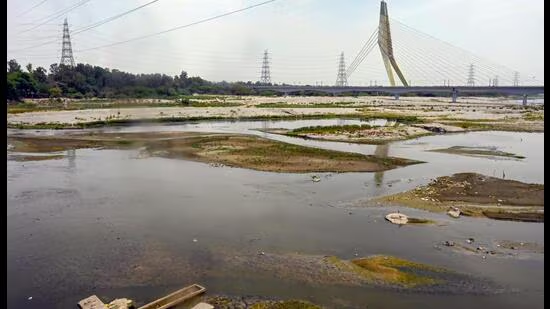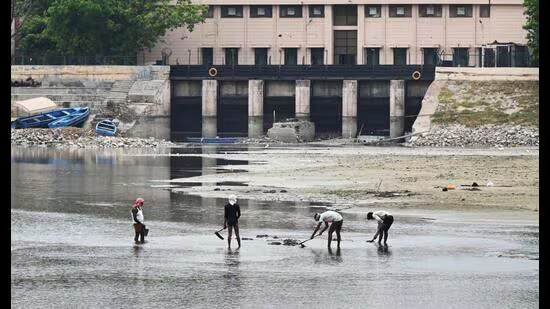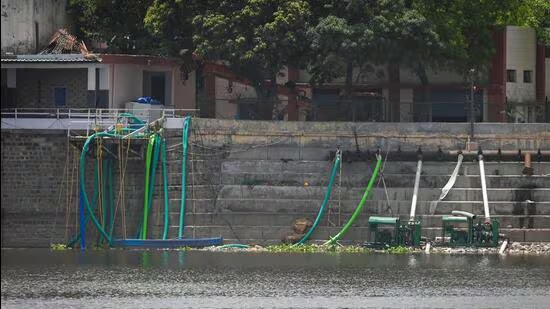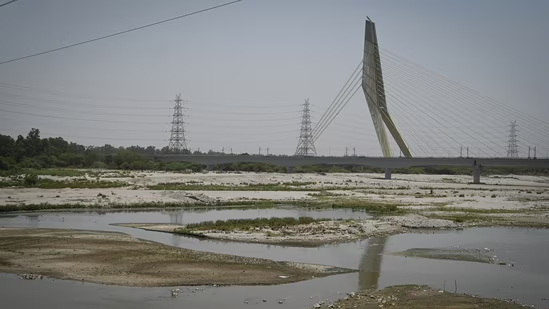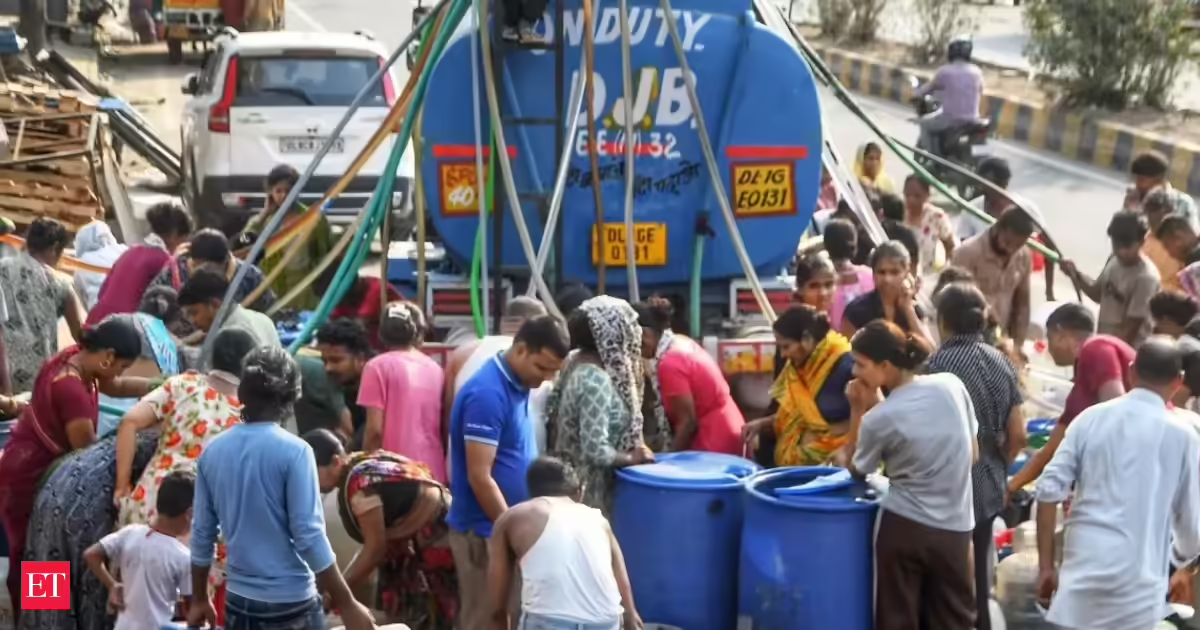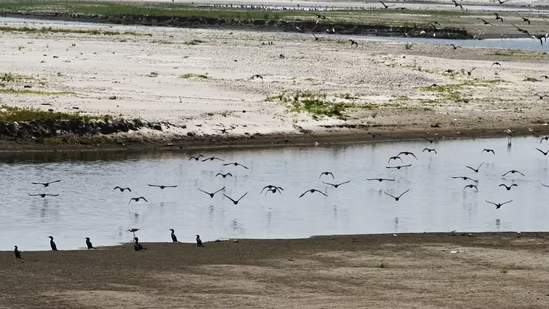
A depleted Yamuna, close to a record low, has pushed two of the capital’s largest treatment plants to reduce capacity, and led to scarcity of water supply to parts of north, central and west Delhi this summer.Water levels in Yamuna drop during peak summer months. (HT Photo/Arvind Yadav)Levels at the Wazirabad pond—the reservoir serving the Wazirabad and Chandrawal water treatment plants—dropped to 668.6 feet (above sea level) last week, about five feet below the 674.5-feet operational threshold.The latest shortfall is the result of the summer heat, but Delhi has for long reeled under a chronic mismatch between the city’s water supply infrastructure and its burgeoning demand.How Delhi sources its waterThe Delhi Jal Board (DJB) operates nine water treatment plants that draw raw water from three sources: the Yamuna, supplied through Haryana; the Ganga through Uttar Pradesh via the Upper Ganga Canal; and the Bhakra Nangal system through Punjab.Approximately 40% of the city’s raw water is from the Yamuna via Haryana.The Yamuna enters Delhi at Wazirabad barrage, where the pondage serves as the holding reservoir from which raw water is driven to the Wazirabad and Chandrawal WTPs. A fall in river level at this point directly constrains supply to both the plants.Plants drawing water from the Ganga canal system—Sonia Vihar and Bhagirathi—are operating as usual.Also read: Shah asks Delhi, Haryana, UP to ensure ecological flow in YamunaThe demand-supply gapEven at full production, Delhi’s water supply falls well short of its needs. The city of 2.3 crore people, on average, requires 1,380 million gallons of water per day (MGD). It gets 1,000 MGD, data by DJB shows.Of the total supply, the Wazirabad plant supplies approximately 110 MGD and Chandrawal, about 90 MGD—accounting for around one-fifth of the total.The shortage, nowThe pondage at Wazirabad barrage must be maintained at 674.5 feet above sea level for the two WTPs to operate at full capacity. A drop to 668 feet sharply restricts the volume of raw water that can be diverted to the treatment facilities.This month, according to DJB officials, water levels at the Wazirabad WTP dropped by 30-40%, and Chandrawal WTP fell 15-20%.Residents in affected colonies have reported receiving no water for days or receiving supply unfit for use, with demand for water tankers outstripping availability. Parts of Rani Khera, Begumpur, West Patel Nagar, Rajinder Nagar, Subhash Nagar, Sewak Park (Dwarka Mor), and Patel Nagar, are among the worst affected areas.What’s being done to avert crisis?Last week, two excavators were deployed to dig up the river bed, so the water can be directed towards the uptake point for the WTPs.DJB officials had told HT that raw water from Munak canal was diverted through the Haiderpur canal to supplement Wazirabad WTP’s intake as well.After talks between governments, Haryana also agreed to release additional Yamuna water for Delhi.Also read: At Wazirabad, Yamuna runs so low that ‘even kids can cross it’A recurring crisisThat the crisis repeats every summer points to longstanding problems for the country’s capital.Delhi's dependence on Haryana for approximately 40% of its Yamuna-based raw water makes supply directly vulnerable to upstream flow conditions and inter-state disputes. Any reduction in release creates an immediate downstream deficit at Wazirabad.Experts have also pointed to Yamuna's carrying capacity, which has deteriorated over the decades. The river's 22km stretch through Delhi, between Wazirabad and Okhla barrages, has fallen to siltation, floodplain encroachment, and rampant concretisation of ghats and riverbedsAccording to DJB officials, the river near Wazirabad was last desilted in 2013. Then too, the exercise was stopped by the National Green Tribunal over concerns about sand mining. A shallower riverbed retains less water and depletes faster under low-flow conditions.The demand-supply deficit isn’t a seasonal anomaly either, and a summer heatwave increases per capita demand at precisely the point when river levels are at their lowest.Until upstream flow is secured and the river’s own carrying capacity is restored, the Wazirabad barrage will remain the point at which Delhi's water problem becomes visible—every year, on schedule.
Why Delhi's water crisis keeps returning to the same chokepoint
The shortfall is the result of the summer heat, but Delhi has for long been unable to meet its water demand. | India News
655 words~3 min read