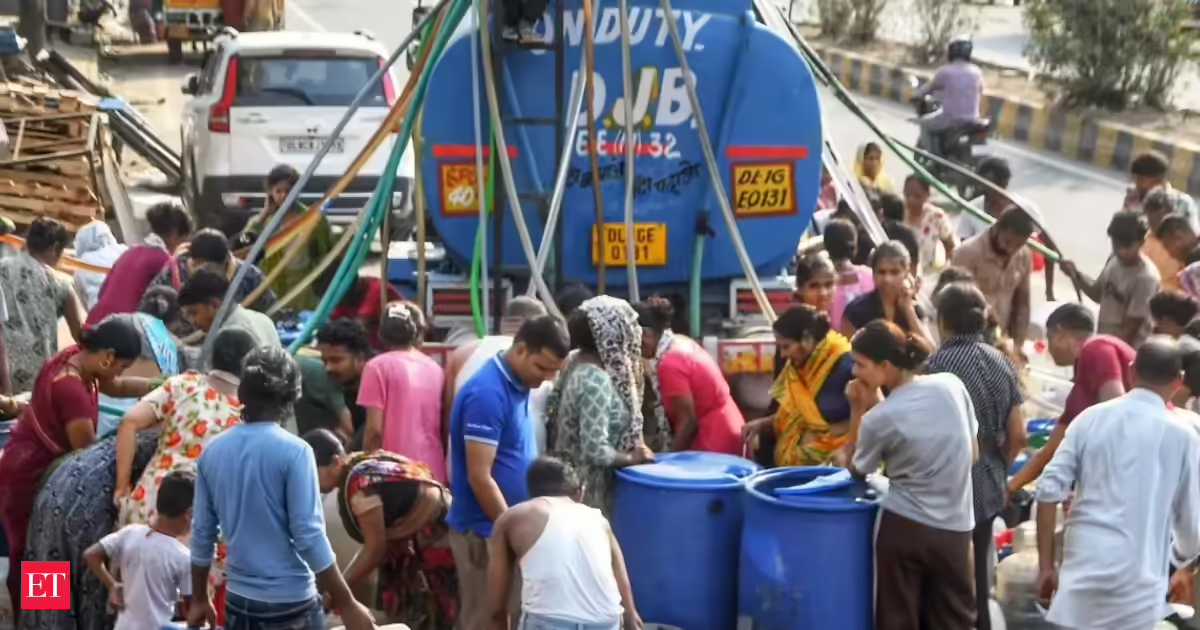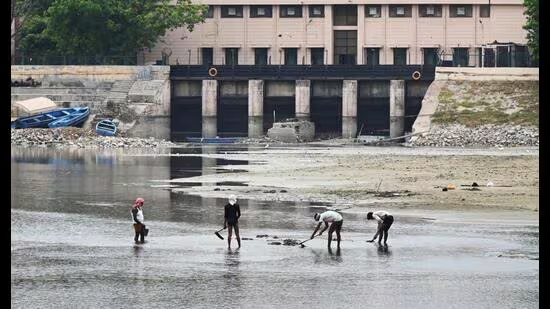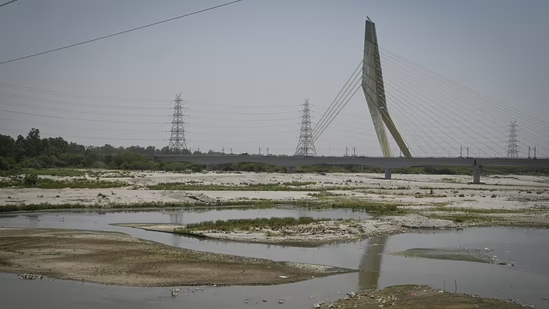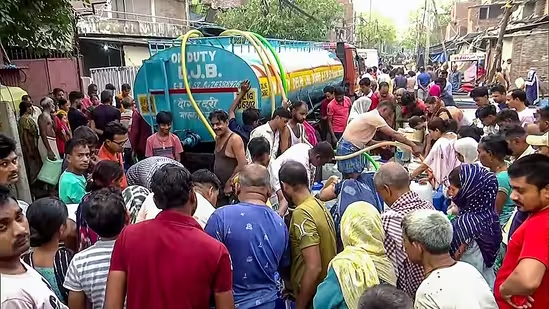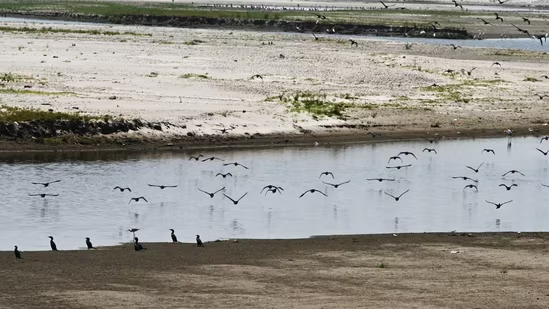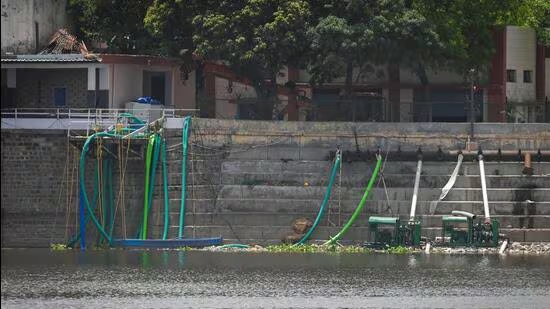
New DelhiDesilting work underway at the Sonia Vihar water treatment plant, located opposite the Wazirabad barrage, where Delhi receives Yamuna supply.) (Sanchit Khanna/HT Photo)With the Yamuna largely running dry, Delhi on Wednesday continued to face a water shortfall of around 50 million gallons per day (mgd) amid several localities grappling with contaminated supply, officials said. Most complaints were received from Prem Nagar, Bhajanpura, Hari Nagar Ashram, Chandni Chowk Maliwara, Sangam Vihar and Budh Vihar, among others.Senior government officials said that Haryana was releasing an additional 125 cusecs (~66.25MGD) of water through the Munak Canal, helping keep the water supply at 951MGD, against a target of 1,002MGD.A senior government official, who did not wish to be named, said, “At the peak of the crisis, we were receiving 924 cusecs of water through the Munak Canal; this has increased to 1050 cusecs. Haryana was initially reluctant to provide even this water. But this does not compensate for 220-230 cusecs of water needed at Wazirabad.”Delhi receives water from Haryana via two routes, the Yamuna river channel and the Munak canal system. On Wednesday, excavators were busy digging a five-to-six-foot-deep channel in the riverbed along the Wazirabad water treatment plant uptake point.“There is barely 1-2 feet of water left in the pondage area at Wazirabad. The deeper channels being dug using the excavators are being developed to channel the remaining water to the plant. Even the channels created using master water dredging machines to bring river water to the plant are yielding less water because the river itself lacks sufficient flow,” a second official said.This is the third consecutive week of water crunch in Delhi. The water supply over the last 10 days has been fluctuating on a day-to-day basis, ranging from 905MGD on June 4 to 954MGD on June 9 and 951MGD on June 10.A Delhi Jal Board (DJB) official said that every 1MGD caters to the water needs of around 25,000 residents.Delhi has an estimated water demand of 1250MGD, while it receives a supply of around 1,000MGD from neighbouring Haryana and Uttar Pradesh.During summer, the 352 cusecs of water released in the Yamuna from Hathnikund barrage does meet the environmental flow requirements, with the river running dry in the second half of May and June. Although the situation has improved slightly, the continued absence of water in the Wazirabad reservoir means residents in large parts of north, central, and Old Delhi are still struggling with water shortages. On the ground, these shortages translate to rationalisation, alternate day water supply and increased contamination.Foul-smelling sewage mixed waterLow water availability is translating to low pressure and contaminated supply in various pockets across the city.Sanjeev Sharma, a resident of Malwara in Chandni Chowk said yellow-coloured water was being supplied to the locality. “The water is not useable in any way. In such heat, even potable water is not being supplied to us in the country’s capital,” he said.Ajay Maurya of Sangam Vihar said that the supply to H Block was extremely dirty. “We wake up at 2-3am every night to collect water, but it is still unsafe to use,” he said.Rohan Bhalla, of Hari Nagar, Ashram, said that water supply to the locality was foul-smelling. “It appears to be mixed with sewage and poses serous health risk, especially to children and senior citizens,” he said.
Despite increased canal supply, dry Yamuna causes 50mgd water shortfall in Delhi
Delhi faces a water shortfall of 50 million gallons daily, with many areas reporting contaminated supplies as the Yamuna runs dry. | Latest News Delhi
549 words~2 min read