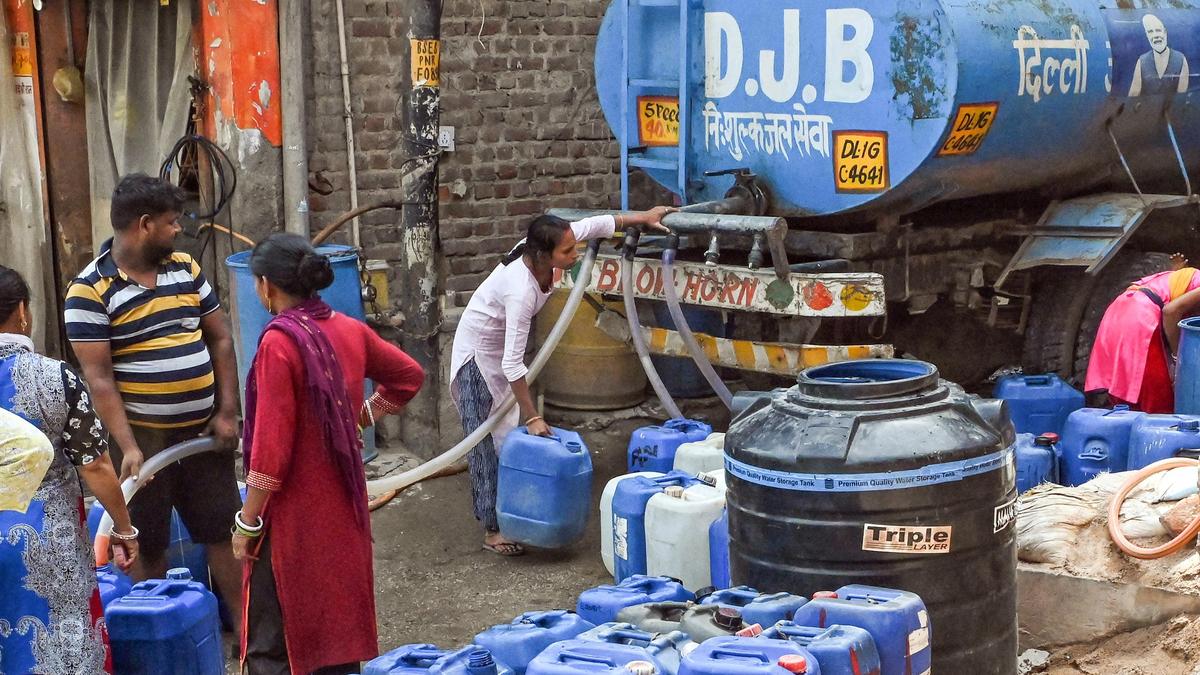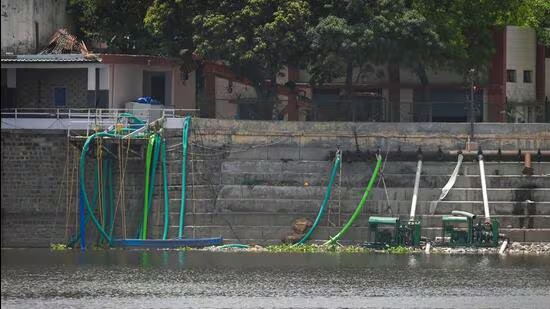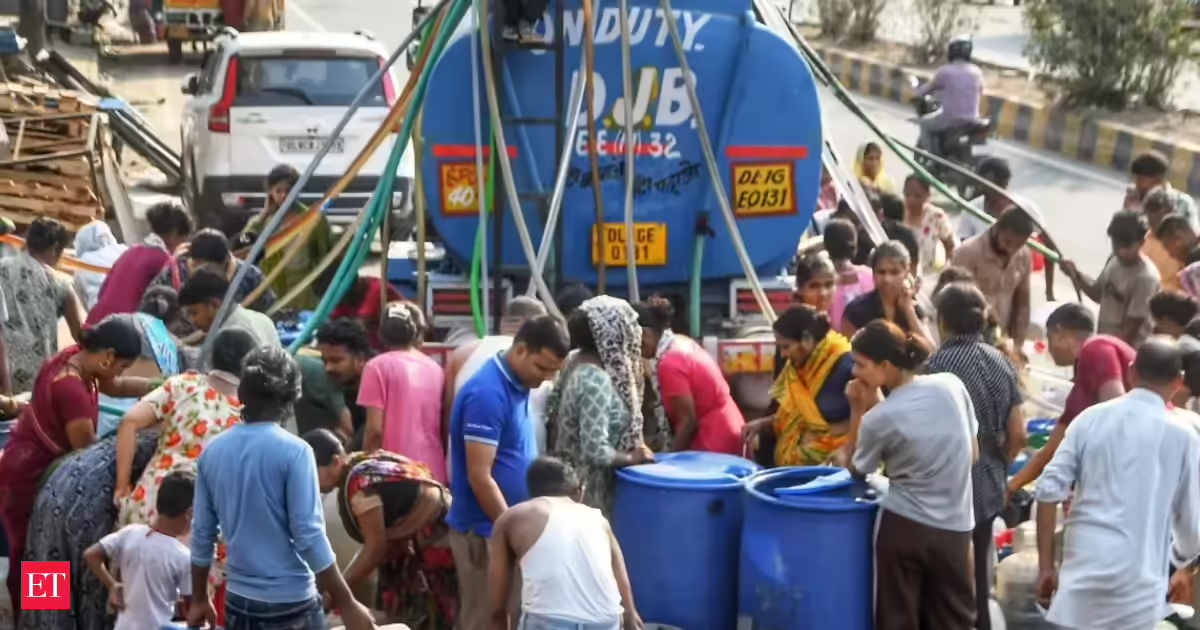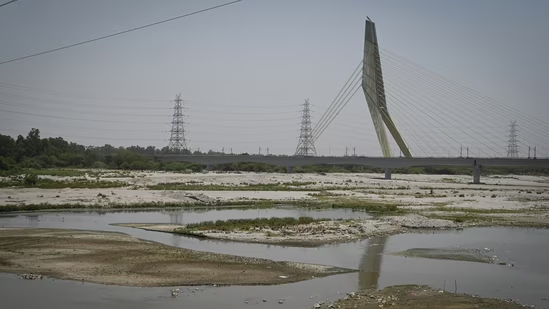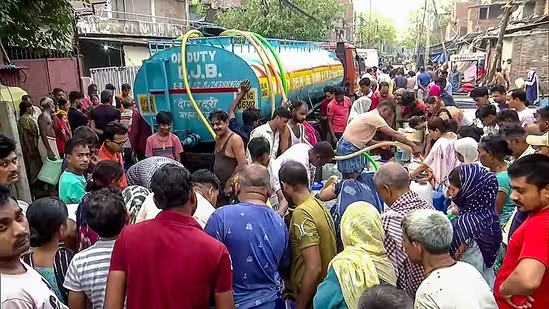
Delhi continued to reel from water shortage on Wednesday despite Haryana sending additional 55 cusecs through the Munak canal system, with officials pegging the deficiency at about 90-100 million gallons a day (mgd). Senior government officials said that the situation was unlikely to improve unless additional water is released into the Yamuna River channel.Complaints were received on Wednesday from central, northern and western parts of Delhi. (File Image)Usually, Delhi receives 1,002mgd of water from the Yamuna, Ganga and groundwater resources, against a demand of 1,250mgd and bridges this gap through tankers and an array of tubewells. However, the current supply level is around 904-905mgd, government officials said, citing increased shortfall and diversion from the Haiderpur water treatment plant to plants at Wazirabad and Chandrawal.“Delhi government is in constant touch with the Haryana to increase the raw water supply. There has been a marginal increase in water coming via Munak canal system by about 55 cusecs (from 924 cusecs to 980 cusecs) but this can only help reduce a little pressure on the system. Normally, we get around 210 cusecs of water from Yamuna River channel, which has completely dried up so we are still short of around 150 cusecs (96-97mgd),” a government official, who did not wish to be named, said.Where Delhi gets its waterDelhi is primarily reliant on its neighbours for its water supply, with around 61.1% of raw water supplied by Haryana, 25.25% by Uttar Pradesh through the Ganga and the rest from groundwater sources.Delhi gets water from Haryana via two sources, chief the Hathnikund Barrage, which flows through the course of the Yamuna, and the Munak canal, through its two subdivisions. Usually, Haryana releases 1,049 cusecs through these two sources, with Delhi receiving around 924 cusecs at Haiderpur, following transmission losses.A second official aware of the matter said, “Munak has limited carrying capacity and it cannot replace the 210 cusecs received via the river course, which feeds Wazirabad and Chandrawal plants. We are requesting Haryana to release more water via Hathnikund and Somb tributary.”Besides Haryana, Delhi gets around 470 cusecs (254.08mgd) water from the Ganga system via the Upper Ganga Canal, with 200 cusecs sent to the Bhagirathi plant and 270 cusecs sent to the Sonia Vihar plant. This is supplemented by 135mgd (208.8 cusecs) of groundwater supplied through Ranney wells and tubewells installed on the Yamuna floodplains. To be sure, Haryana is not under any legal obligation to release additional water to Delhi, but the request has been made on humanitarian grounds.Data from the Hathnikund barrage shows that around 352 cusecs of water is being released in river but officials in Delhi argue that most of it gets lost in transmission within Haryana. “If enough water is released to ensure a receipt of 200-225 cusecs at Wazirabad barrage, the situation will ease,” a third official said.Contamination, pressureOn ground, the 90-100mgd shortage is translating to taps running dry in the tail-end areas, low supply pressure and curtailed supply timings along with rise in complaints of water contamination due to lack of water in the supply network, coupled with household pumps. Complaints were received on Wednesday from central, northern and western parts of Delhi. Shortages were marked in Patel Nagar, parts of Rajouri Garden, Vishnu Garden, Model Town, Mahavir Enclave, Raj Nagar, and parts of Palam, among other places.A senior official of the Delhi Jal Board (DJB) said that when the water pressure falls in the system, contamination leakage points increases. “Moreover, use of pressure pumps by houses sucks the contaminated water. Less water in system translates to more contamination,” the official said.Contamination complaints were received from areas of Dwarka Sector 12 Pocket 2, parts of Rohini Sector 25, Block 12 Rajinder Nagar and WP Block Pitampura, among others.Students of the Delhi University’s North Campus, which falls in the catchment area of impacted plants, such as Vijay Nagar, Roop Nagar and Kamla Nagar, reported irregular supply and contamination.(Inputs from Gargi Shukla)
New Delhi facing water supply shortfall of more than 90 mn gallons a day
Delhi is primarily reliant on its neighbours for its water supply, with around 61.1% of raw water supplied by Haryana, 25.25% by Uttar Pradesh. | Latest News Delhi
653 words~3 min read