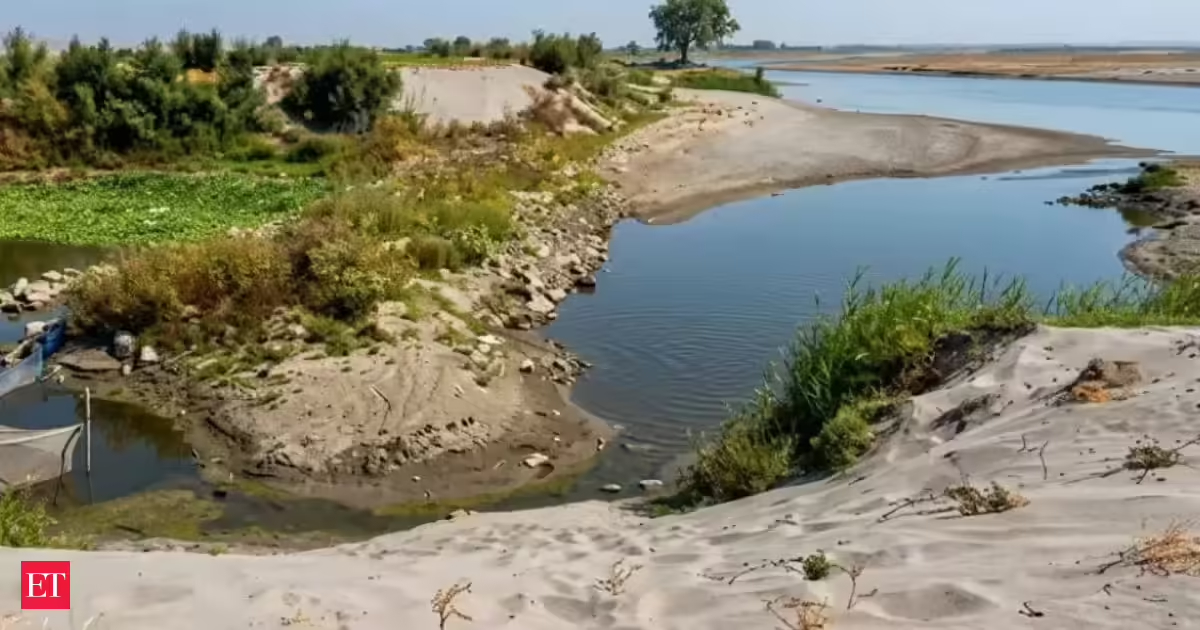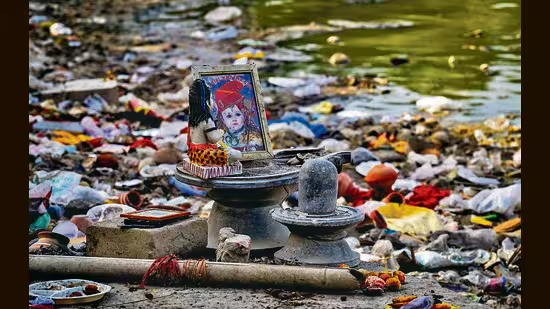
The receding Yamuna has revealed hundreds of religious idols and photos, along with other paraphernalia, that had presumably been dumped into the river, now lying on the new banks and dry riverbed areas.Idols on the banks of the Yamuna at Ramghat in the Wazirabad area of New Delhi on May 26, 2026. (RAJ K RAJ /HT PHOTO)During a spot check on Monday and Tuesday, HT found damaged idols, garlands, framed photographs, cloth offerings, and plastic waste scattered along stretches near Ram Ghat, Sur Ghat, sections along Burari, Sonia Vihar and the Jagatpur Ghat. These ghats cover last remaining clean sections of the river from where Delhi draws its drinking water, and where what is left of the fish and aquatic in the river still survives.Environmentalists and civic agencies have repeatedly warned that idol immersion and dumping of puja waste is a major contributor to pollution in the river.Bhim Singh Rawat, coordinator of South Asia Network on Dams, Rivers and People (SANDRP), said this shows that judgments of the National Green Tribunal (NGT) are being violated. “This is clearly illegal. NGT has time and again pointed out that idols and worship material cannot be dumped in the river. Artificial ponds and symbolic immersions in them must be carried out. These idols are made of POP (plaster of paris) and toxic chemicals which seep into the river where the water is still relatively clean while harming the biota and river ecology.”He also said this showed that the marshals and personnel of territorial army deployed to prevent this were having little impact. “It seems Delhi’s government has left the river orphaned with anyone allowed to do anything. The wire mesh on bridges are broken. There are no collection points or regular cleaning drives. Even if activists request people to stop dumping, no one cares to listen. Harming river is no way to worship it,” he added.In its verdict in ‘Manoj Mishra vs Union of India & Ors. Maily se Nirmal Yamuna’ case on January 13, 2015, the NGT had prohibited throwing puja material, idols, flowers, havan samagri, food grain, oil, among others into the rivers except at designated sites. Violators, it had said, would be fined ₹5,000 under the “polluter pays principle”.Again, on September 16, 2015, NGT issued further directions restricting idol immersion and allowing only biodegradable idols and environment-friendly practices.On May 19 this year, Chief Minister Rekha Gupta announced a special public participation campaign aimed at the respectful collection and recycling of damaged idols of Hindu deities across Delhi. As part of the initiative, the Delhi government plans to establish dedicated collection centres for the dignified disposal and recycling of old and damaged idols. Officials said the campaign framework will be prepared with suggestions from residents and local stakeholders. Gupta had said idols worshipped in homes for years are often abandoned under peepal trees, near riverbanks, parks and roadsides once they become damaged.Officials said details regarding the number and locations of collection centres are currently being worked out and the river banks will also be included.Rawat said that court orders and the NGT have been ineffective and that an independent body like Yamuna monitoring committee should oversee such drives.
Receding Yamuna reveals idols, waste along riverbed
The receding Yamuna has uncovered dumped religious idols and waste, raising pollution concerns. Environmentalists criticize ineffective enforcement of NGT orders. | Latest News Delhi
527 words~2 min read