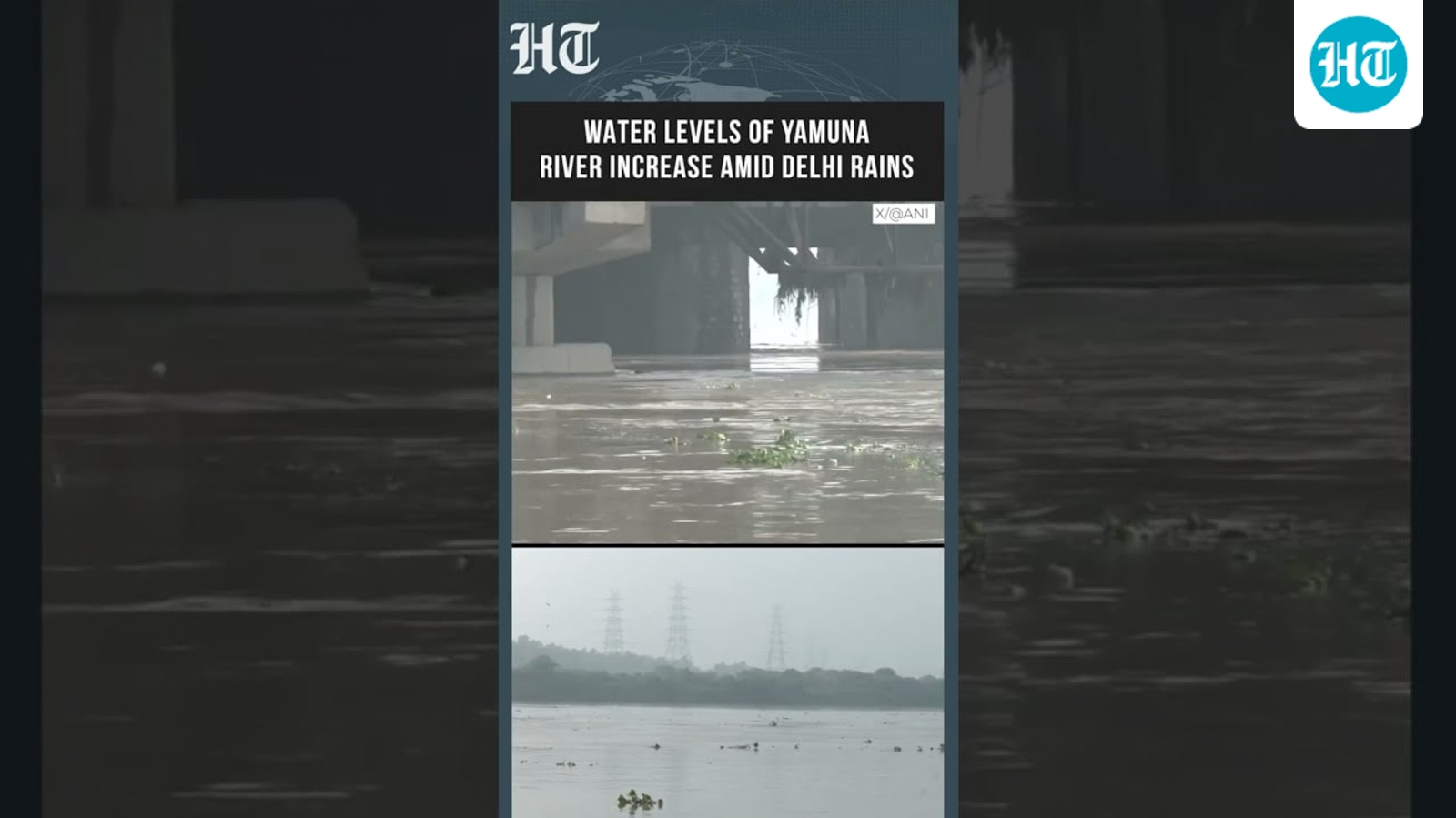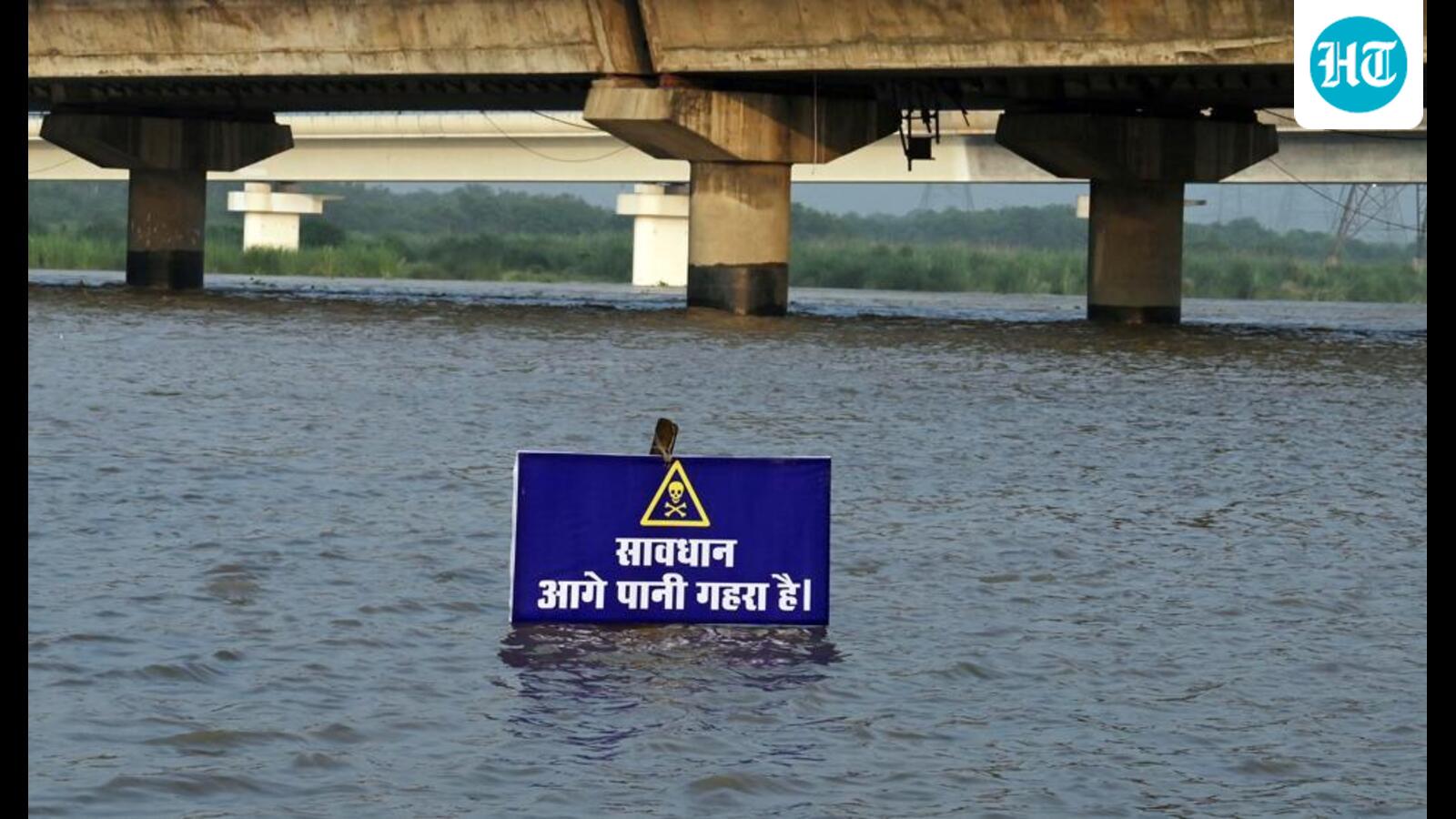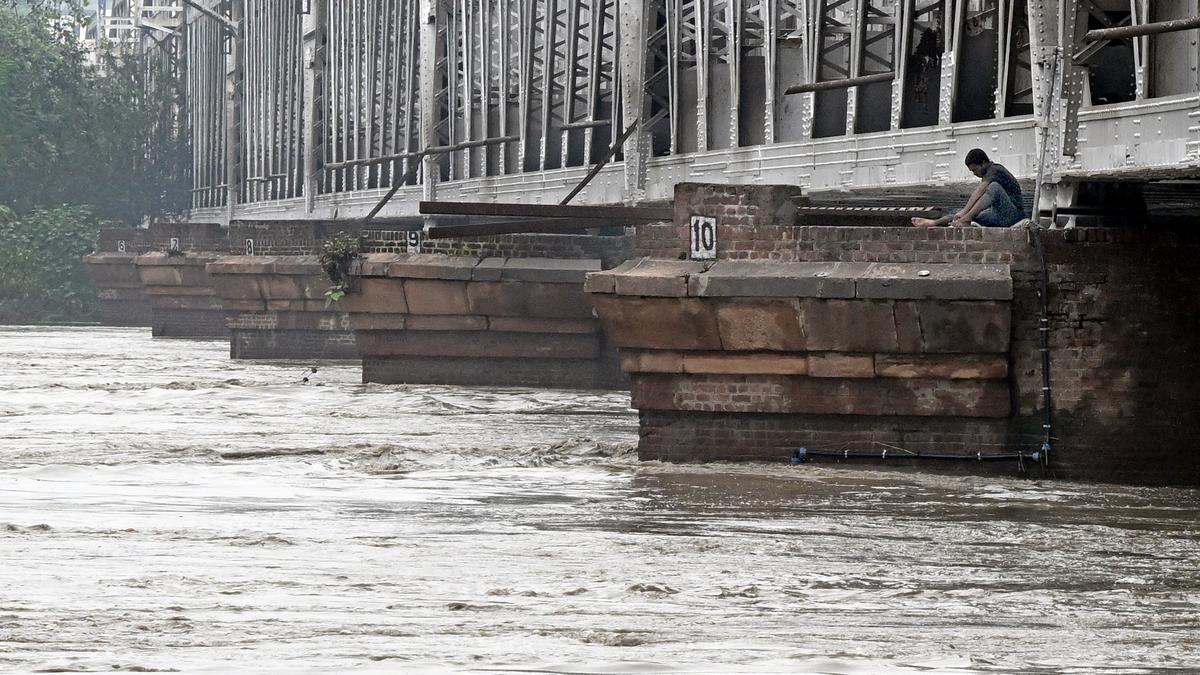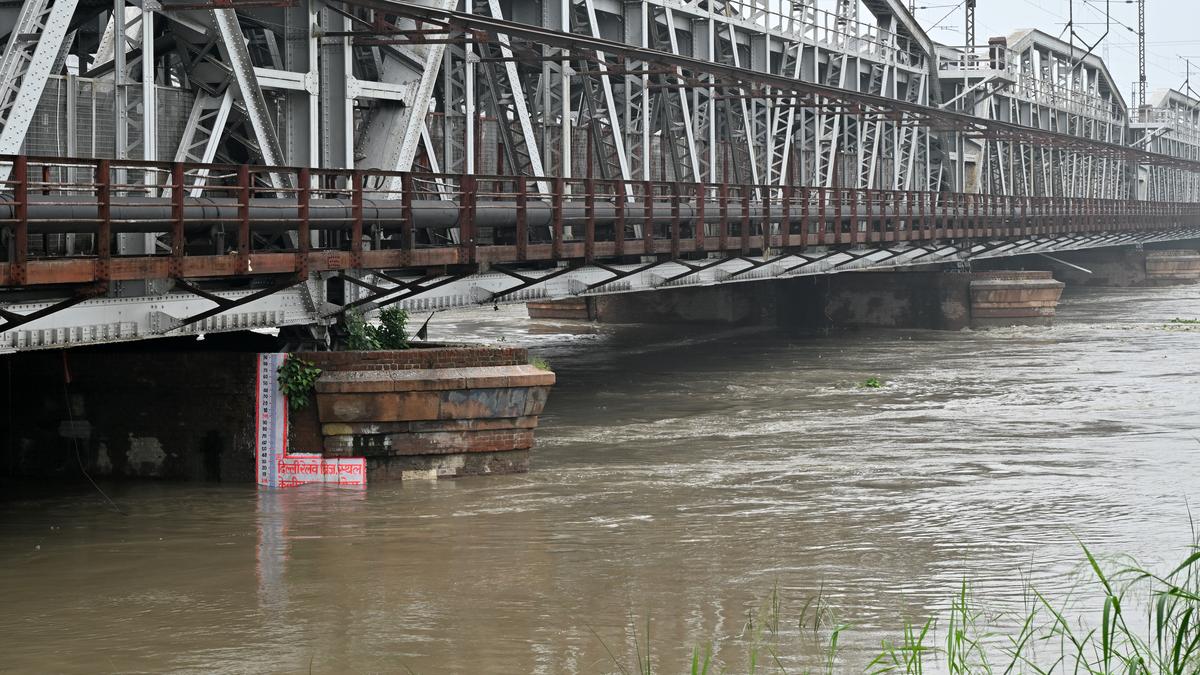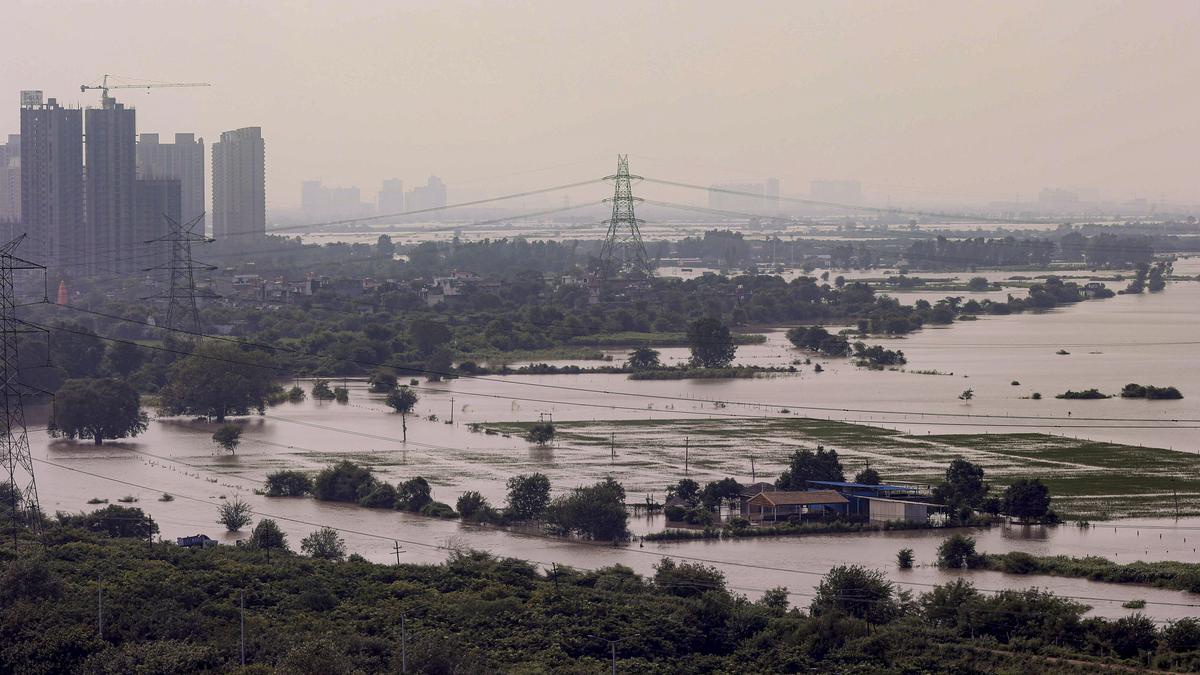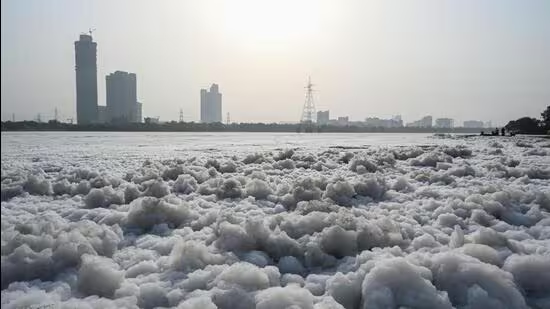
The water levels in Yamuna stretch in Delhi rose sharply on Sunday, increasing by over 2 metres, following heavy rainfall recorded in the hills upstream. This marks the first instance where the river has risen above 204m-mark after a prolonged dry period during summer months, said officials.The river still remained polluted with sheets of toxic white foam seen at Kalindi Kunj Ghat on Sunday. (Ajay Aggarwal/HT Photo)According to officials, the river rose from 201.87m at 10pm on Saturday to 204.05m at 11am at the Old Railway Bridge — 2.18m over a 12 hour period. The Bridge at Loha Pul, near Yamuna Bazaar,acts as the standard for measuring water levels of the river in Delhi for the flood related measurements.The jump on Sunday marks the first significant increase in water levels after an extremely dry summer period, resulting in extensive water supply disruptions in the city and a shortfall of upto 100 MGD during the peak crisis period.The river is slightly under the “warning” level now (204.50 and above) and, officials said, its level is now likely to stabilise.Data from the Hathnikund Barrage shows that the river outflow reached 1086.76 cumecs (38,378.85 cusecs) on July 10 at 10pm and was 1,009 cumecs (35661.1 cusecs) on July 11 at 2am. This is the excess monsoon flow being discharged from the barrage, which normally releases around 352 cusecs of water.While the river has turned brownish due to excess flood water upstream , the pollution level in the river downstream of Okhla still remains high, carrying untreated effluents, with huge sheets of toxic foam coating the river at Okhla-Kalindi Kunj on Sunday.Normally, the froth bubbles are caused due to soap-like surfactant molecules. When water falls from a height in nearby Okhla barrage, it leads to churning of polluted water and increased frothing. Froth over the Yamuna water intensifies around winter and froth bubbles formed due to churning polluted water at Okhla barrage becomes more stable. However, such heavy froth formation is rare during the monsoon.A senior official from the flood and irrigation department said that the water level rise was expected as large volume of water was being released from Hathnikund barrage over the last 2-3 days. “The water takes 48-72 hours to reach Delhi from Yamunanagar in Haryana. The level started rising last night but situation is well under control. The high flow will cleanse the river marking the first episode of flushing the pollutants down. The water quality is likely to improve in coming days. There is no flooding risk at the moment,” official added.The official “danger” level for the river is the 205.33m-mark and, last time, in 2023, the Yamuna swelled to its highest-ever water level of 208.66m on July 11 following a record discharge of 359,760 cusecs from Hathnikund. It breached embankments and inundated parts of Outer Ring Road, settlements along the floodplains. In 2024, peak was 204.38m on September 26 — below the “warning” level and the peak was 87,018 cusecs.To be sure, these volumes of water being released from the barrage are not alarming and they just indicate the return of monsoonal flow in the river bed. Bhim Singh Rawat, coordinator of the South Asia Network on Dams, Rivers and People (SANDRP), said this is the first instance of natural flow returning to the river after the summer season. “Yamuna bed has been completely dry this summer. This will help quench the river and start the period during which Yamuna resembles a normal river. Its overexploitation in non monsoon phase just reduces it to sewage canal during the other seasons,” he said.
After a dry summer, heavy rain upstream boosts Yamuna levels
The water levels in Yamuna stretch in Delhi rose sharply on Sunday, increasing by over 2 metres, following heavy rainfall recorded in the hills upstream | Latest News Delhi
594 words~3 min read