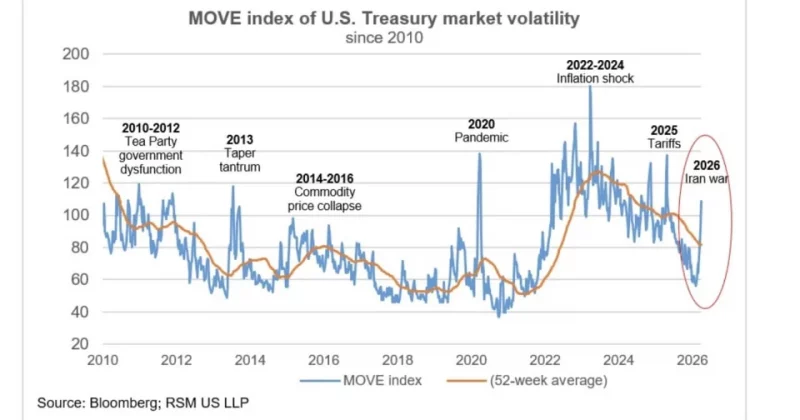
When geopolitical tensions spike, investors usually do two things: buy dollars and buy Treasuries. This time, they only did one.
Goldman Sachs research highlights an unusual divergence in March 2026: the US dollar index climbed more than 2% as the US-Iran conflict escalated, but Treasuries didn’t get the typical flight-to-safety bid. Instead, foreign official institutions, including those from China and Japan, were actively selling US government bonds.
The energy shock rewriting the playbook
The US-Iran conflict escalated sharply in early March 2026, with disruptions in the Strait of Hormuz creating what Goldman Sachs described as the largest energy supply shock on record. The Strait of Hormuz handles roughly a fifth of global oil consumption on any given day.
Oil prices surged, and with them came a wave of inflation anxiety that changed the calculus for bond investors. Rising Treasury yields during this period weren’t a reflection of economic optimism. They were a reflection of fear that inflation, not recession, was the dominant risk.