May 28 : The U.S. dollar was slightly higher on Thursday, after touching its strongest level since early April, as doubts grew over prospects of a deal to reopen the Strait of Hormuz and focus shifted to possible U.S. interest rate hikes.Iran's Revolutionary Guard targeted a U.S. airbase on Thursday, hours after U.S. President Donald Trump rejected a report he was close to a compromise deal with Tehran. The dollar surged in March after Iran's effective closure of the Strait of Hormuz sent oil prices higher, hitting importers such as Japan and the euro zone and boosting safe-haven demand for the greenback. It fell after Trump announced a two-week ceasefire on April 7, before recovering in May as doubts over a lasting deal grew.
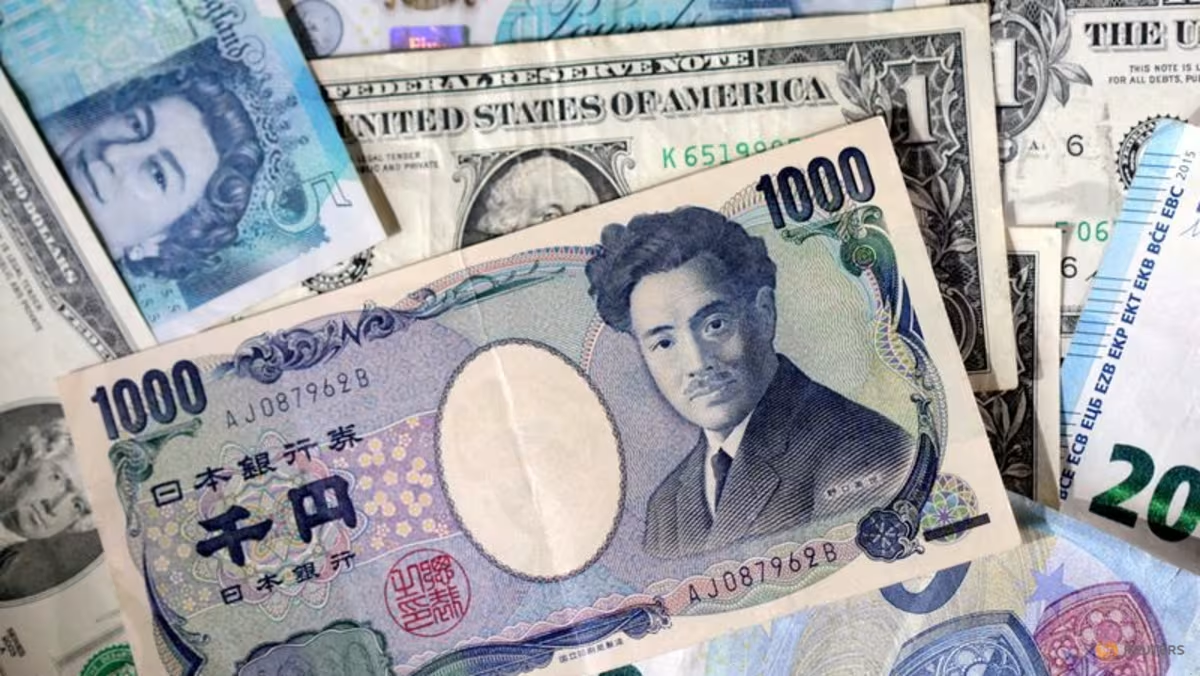
Investors are also assessing the Federal Reserve's interest rate outlook ahead of economic data later in the session."Given that statements from FOMC members have become increasingly hawkish in recent days and weeks, which is certainly one of the key reasons for the shift in market expectations towards interest rate hikes, it will be decisive whether the figures support these expectations," Commerzbank rate strategist Michael Pfister said.Governor Christopher Waller said last Friday the Fed should axe the "easing bias" from its policy statement and effectively open the door to a possible rate hike. ING analysts recently said the hawkish Fed narrative is likely to dominate in the coming weeks, warning the euro may struggle to hold above the $1.1650–$1.1660 range.The single currency was down 0.11 per cent at $1.1613.Markets will now turn to the Fed's preferred inflation gauge, the core PCE deflator, due later in the day."It's worth reiterating how the dollar now enjoys stronger macro support than it did in early May, when markets latched onto an overly optimistic de-escalation narrative," said ING forex strategist Francesco Pesole, citing recent hot U.S. inflation data.Oil prices rose more than 2 per cent on Thursday after dropping over 5 per cent the previous day, as Iran's Revolutionary Guards said they targeted a U.S. airbase in response to a U.S. attack in the port city of Bandar Abbas. The dollar index, a gauge of its value relative to a basket of major foreign currencies, was up 0.11 per cent at 99.33, after touching 99.546 in Asian trade, its highest since April 7.YEN STEADY, INTERVENTION IN FOCUSAnalysts said a sharp rebound in the yen from current weak levels is unlikely, with a June Bank of Japan rate hike largely priced in. The threat of official intervention could limit losses past 160 per dollar.Markets are pricing a roughly 70 per cent chance of a quarter-point rate rise at the BOJ's June 15–16 meeting, LSEG data showed. The dollar was little changed against the yen at 159.48.U.S. data will remain key, as a more hawkish Fed could limit any pullback in dollar-yen, with short-term U.S.-Japan yield spreads still the main driver.The risk-sensitive Australian dollar fell 0.3 per cent to $0.7120, a one-week low, while the New Zealand dollar dipped 0.4 per cent to $0.5876 after rising 1.11 per cent in the previous session. The kiwi dollar was the top-performing G10 currency on Wednesday after the Reserve Bank of New Zealand signalled the need for earlier and potentially more aggressive rate hikes to counter the global energy shock.