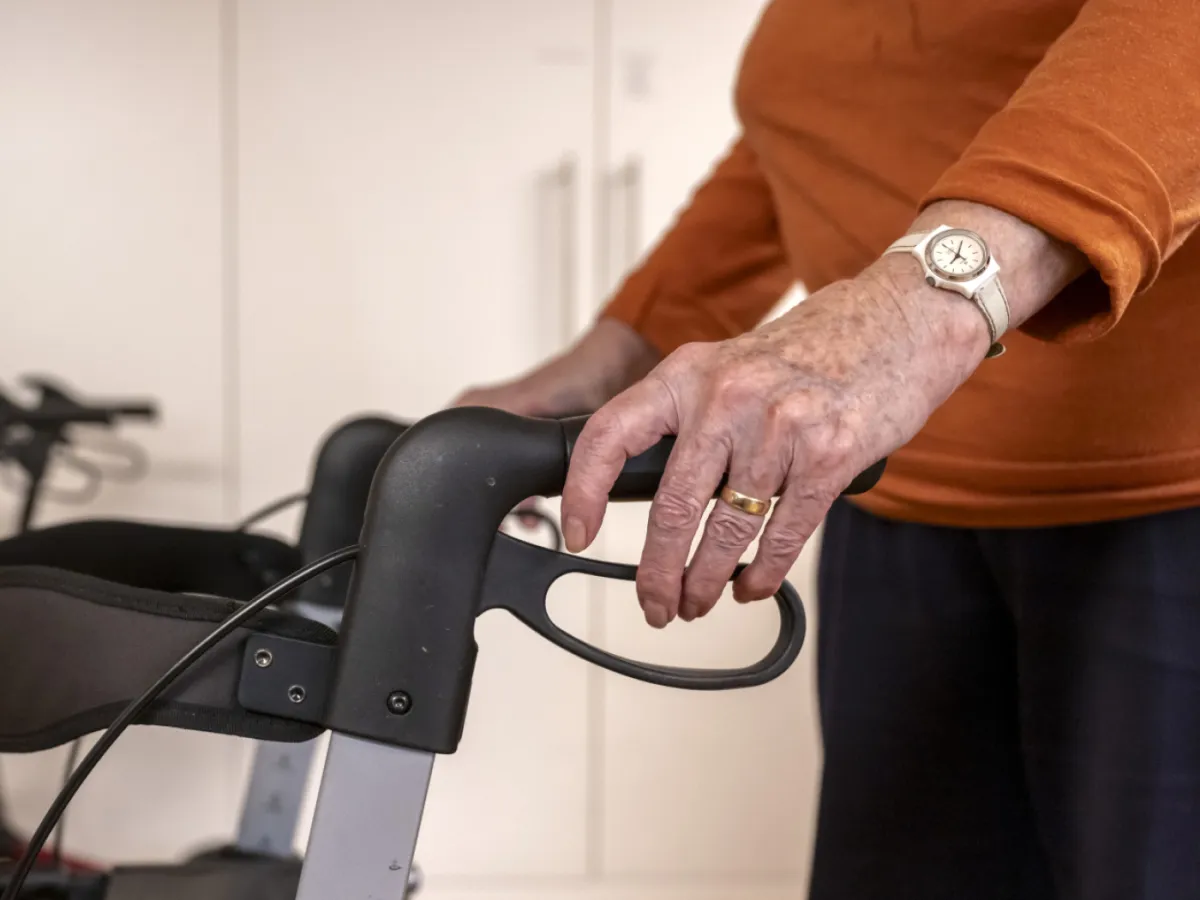
A person’s biological age can be measured with a new type of ‘clock’ that is based on gene activity.Credit: Eduardo Parra/Europa Press via GettyA powerful molecular clock calibrated using data on gene activity from thousands of individuals can predicts biological ageing in rodents, monkeys and humans — and time to death in people.1.The clock, described today in Nature, is based on an analysis of gene activity in more than 25 tissues across four species: mice, rats, the monkeys called crab-eating macaques (Macaca fascucularis) and humans. Although it is not ready for medical applications, the clock could eventually be a boon to biologists keen to learn which drugs or lifestyle changes might mitigate ageing’s myriad effects on the body.“Even if you want to do an experiment in mice, to test the lifespan of mice takes a very long time,” says João Pedro de Magalhães, a biologist at the University of Birmingham, UK, who studies the genetics of ageing and was not involved in the study. “If you had something that would give you a quicker indication of whether your treatment is going to work or not, that would be very advantageous.”Tick-tockAge is typically measured by the steady passage of years, but the ticking of the clock in a person’s cells can stutter, stall and restart depending on the individual’s health and environment. In recent years, researchers have developed a variety of molecular clocks that assess biological ageing — the body’s decline with time. These clocks are based on different measures: the composition of metabolites or proteins found in the blood, brain scans or the presence of chemical groups on DNA (methylation) that can affect gene activity. This last type, called an epigenetic clock, is generally the most accurate and widely used.Sleep linked to slower ageing: huge study pinpoints the right amountBut epigenetic clocks are difficult to interpret, says Magalhães, because little is known about the biological changes that lead to changes in methylation. “We know it correlates with chronological age; we know it correlates with mortality,” Magalhães says. “But we don’t quite understand what is being measured by the clock.”To develop a more revealing clock, Vadim Gladyshev, a researcher who studies ageing at Harvard Medical School in Boston, Massachusetts, and his colleagues decided to look at gene activity, rather than at chemical marks on DNA. Genes that become either more or less active as individuals age could provide information about biological pathways and processes that might have a role in ageing.So Gladyshev and his colleagues developed new clocks based on the activity of genes in 11,000 individuals, and incorporated data from rodents treated with dozens of genetic, dietary, and pharmacological interventions, some of which are known to affect ageing and lifespan.Shared patternsThe team found that many signatures of ageing were shared, both across different tissues within a species, and across species. “We share very fundamental, conserved ageing-related changes,” says study co-author Alexander Tyshkovskiy, a computational biologist at Brigham and Women’s Hospital, also in Boston. In humans, the clocks also predicted time of death from any cause among participants in a large heart-health study.
Gene clock predicts time to death in humans – and assesses ‘biological’ age
Cellular-ageing clocks based on gene activity could be more sensitive than previous measures.
512 words~2 min read