Imagine a train sitting at a station. Passengers have boarded, conductors have checked tickets, and everything appears ready to go. But if the engineer's watch has stopped working, the train never departs. The doors stay open, the whistle never blows, and the journey never begins.
A similar problem can occur inside living cells. If the timing system that controls development fails, an organism may never progress through the stages needed to reach adulthood.
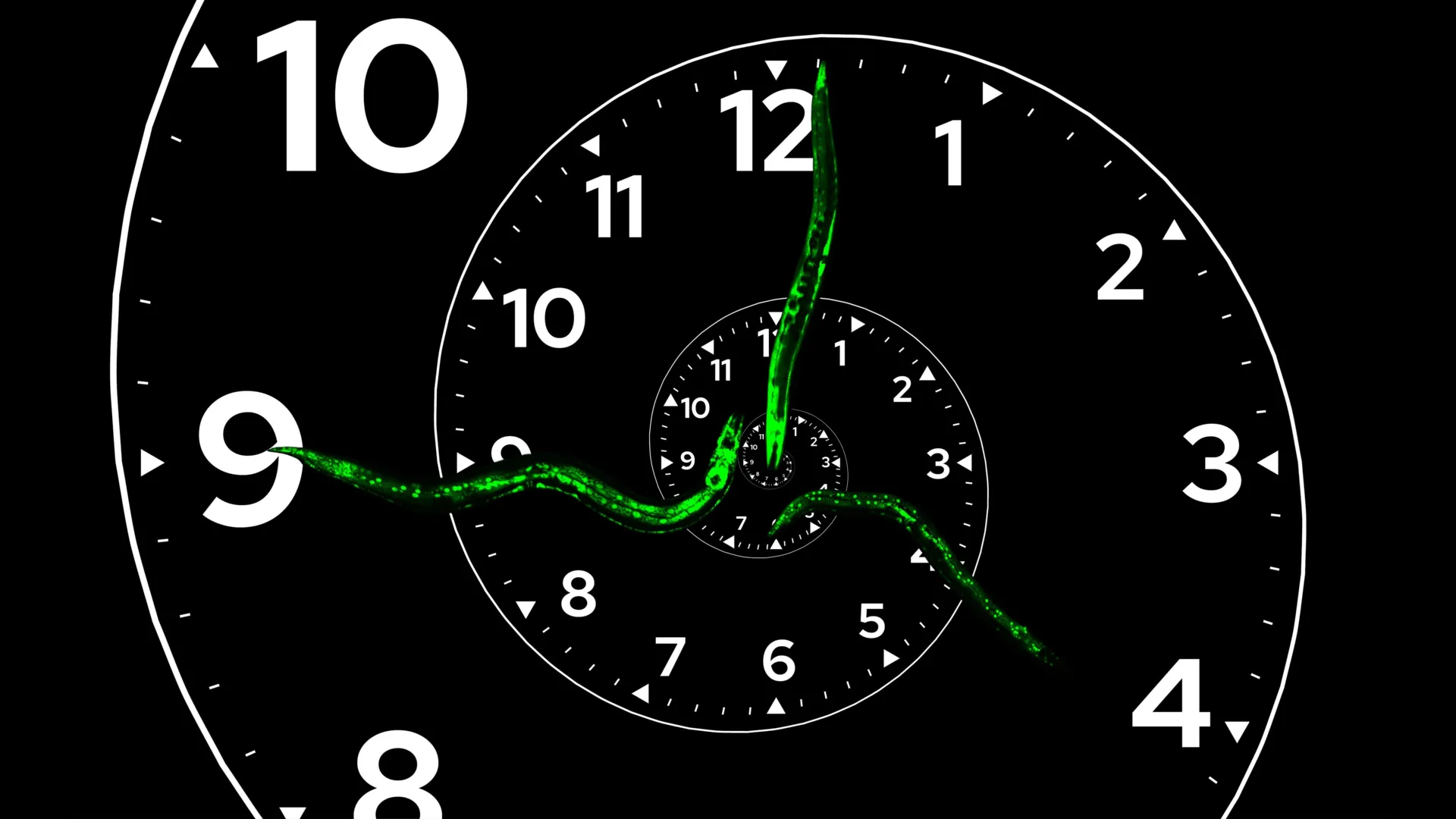
Researchers at Cold Spring Harbor Laboratory (CSHL) have now identified what appears to be a master developmental clock in the tiny worm C. elegans. The discovery reveals how cells keep growth and development on schedule by coordinating a series of carefully timed bursts of gene activity.
Scientists Identify a Master Developmental Clock
Several years ago, CSHL Professor Christopher Hammell and his colleagues discovered that development in C. elegans is driven by pulses of gene expression. These bursts of genetic activity occur in sequence and help guide the organism through each stage of growth.