June 5th, 2026
If one can develop a single aging clock that works in much the same way in both mice and humans, could it be used to determine which of the interventions to treat aging that have been tested in mice are more likely to work well in humans? It is clearly the case that most of the established approaches to slowing the progression of aging, largely derived from manipulation of stress response mechanisms that clean up damage and improve cell function, produce much larger increases in life span in short-lived species than in long-lived species. How will that difference manifest in an aging clock designed to work similarly in both short-lived and long-lived mammals? That is an interesting question, still awaiting an answer.
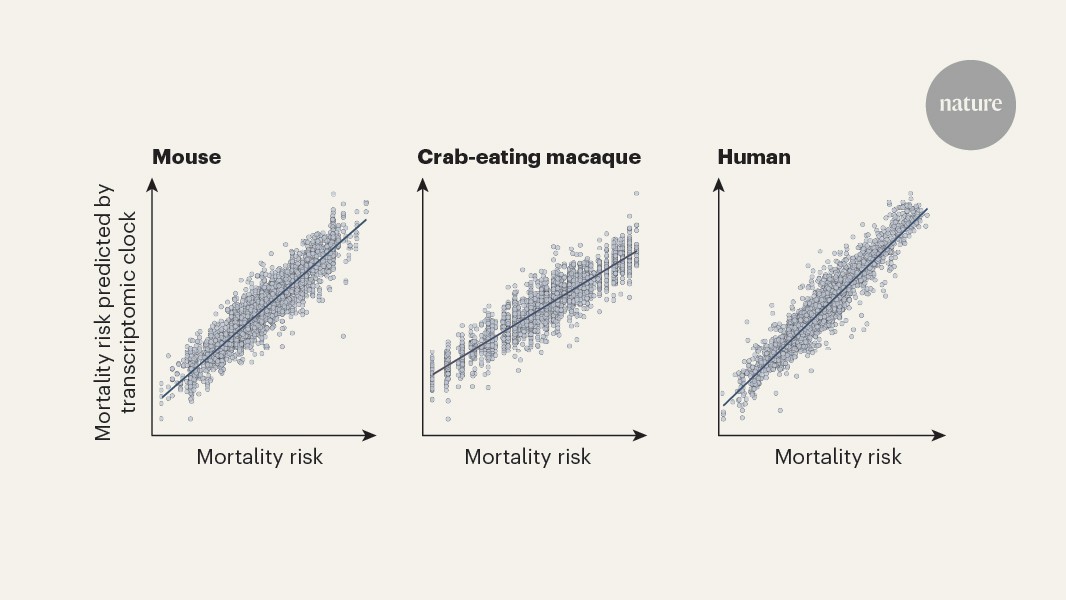
Ageing and interventions modulate health and mortality, yet the underlying molecular mechanisms of this modulation remain unclear. Here we integrate more than 11,000 transcriptomes from more than 25 tissues across 4 mammals (mouse, rat, macaque, and human) to develop accurate, interpretable rodent and multi-species biomarkers of chronological age and expected mortality, predicting lifespan-modulating interventions, time to death, chronic diseases, and rejuvenation. Ageing-related changes were conserved across species and cell types, revealing universal transcriptomic signatures of mammalian ageing and mortality, including CDKN1A and LGALS3, whose protein levels were also associated with mortality and multimorbidity in UK Biobank.