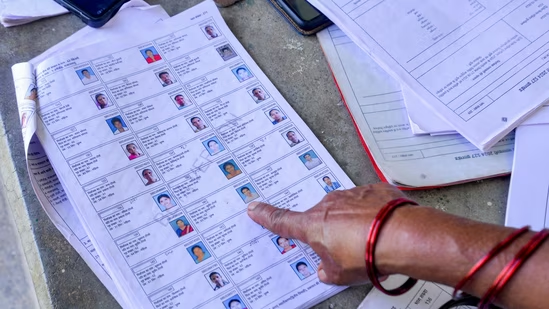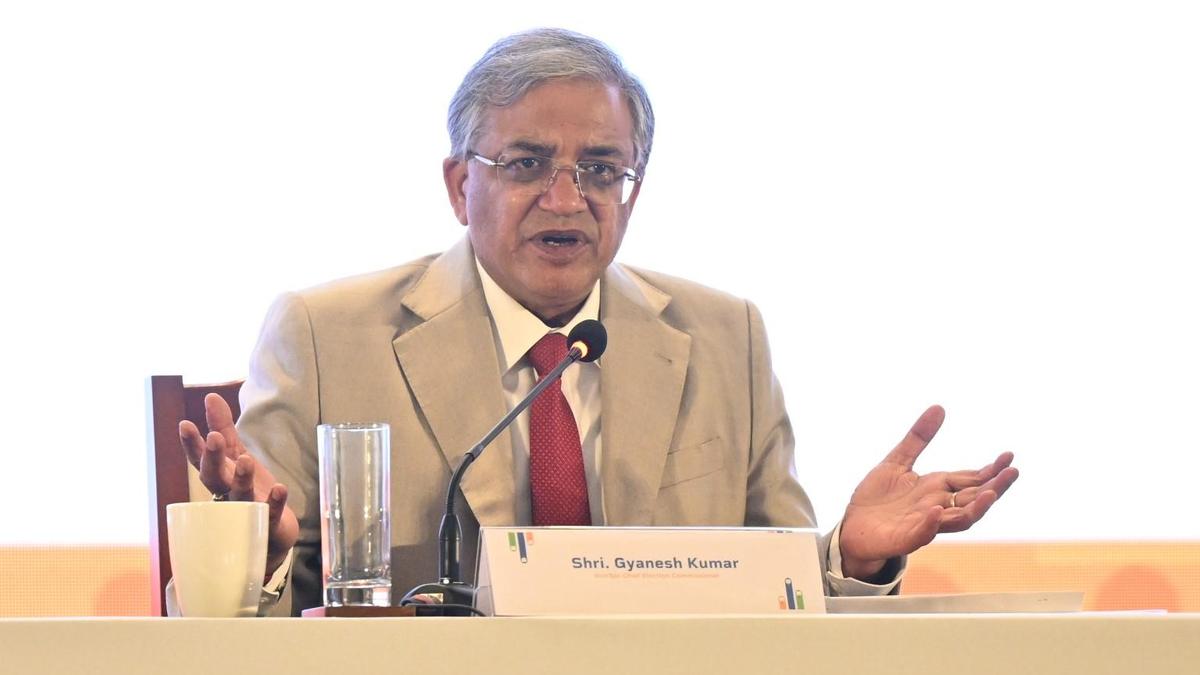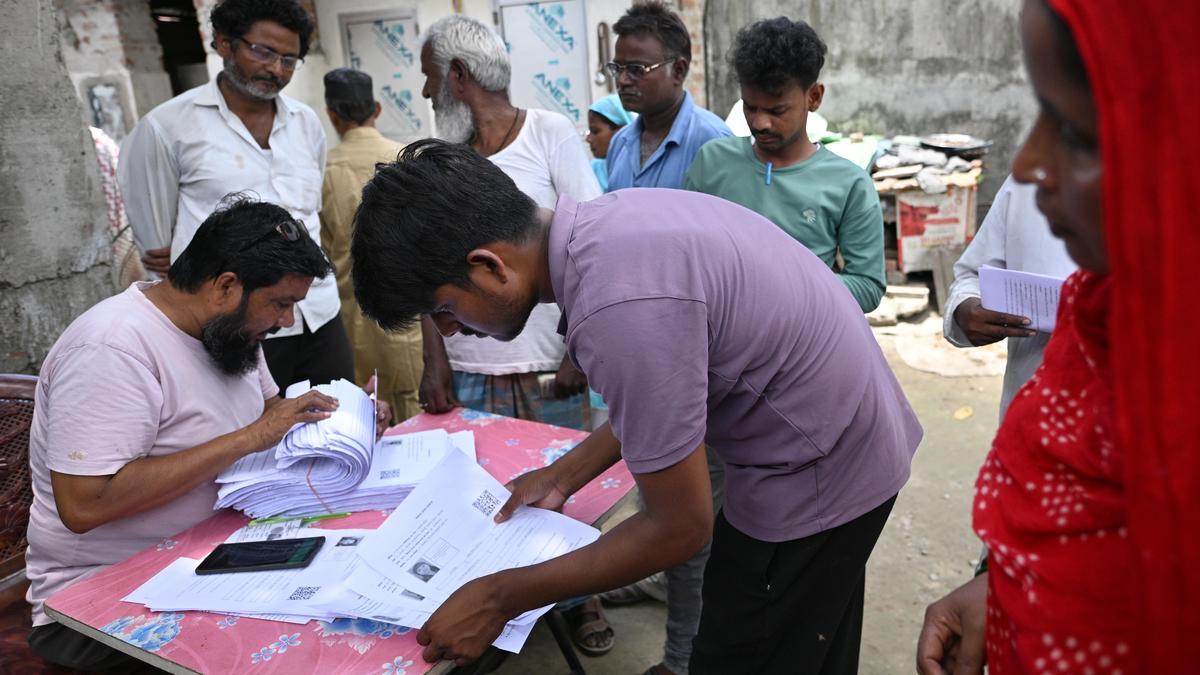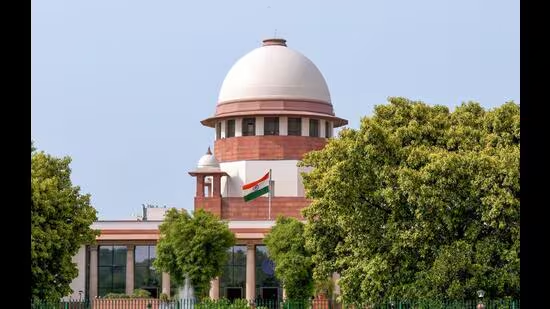
The Supreme Court on Wednesday upheld the validity of the special intensive revision (SIR) conducted by the Election Commission of India (ECI), ruling that the exercise furthered the constitutional imperative of free and fair elections and that the measures adopted by the poll panel were legitimate, proportionate, and accompanied by adequate procedural safeguards.The court said that the ECI was empowered to undertake such a special exercise. (ANI)A bench comprising Chief Justice of India (CJI) Surya Kant and Justice Joymalya Bagchi held that the SIR undertaken under Article 324 of the Constitution and Section 21(3) of the Representation of the People Act, 1950, was neither contrary to the statutory framework governing electoral rolls nor an impermissible assumption of citizenship adjudication powers by the ECI.Reading out the operative portion of the judgment, CJI Kant said that the SIR was initiated because “substantial changes in the electoral rolls had occurred on account of demographic variations, urbanisation and large-scale migration” and was aimed at safeguarding “the integrity of the electoral process and ensure free and fair elections”.The court said that the ECI was empowered to undertake such a special exercise and that the revision “breathes life into the constitutional mandate under Article 324 within the precise statutory contours provided by Section 21(3)”.“We are equally satisfied that the object sought to be achieved by the SIR bears a direct nexus to the constitutional goal of free and fair elections,” held the bench, adding that free and fair elections “fundamentally depend upon the integrity, accuracy and credibility of the electoral rolls”.Rejecting the principal challenge mounted by the petitioners, the court held that the SIR exercise did not supplant the existing statutory framework under the Representation of the People Act and the Registration of Electors Rules, 1960. “The impugned SIR does not supplant the Representation of the People Act and the Rules… Therefore, it cannot be said that the Commission has acted in excess of its statutory powers,” the bench noted.The court ruled that the exercise satisfied the constitutional doctrine of proportionality and that the safeguards introduced during implementation ensured fairness in action. “A process that may initially appear exclusionary can, through appropriate safeguards, be rendered constitutionally compliant in execution,” it said.The bench held that the measures adopted by the commission bore a “reasonable nexus” to the objectives sought to be achieved and were “not manifestly excessive”.The ruling came on a batch of petitions led by Association for Democratic Reforms (ADR) and People’s Union for Civil Liberties (PUCL), along with pleas filed by opposition leaders Manoj Kumar Jha, KC Venugopal, Mahua Moitra and political activist Yogendra Yadav, challenging the legality and operational framework of the SIR exercise initiated in Bihar and subsequently extended to several states and Union territories, including West Bengal.The petitioners argued that the timing and scale of the exercise, undertaken ahead of assembly elections in multiple states, resulted in large-scale disenfranchisement and effectively converted the ECI into a citizenship verification authority without statutory backing.They also contended that the SIR process reversed the settled presumption recognised in Lal Babu Hussein v Electoral Registration Officer that a person whose name already exists on the electoral roll is presumed to be an Indian citizen unless proven otherwise by the state.Rejecting this argument, the court held that the presumption in favour of existing voters was rebuttable and did not create a blanket bar against verification. “Calling upon electors to furnish supporting material in the course of such an exercise does not amount to negation of the presumption,” the bench said.The court clarified that while the ECI could examine citizenship questions for electoral purposes, such scrutiny did not amount to a final determination of citizenship under the Citizenship Act.“The Commission is empowered… to undertake a meaningful inquiry into citizenship for the limited purpose of satisfying itself as to eligibility for inclusion in the electoral rolls. Such an inquiry does not amount to a determination of citizenship in the strict sense,” it said.The court directed that wherever the commission formed the view that a person may not satisfy citizenship requirements, such cases must be referred within four weeks to the competent authority under the Citizenship Act for adjudication.“Any deletion effected on this ground shall therefore remain subject to the outcome of adjudication by the appropriate authority,” the court said.The court directed that persons whose names may have been wrongly deleted on grounds of absence, despite continuing to reside in Bihar, would be entitled to file representations before the election authorities.The judgment assumes major constitutional and political significance because assembly elections in several states, including West Bengal, have been conducted based on revised electoral rolls prepared following the SIR exercise.By the time West Bengal voted in April this year, over 9.1 million names, amounting to around 11.88% of the state’s pre-revision electorate, had been deleted from the rolls pursuant to the exercise, according to data placed before the court during hearings.The SIR process, first initiated in Bihar through a June 24, 2025, notification, required voters not traceable to the 2002 or 2003 electoral rolls to furnish documentary proof linking them to persons present in those legacy rolls. The commission had initially prescribed 11 categories of acceptable documents before the Supreme Court directed the inclusion of Aadhaar during interim proceedings.Senior advocates Kapil Sibal, Abhishek Manu Singhvi, Gopal Sankaranarayanan, and Raju Ramachandran appeared for the petitioners. Senior advocates Rakesh Dwivedi, Maninder Singh, and Dama Seshadri Naidu represented the ECI.
SC validates nationwide SIR, says electoral integrity cannot be compromised
The court said the SIR was neither contrary to the statutory framework governing electoral rolls nor an impermissible assumption of citizenship adjudication powers | India News
896 words~4 min read