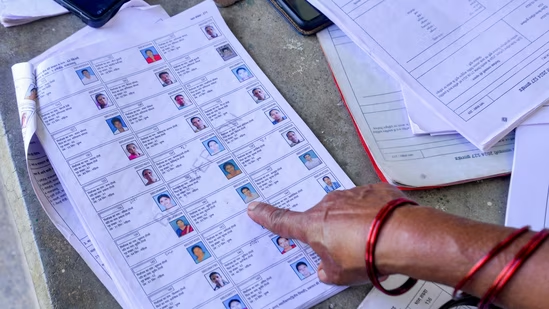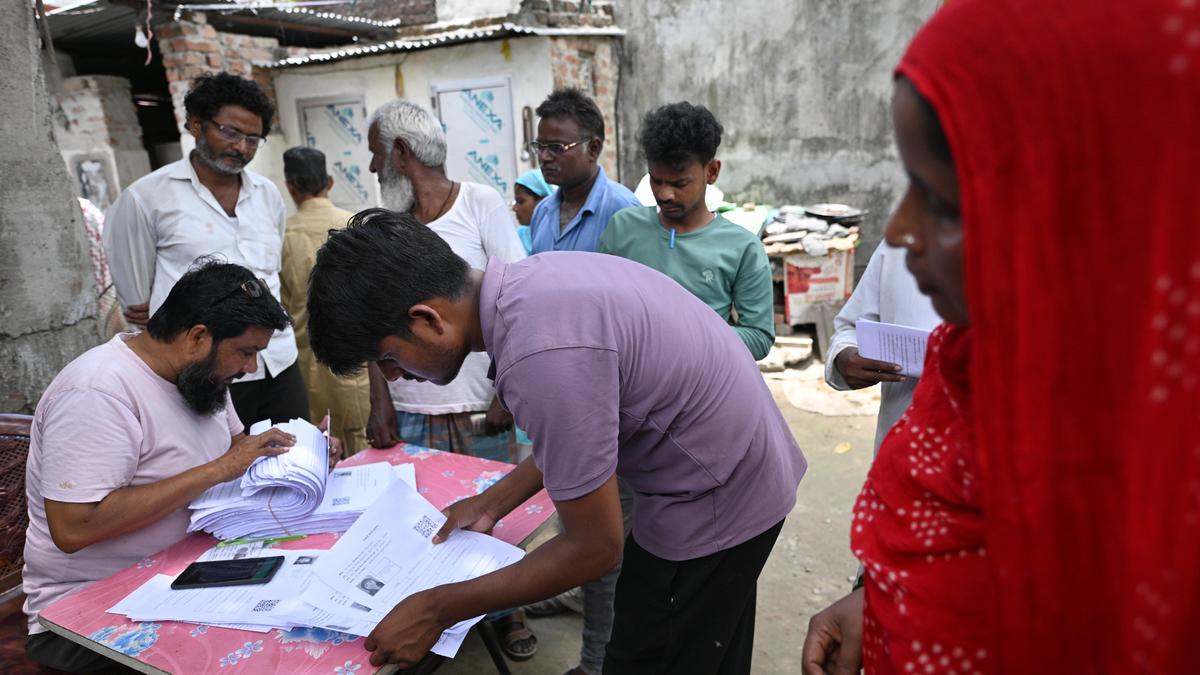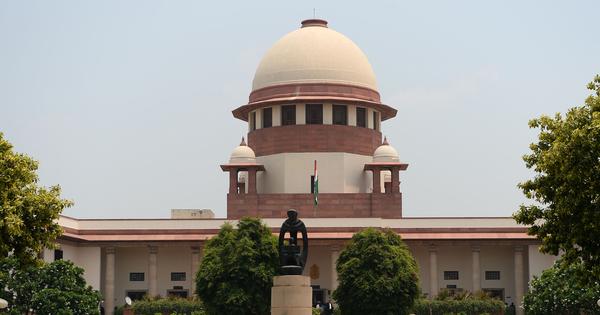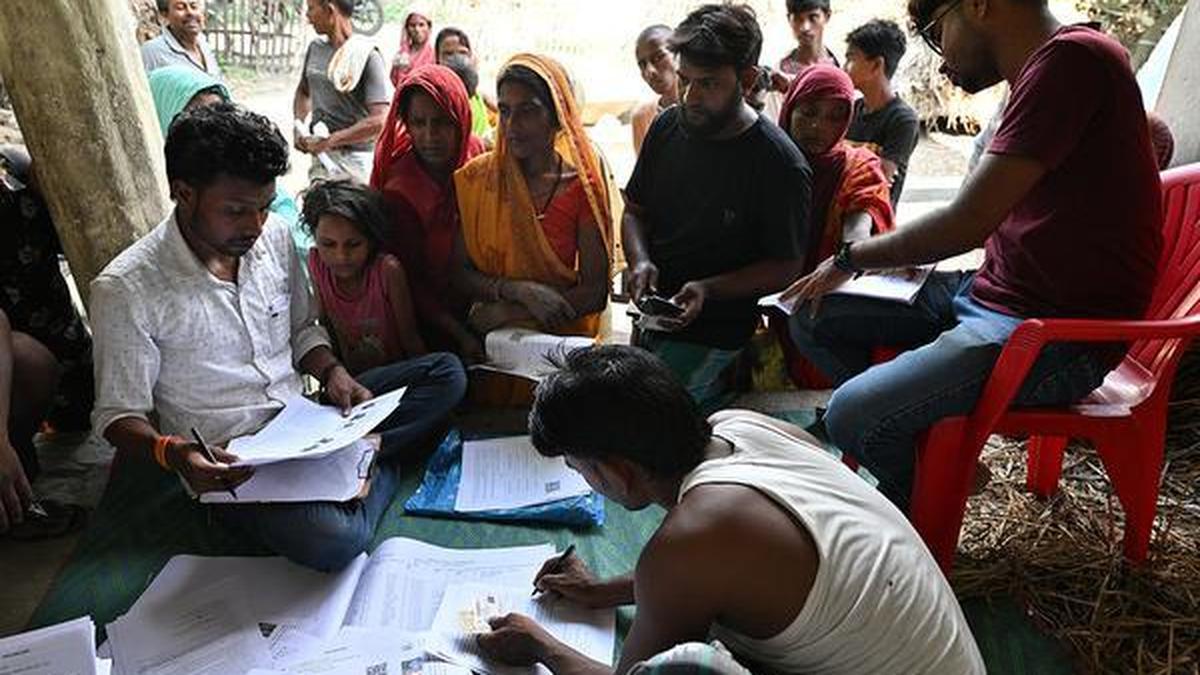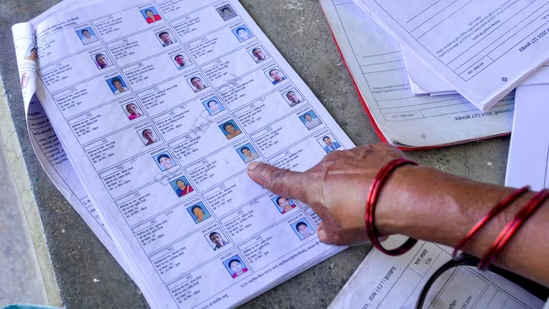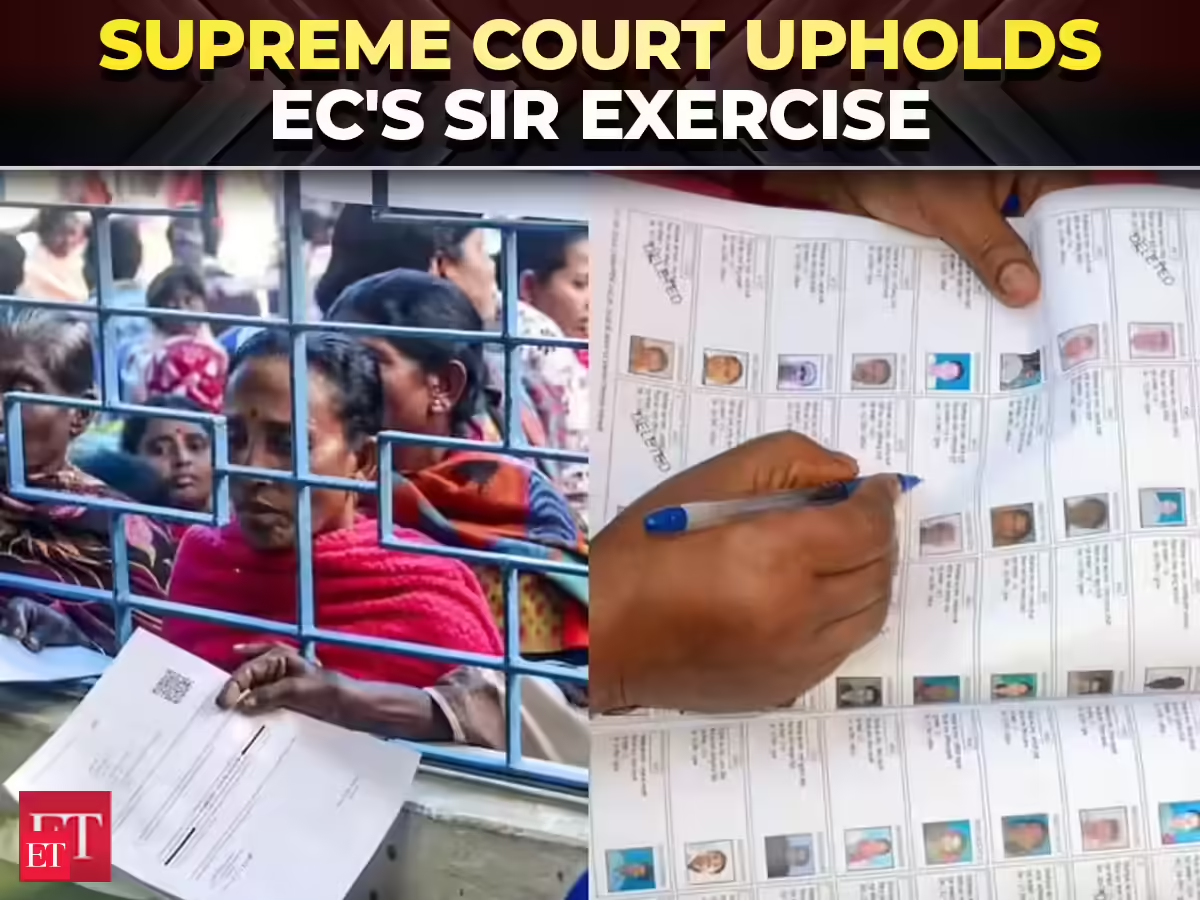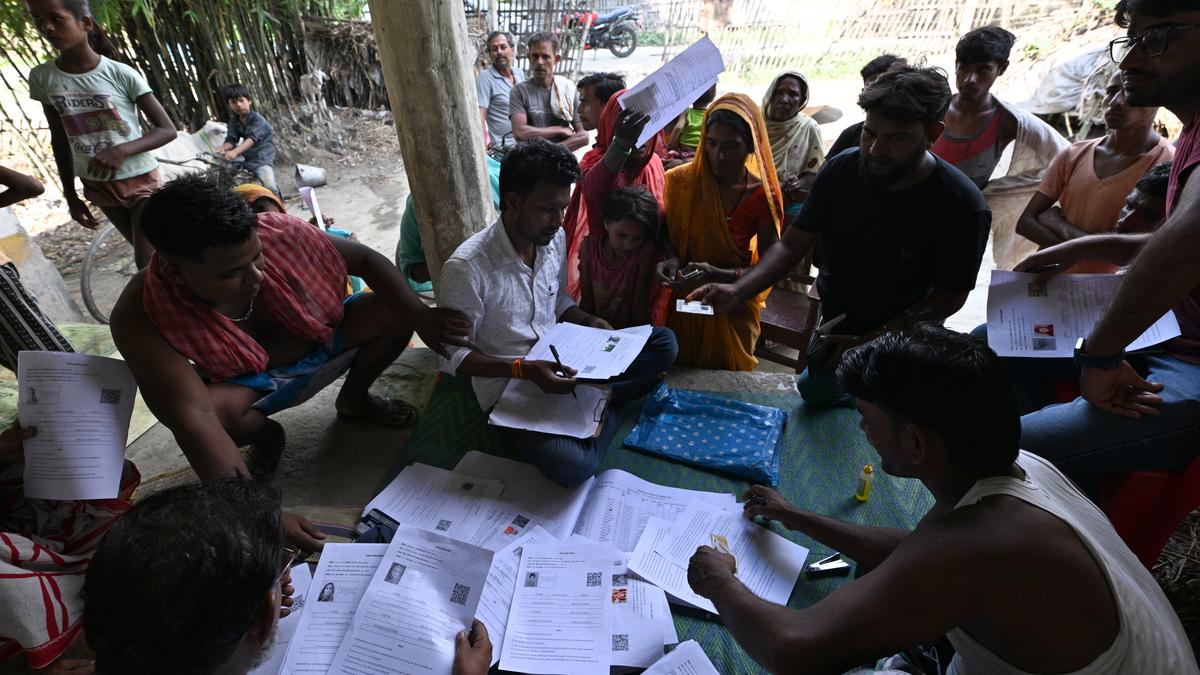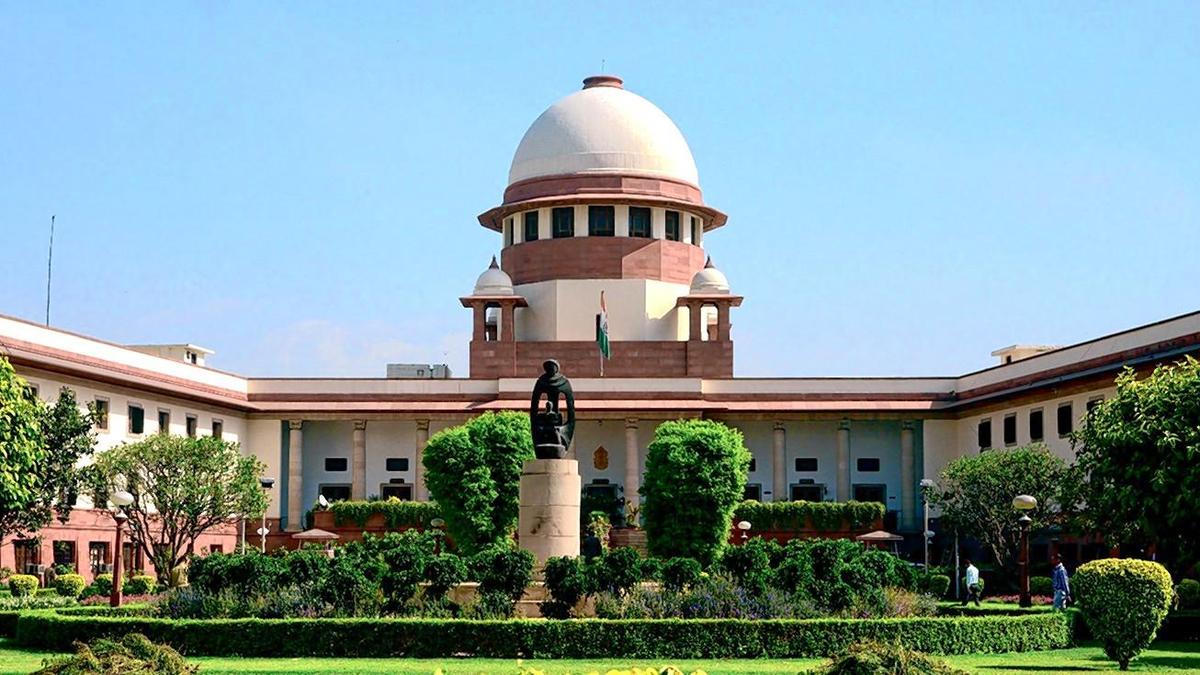
New Delhi: The Supreme Court on Wednesday upheld the documentation framework adopted by the Election Commission for the Special Intensive Revision (SIR) of electoral rolls, saying it was neither arbitrary nor outside the statutory scheme.In a landmark judgment reinforcing the autonomy of the poll panel, a bench comprising Chief Justice of India Surya Kant and Justice Joymalya Bagchi upheld the Commission's authority to conduct the SIR of electoral rolls and said that Aadhaar is not proof of citizenship.Authoring a 124-page verdict, the CJI separately dealt with the validity of the documentation regime prescribed by the Commission as part of the enumeration process.The verdict said the EC was entitled to classify documents on the basis of their evidentiary value in establishing statutory conditions such as residence and eligibility.A central point of the judgment was the validity of the Aadhaar card in the enumeration process.The court provided a clarification on Aadhaar cards and said the law on the 12-digit unique identifier does not treat the card as proof of citizenship or domicile. Therefore, the EC is justified in not treating it as a primary document to establish statutory eligibility for voting, it said."Insofar as the exclusion of Aadhaar is concerned, the justification advanced by the Commission needs to be examined in light of the Aadhaar Act. The statutory framework governing the Aadhaar Card does not treat it as proof of citizenship or domicile."In an exercise where the Commission is required to be satisfied as to eligibility in terms of the statute...," it said.However, the verdict referred to Section 23(4) of the Representation of the People (RP) Act, which allows Aadhaar to be used for the limited purpose of establishing an individual's identity.The verdict reaffirmed its earlier order and directed the EC to treat Aadhaar as an "additional 12th document" for identity verification in Bihar's revised rolls.Dismissing challenges to the EC's documentation standards, the verdict emphasised that preparing electoral rolls is not a "mechanical exercise" but a foundational constitutional duty."At the outset, it must be recognised that the preparation and maintenance of electoral rolls is not a mechanical exercise but a Constitutional function entrusted to the Commission. The obligation to ensure the purity, accuracy and integrity of the electoral roll is both continuing and foundational to the democratic process."This obligation necessarily carries with it the authority to devise appropriate procedures for verification, including the nature and extent of documentation required to establish eligibility," it said.Crucially, the bench added that Aadhaar is not "conclusive proof", and authorities maintain the power to call for further material to verify a voter's genuineness.The bench also supported the Commission's decision to exclude ration cards from the list of prescribed documents for the intensive survey."Similarly, the exclusion of ration cards is supported by the Commission's assessment of their evidentiary reliability. While shaping the contours of a special intensive survey under Section 21(3) of the RP Act, the discretion of the Commission is not wholly circumscribed by Rules 4 to 23 of the 1960 Rules."It is open to the Commission to substitute a document, e.g. Ration Card in Form 6 with other classes of document to suit the purpose and intent of such a special intensive survey. It may not be out of place to note that a Ration Card, unlike a Passport or a Birth Certificate, is certainly not a conclusive proof of citizenship," it said.The verdict said the choice of proposed documents for verification of electoral rolls and their evidentiary standards necessarily falls within the discretionary domain of the Commission which may not be substituted subject to reasonableness.The bench noted that unlike a passport or a birth certificate, a ration card is not "conclusive proof of citizenship" and is often susceptible to misuse.The bench ruled that the EC has the "discretionary domain" to substitute certain documents, like replacing ration cards with more reliable evidence, to suit the rigours of an intensive verification exercise.Concluding that the EC's documentation framework is neither arbitrary nor violative of the law, the bench held that the classification of documents is based on "intelligible criteria" with a direct link to ensuring a "leak-proof" electoral roll."Accordingly, we hold that the documentation regime prescribed by the Commission represents a considered exercise of its administrative discretion in furtherance of its Constitutional mandate. The classification of documents, including the exclusion of certain categories, is based on intelligible criteria having a direct nexus with the objective of ensuring the integrity of the electoral roll."We are, therefore, unable to hold that the impugned documentation framework is arbitrary or violative of the statutory scheme," it held.
Aadhaar is not proof of citizenship, says Supreme Court; upholds EC's documentation regime for SIR
In a landmark judgment reinforcing the autonomy of the poll panel, a bench comprising Chief Justice of India Surya Kant and Justice Joymalya Bagchi upheld the Commission's authority to conduct the SIR of electoral rolls and said that Aadhaar is not proof of citizenship.
755 words~3 min read