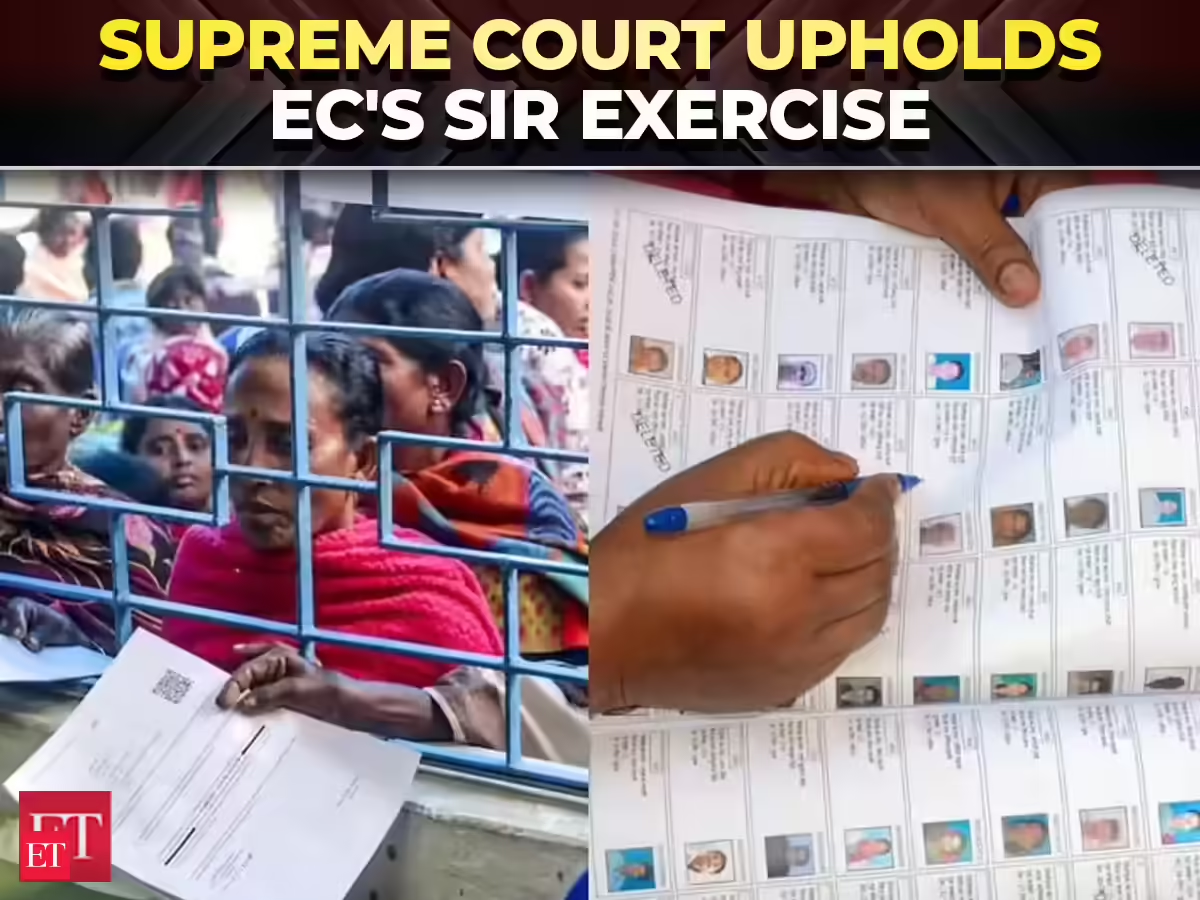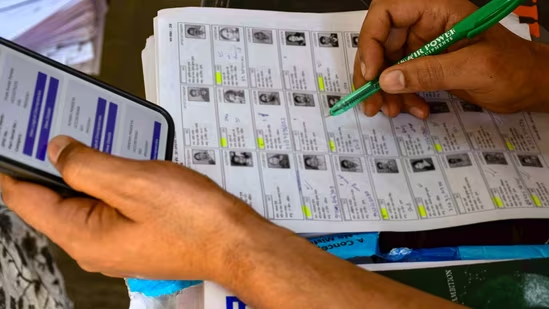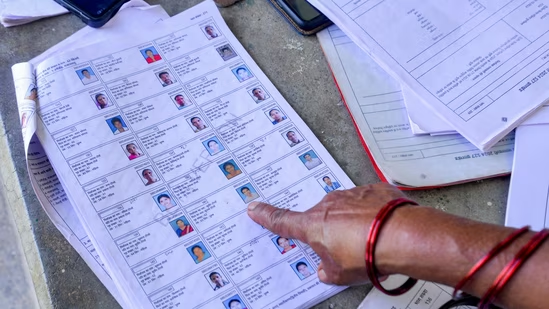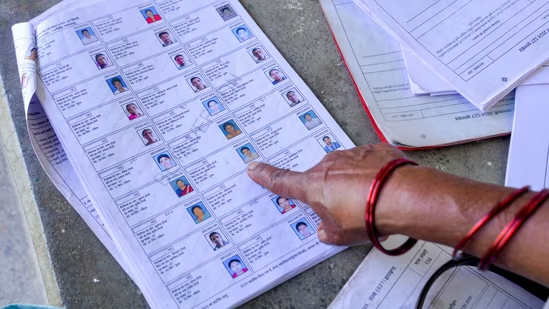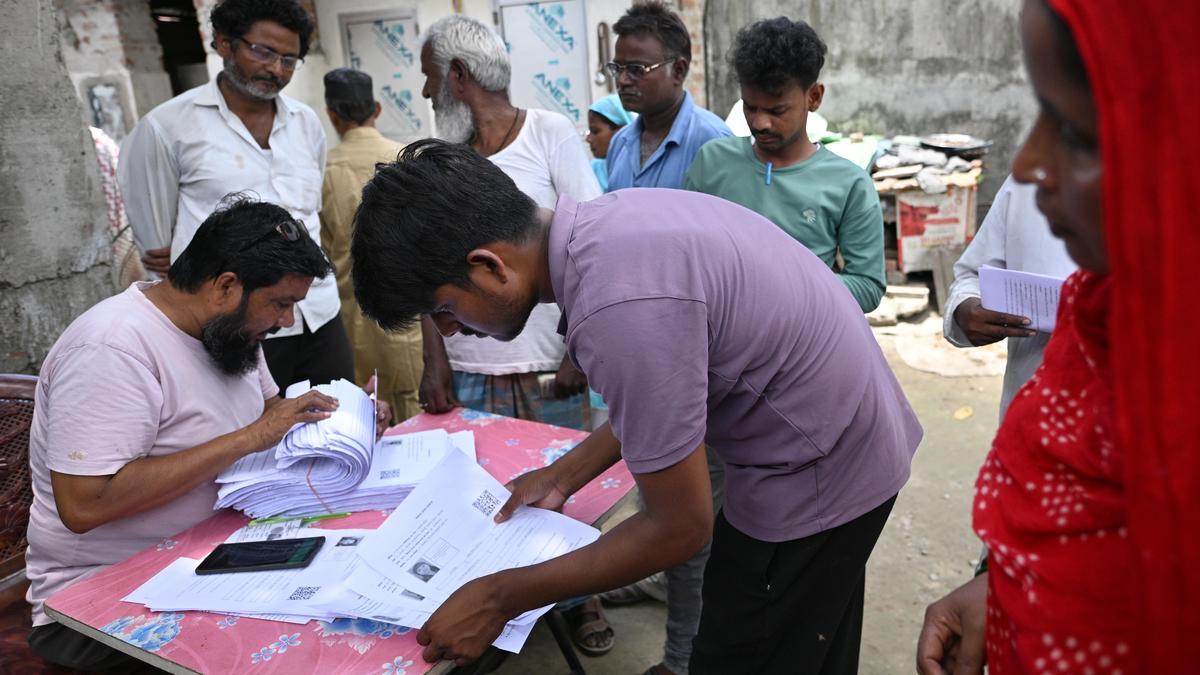
The EC stated that it is constitutionally obligated to ensure that only citizens are enrolled in the electoral rolls
| Photo Credit: SHASHI SHEKHAR KASHYAP
The story so far:The Supreme Court recently upheld the powers of the Election Commission (EC) to conduct special intensive revision (SIR) of the electoral rolls in Bihar. It also upheld the procedure followed by the EC.What was SIR?Article 324 of the Constitution provides that the superintendence, direction and control of the preparation of electoral rolls for the conduct of elections shall vest with the EC. Section 21 of the Representation of the People Act, 1950 (RP Act), deals with the preparation and revision of electoral rolls. It authorises the EC to carry out a special revision of the electoral roll, for any constituency at any time, for reasons to be recorded.In its June 2025 order to carry out the SIR of Bihar electoral rolls, the EC noted that there had been large-scale additions and deletions to the electoral rolls over the last 20 years due to rapid urbanisation and migration. This has increased the possibility of duplicate entries in the electoral roll. The EC stated that it is also constitutionally obligated to ensure that only citizens are enrolled in the electoral rolls. Accordingly, the EC decided to undertake an SIR exercise for the entire country, starting with Bihar.What issues were raised?The Association for Democratic Reforms and various other petitioners had challenged the SIR exercise in the Supreme Court. The key issues for consideration in these petitions are summarised below.First, whether the EC is empowered to carry out the SIR exercise. Section 21(3) of the RP Act authorises the EC to carry out a special revision of the electoral roll for ‘any’ constituency or part of a constituency in such manner as it may think fit. The petitioners argued that this provision is for special revision of only a particular constituency and not for a State as a whole, as envisaged in the SIR process.Second, if the SIR is founded on a legitimate purpose, whether the measures adopted by the EC are proportionate to the object being sought to be achieved. Third, whether the procedure is violative of provisions of the RP Act and Registration of Electors Rules, 1960 (RER). The petitioners argued that enrolment in the electoral roll carries a presumption of citizenship and eligibility. Rule 21A of the RER mandates that no name already entered in the electoral roll can be deleted without prior notice to the elector concerned and an opportunity of hearing. The petitioners argued that requiring all electors to fill out the enumeration forms again and deleting the names of those who fail to submit them violates these provisions. Fourth, whether the EC is empowered to scrutinise the citizenship status of persons seeking inclusion or continuation in the electoral roll.What did the court rule?The court, after hearing the petitioners and EC, upheld the SIR exercise and procedure followed. The conclusion of the court for the four main issues raised can be summarised as follows. First, the interpretation of the word ‘any’ in Section 21(3) of the RP Act as ‘only’ for a particular constituency would be narrow and restrictive. The EC is well within its constitutional mandate to carry out SIR for ‘many’ or ‘all’ constituencies in a State. It is an exercise traceable to Section 21(3) read with Article 324 of the Constitution to fulfil the constitutional requirement of free and fair elections.Second, the SIR exercise satisfies the proportionality requirement. The measures adopted bear a rational nexus to the objective sought to be achieved, are not manifestly excessive, and are accompanied by sufficient procedural safeguards to prevent arbitrary exclusion.Third, while inclusion in the electoral roll gives rise to a presumption of validity, it does not impose a blanket prohibition on the powers of the EC to undertake an SIR. The safeguards of notice and hearing under RER are preserved in substance, and the process adopted by the EC is within the statutory requirements. The documentation prescribed by the EC, to which the Aadhaar card was subsequently added as per the court’s direction, is based on intelligible criteria having a direct nexus with the objective of ensuring the integrity of the electoral roll.Fourth, the EC is empowered, in the exercise of its constitutional mandate, to undertake a limited enquiry into citizenship for eligibility for inclusion in the electoral roll. It does not amount to a determination of citizenship in the strict sense and is confined to electoral consequences alone.Any deletion of names on account of the opinion of the EC that they are not citizens should be referred by the commission to the competent authority under the Citizenship Act, 1955, for adjudication of their citizenship. If the authority holds that such deleted individuals are citizens, they shall be included in the electoral roll.(Rangarajan R is a former IAS officer and author of ‘Courseware on Polity Simplified’. He currently trains civil-service aspirants at ‘Officers IAS Academy’. Views expressed are personal.) Published - May 29, 2026 08:30 am IST