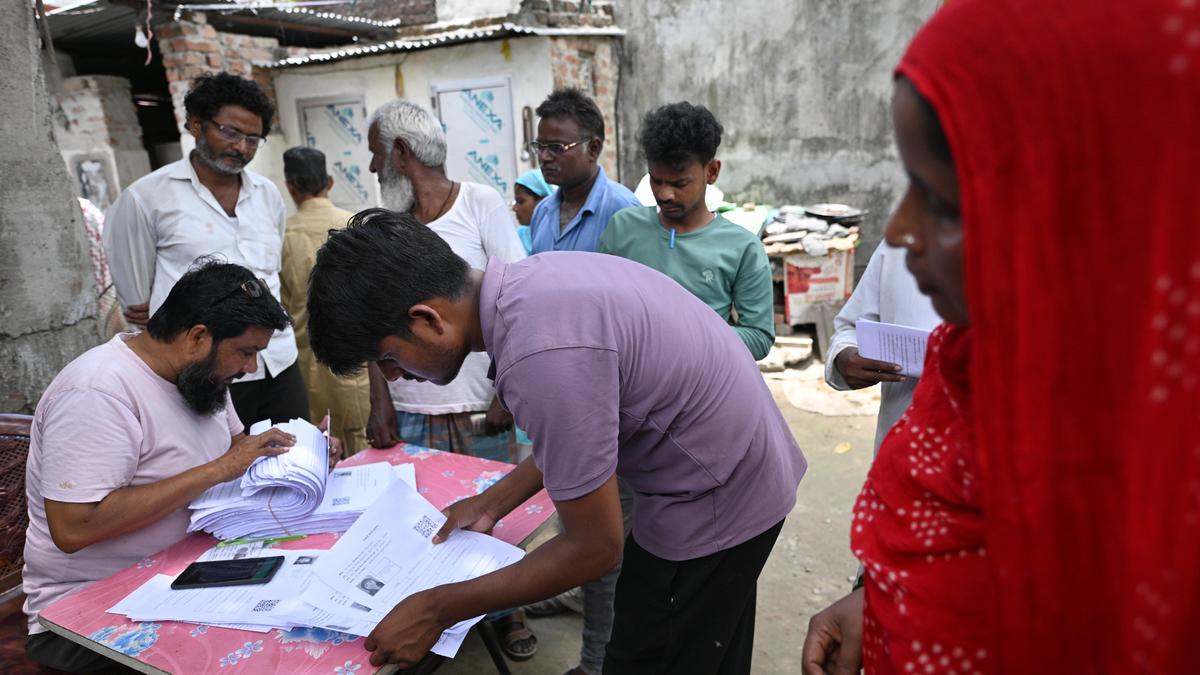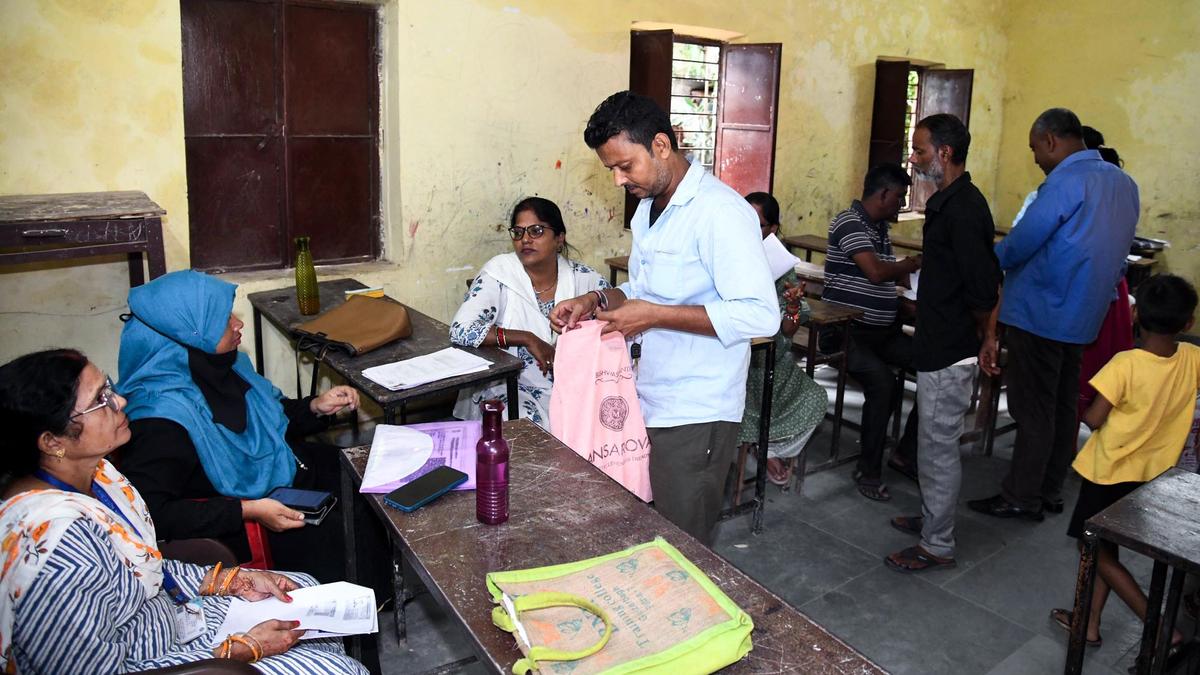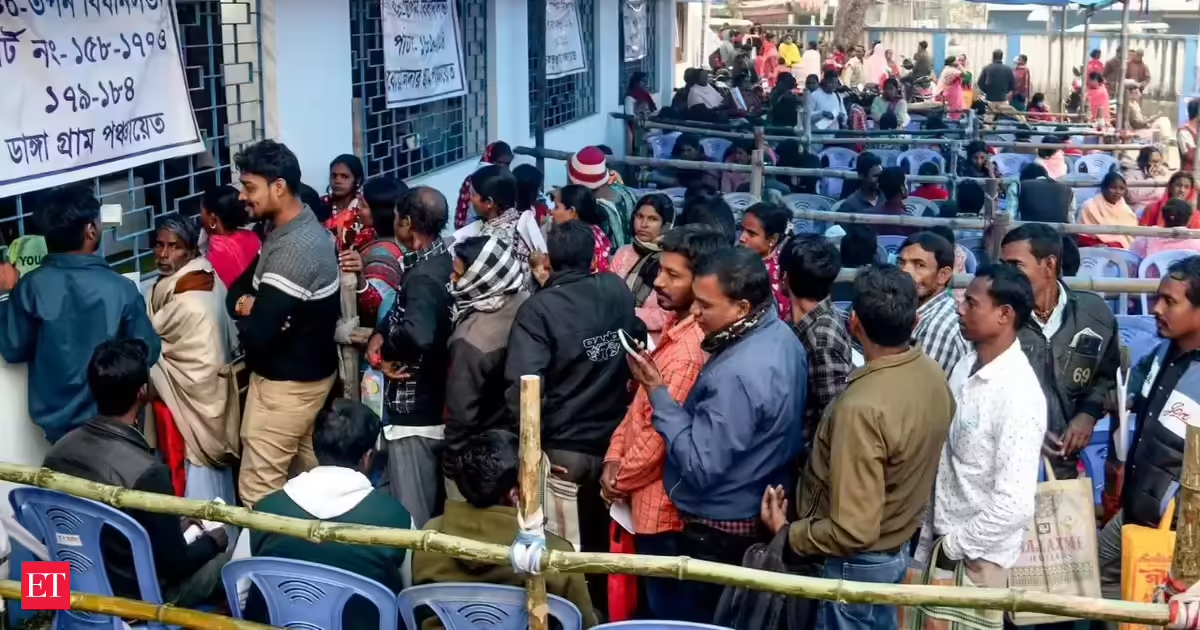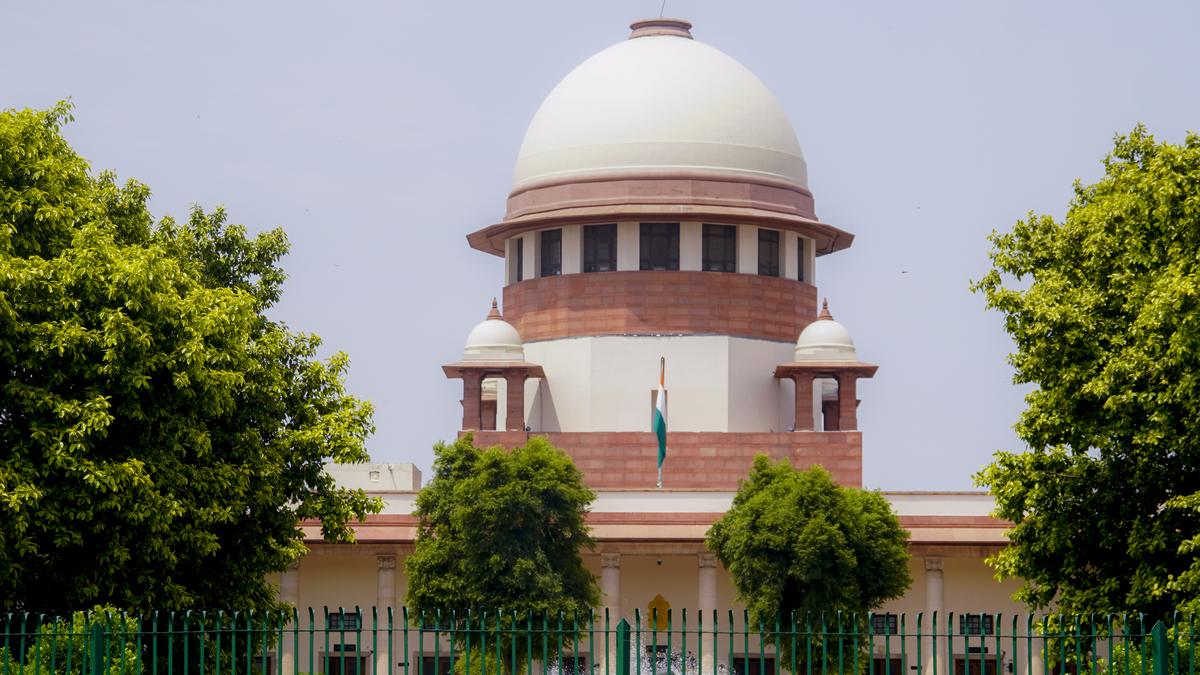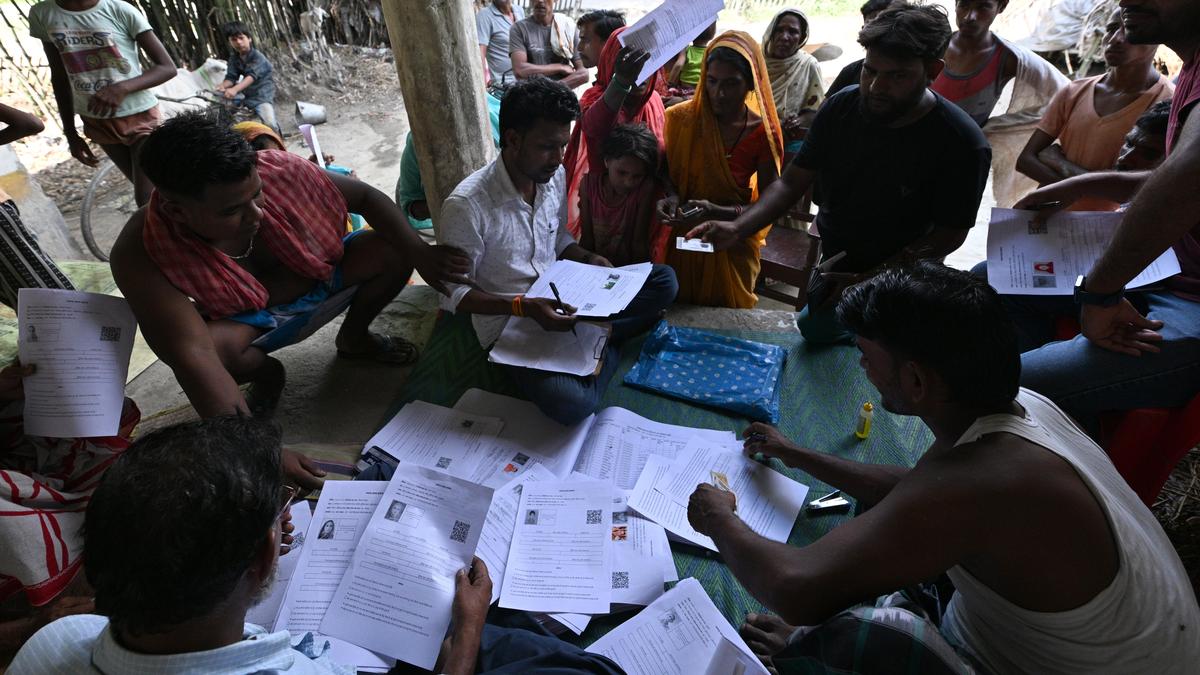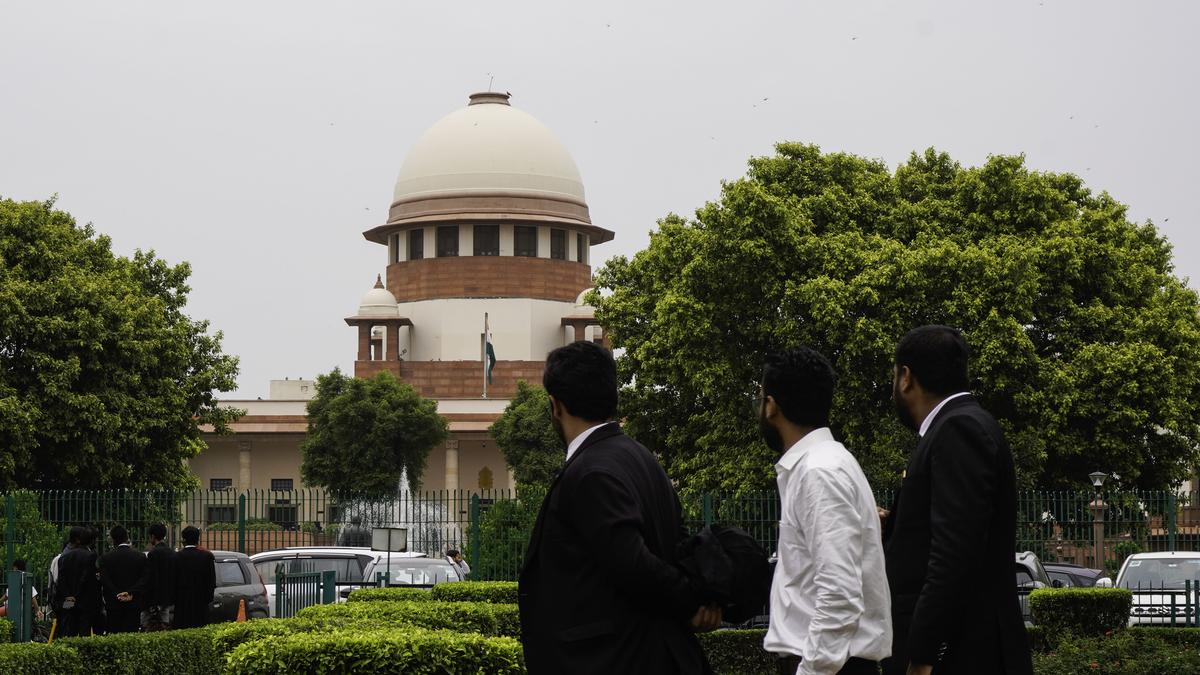
The Special Intensive Revision (SIR) of Bihar’s electoral rolls is a battle between the Election Commission of India’s “power” over elections and the ordinary citizen’s right to be named in electoral rolls, and to be allowed to vote, the Supreme Court observed on Wednesday (August 13, 2025).Justice Joymalya Bagchi, part of the Bench headed by Justice Surya Kant hearing petitions against the SIR, observed that poll-bound Bihar was in the middle of a contest between Article 324, which empowers the Election Commission (EC) to control elections, and the constitutional right of adult suffrage enshrined in Article 326 of the Constitution.Bihar SIR row hearing highlights on August 13, 2025‘Casual removal of voting rights’The judge’s observation was in response to arguments raised by senior advocates A.M. Singhvi and Gopal Sankaranarayanan that the procedure of sending pre-filled enumeration forms to electors, only to later delete 65 lakh of them from the electoral roll without any prior enquiry or physical hearing — that too, with just two months left for the Assembly election in November — was, to say the least, a “casual way of doing away with citizens’ right to vote”.“An elector means someone who is already in the electoral roll. The enumeration form, indicative documents are just figments of the imagination of the EC. There is no such procedure in the Representation of the People Act. I have a statutory right to remain in the electoral roll. The procedure for removal from the electoral roll is ‘absolutely strict’ as intended by the Parliament. Removal would only be subsequent to an enquiry, even for one elector. It is the concept of the ‘little man’ laid down in the Supreme Court by Justice Krishna Iyer… Who gave the EC power to do this, under which law and what authority?” Mr. Sankaranarayanan submitted.EC’s discretionary powerJustice Bagchi referred to the “elbow room” provided to the EC under Section 21(3) of the Representation of the People (RP) Act, which says that the EC can conduct a “special revision” in “such manner as it may think fit”.“Does this provision give the EC some residuary discretion to introduce elements like enumeration forms, additional indicative documents?” Justice Bagchi quizzed the petitioners.However, Mr. Sankaranarayanan responded that Section 21(3) only contemplated a special revision of “any one constituency or a part of a constituency”.“Can the provision be used to change the electoral rolls of the entire country from a time of your own choice? Does it authorise EC to embark on an en masse revision of the electoral rolls across the country?” the senior advocate responded. Section 21(3) was meant to be resorted to only in “exceptional circumstances”, he said.Summarising Section 21(3), Justice Bagchi said that it authorised the EC to devise procedures for special revision of the electoral roll in case of exceptional circumstances like a natural disaster. “Otherwise, the EC has to strictly follow Rules 4 to 24 of the Registration of Electors Rules,” Justice Bagchi said.Voter inclusive vs exclusionaryJustice Bagchi and Mr. Singhvi debated on whether giving citizens an option to choose from as many as 11 ‘indicative’ documents to prove their citizenship and find their way back to the electoral roll could be considered “voter-inclusive” rather than “voter-exclusionary”, as argued by the petitioners. The judge pointed out that earlier summary revisions provided a choice of only seven documents.Mr. Singhvi, however, said the list of 11 documents was “impressive, but hollow”. They were either irrelevant, non-existent, or had minimum coverage in Bihar, he said, noting that only 1% of Bihar’s residents has a passport. Most women in the State do not have matriculation certificates, Mr. Singhvi said, adding that 87% had Aadhaar, which was not included as one of the EC’s 11 approved documents.Justice Kant said the central civil services were mostly populated by people from Bihar.“I am not talking about those few. I am talking about the poor and marginal population of Bihar who live in flood-prone, poverty-stricken and rural areas… The EC says these documents are indicative of your citizenship, but they have only exclusionary value,” Mr. Singhvi submitted.‘EC’s malafide intentions’So far, he said, the SIR has only witnessed the “de facto deletion of electors”.“The SIR policy is to presumptively exclude the entire mass of electors in Bihar since 2003 and then put the onus on them to come with any of the indicative documents to prove their citizenship... These are people who have voted in five to 10 elections since 2003, and you have deleted 65 lakh of them without any enquiry, physical interviews, verification or giving them an opportunity to produce documents,” Mr. Singhvi said.Advocate Prashant Bhushan argued that the “malafide” of the EC was evident from its haste in conducting the SIR, its refusal to accept Aadhaar or voter ID cards, its refusal to publish the names of the 65 lakh deleted voters and the specific reasons for their exclusion, and the removal of the mechanism to search for names in the draft electoral roll after Congress leader Rahul Gandhi’s press conference on the issue.
Bihar SIR a battle between Election Commission’s power, citizens’ right to vote: Supreme Court
Bihar's electoral roll revision sparks debate between Election Commission's power and citizens' right to vote, Supreme Court observes.
831 words~4 min read