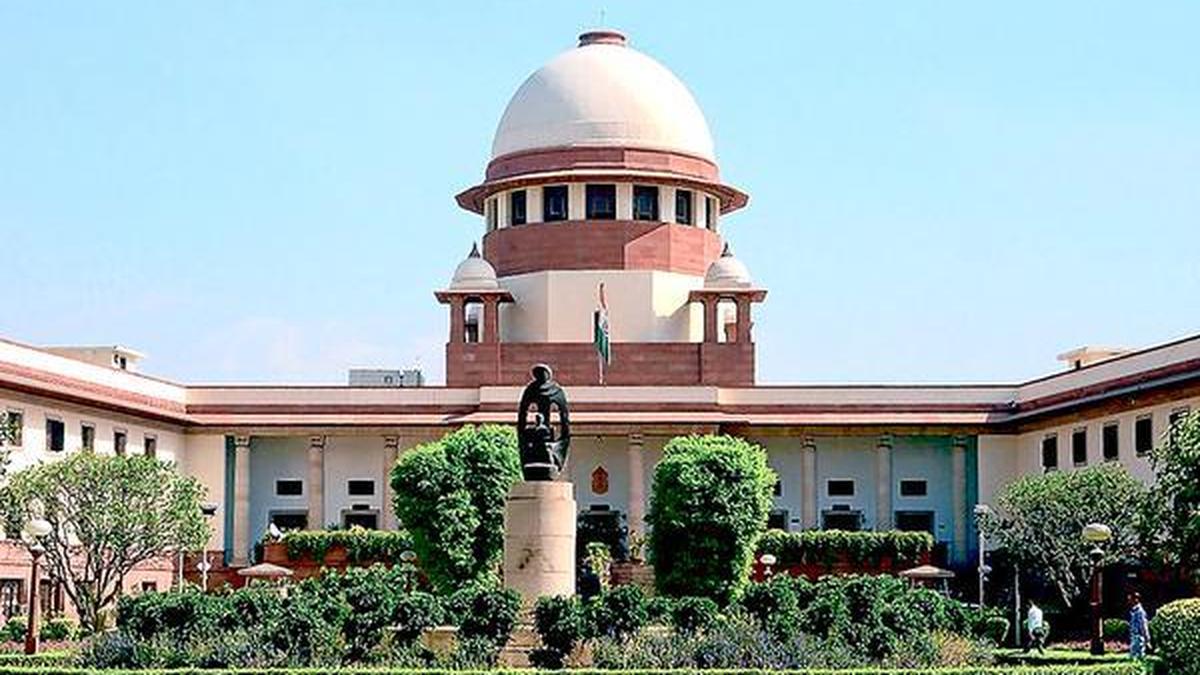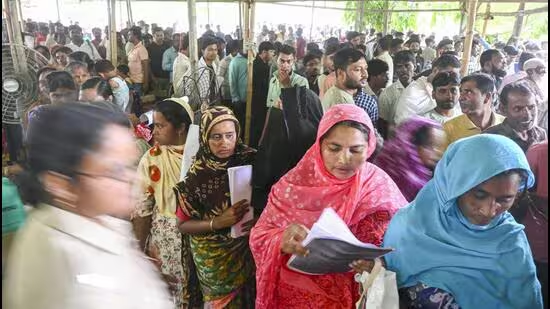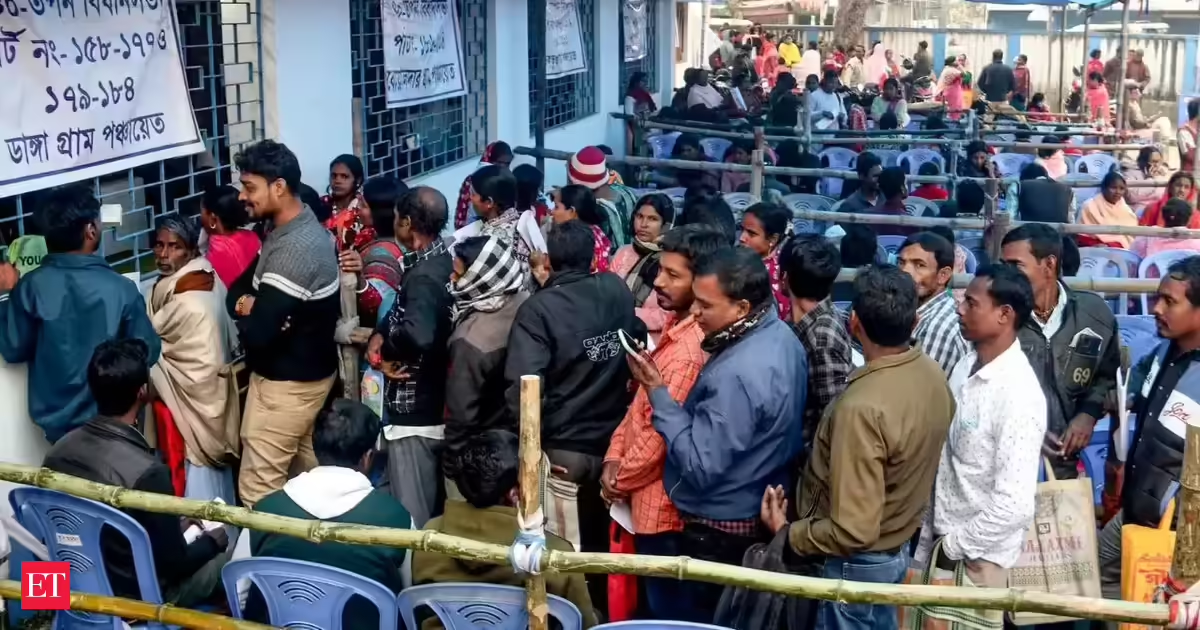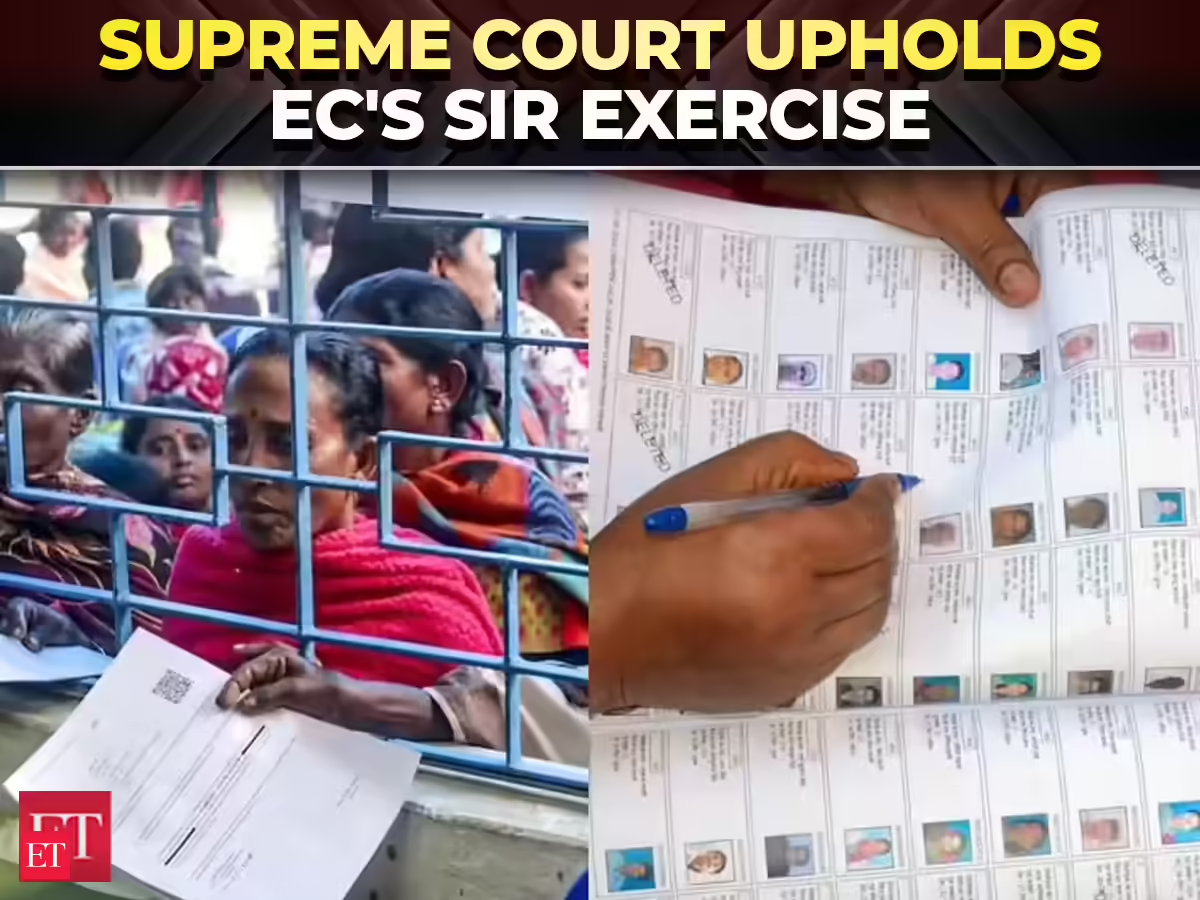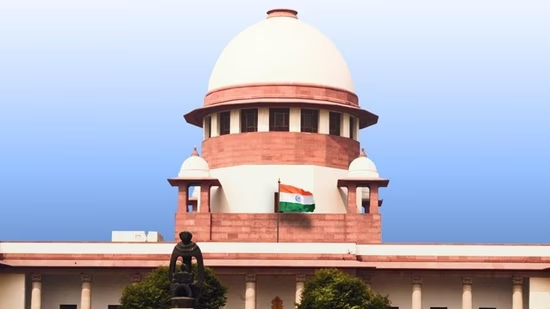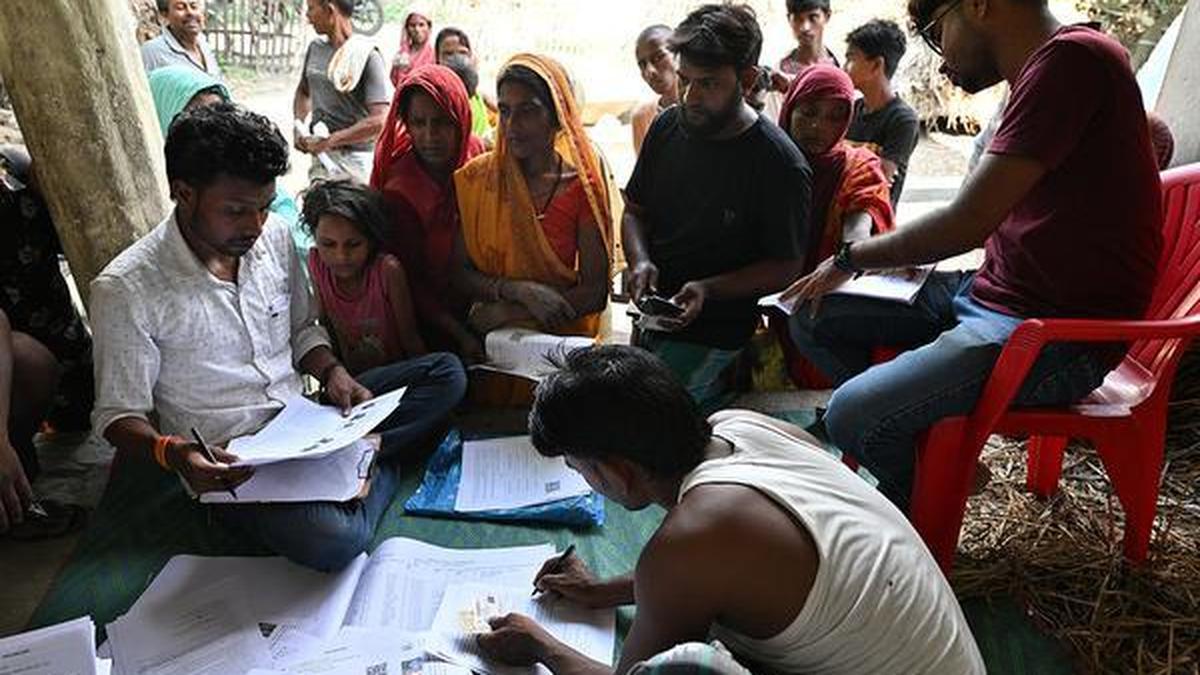
The Supreme Court’s verdict on Wednesday upholding the ECI’s SIR of the electoral rolls as “an advancement towards free and fair elections” arrives long after the SIR became a settled fact in Bihar and the exercise carried out in 12 other States and Union Territories in phase 2. For months, the Court refused to weigh in on the constitutionality of the exercise, in Association for Democratic Reforms vs ECI, and proceeded instead with administrative and managerial decisions. The impact of an unimpeded exercise was a net trim of the rolls by more than 10%, with nearly 6.5 crore deletions and, crucially, an unexplained and curious fall in the gender ratio in the rolls of most States except Tamil Nadu. In West Bengal, the flaws of the SIR led to arbitrary deletions and the systematic exclusion of a large section of minorities and the underprivileged, with statistical exercises indicating that this influenced poll outcomes in many constituencies. The Court’s interventions on the SIR remained largely supervisory until Wednesday, when it delivered a judgment that can only be called a retrospective validation of the process.It has at last decided the constitutional question, and decided whether the SIR was proportionate and free of arbitrary exclusion as implemented. But it did not adequately confront the record of the implementation. Its reasoning engages the SIR in theory rather than its practice. To the petitioners’ contention that Section 21(3) of the Representation of the People Act authorises only targeted, constituency-specific revision and not a State-wide dragnet, the Court held that the word “any” cannot be read down to “only,” and that a systemic problem of migration and churn needed to be remedied systematically. But it overlooked that Section 21(3) is an exceptional power that omits the “prescribed manner” safeguard binding ordinary roll revisions. On the objection that requiring crores of already-enrolled electors to prove their eligibility afresh inverts the presumption that those electors are valid, the Court offered a distinction between an “adjudicatory” exercise, where that presumption holds, and an “inquisitorial” one, where it does not. The prior judgment in Lal Babu Hussein (1995), which had insisted that any removal be reasoned and individuated, was confined to its own facts. Yet, the Court’s assurance that the presumption survives is not borne out when the SIR requires the elector to prove an entitlement already held. An accurate roll, as the Court rightly argues, is the foundation of a genuine election. This is why the potentially wrongful deletion of lawful voters through a hurried process under a demanding election-driven deadline is a grave blow to electoral integrity. Published - May 29, 2026 12:20 am IST
Validating flaws: on the Supreme Court and the SIR
The Supreme Court’s judgment on the SIR on Wednesday can only be called a retrospective validation of the process
TL;DRAI
India's Supreme Court upheld the ECI's Special Intensive Revision of voter rolls, which cut 6.5 crore names—over 10% of the electoral register—across 13 states. The ruling retrospectively validates the process without confronting documented arbitrary deletions and systematic minority exclusions, setting a precedent for wide administrative power over electoral integrity.
437 words~2 min read