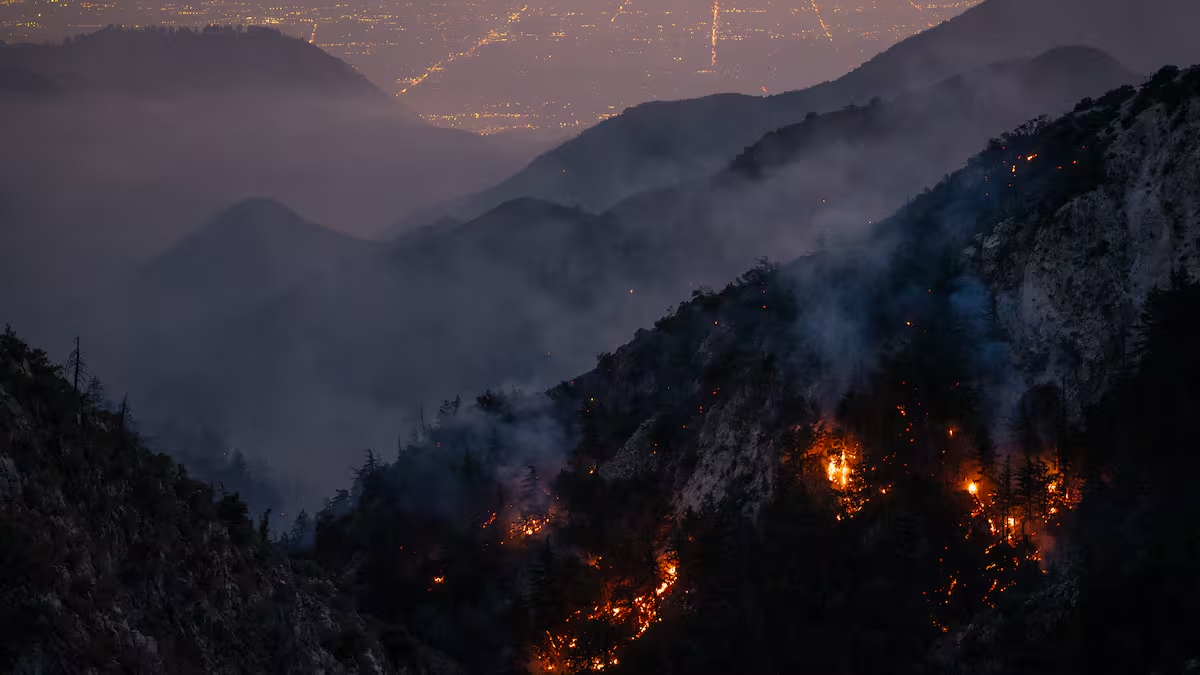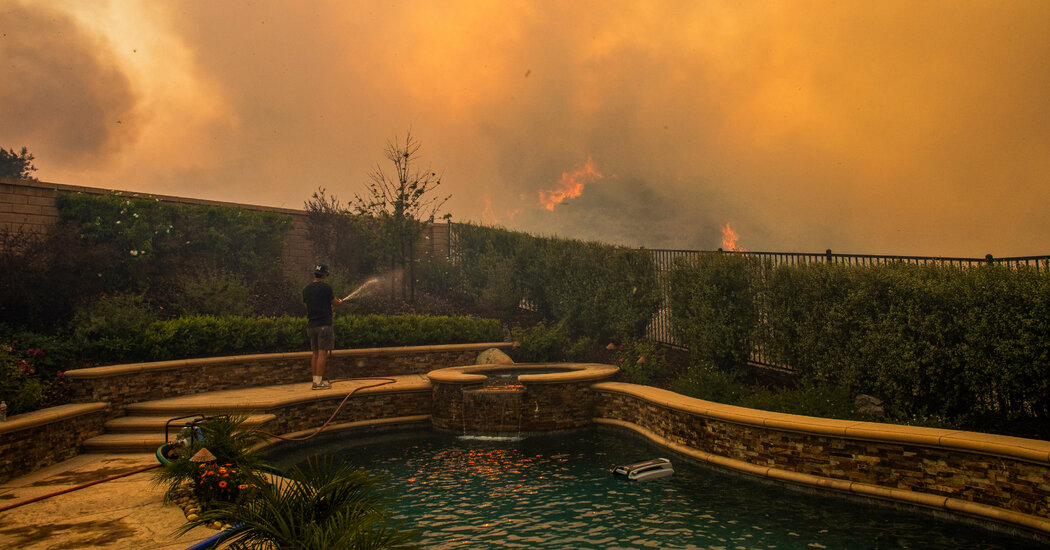
AdvertisementSKIP ADVERTISEMENTYou have a preview view of this article while we are checking your access. When we have confirmed access, the full article content will load.Why Scientists Retired the Dire Climate Scenario Used for Over a DecadeWhile global warming is still a threat, the decision to back away from a worst-case outlook raises questions about whether some risks have been overstated.Listen · 12:48 min A wildfire burning in the Simi Valley of California this month.Credit...Apu Gomes/Agence France-Presse — Getty ImagesMay 26, 2026Updated 10:32 a.m. ETIt’s rare for technical papers about climate modeling to kick off a heated public debate, or attract attention from the White House.But that’s what happened recently after an international team of researchers published a major revision of the emissions scenarios used to study global warming.When scientists try to model how hot Earth could get this century, they typically look at a range of possibilities for how much planet-warming pollution humans might pump into the atmosphere. These scenarios get updated every seven years or so.In this latest update, the researchers abandoned a dire — and often criticized — high-emissions scenario known as RCP8.5 that has been prominently cited in thousands of climate studies over the past decade. The authors said the scenario was now “implausible” given recent energy trends.That provoked online arguments among scientists. For years, critics of the high-emissions scenario had argued that it was always unrealistic, in part because it envisioned that countries would burn coal at absurdly high rates. They argued that any studies or news reports relying on that scenario exaggerated the risks of climate change. Why, those critics now asked, did the course correction take so long?Other researchers, however, noted that scientists still can’t rule out extreme warming, even if the odds might be low, and that there are good scientific reasons for studying high-emissions scenarios.Thank you for your patience while we verify access. If you are in Reader mode please exit and log into your Times account, or subscribe for all of The Times.Thank you for your patience while we verify access.Already a subscriber? Log in.Want all of The Times? Subscribe.AdvertisementSKIP ADVERTISEMENT
Scientists Ditched a Scary Climate Scenario. What Now?
While global warming is still a threat, the decision to back away from a worst-case outlook raises questions about whether some risks have been overstated.
351 words~2 min read