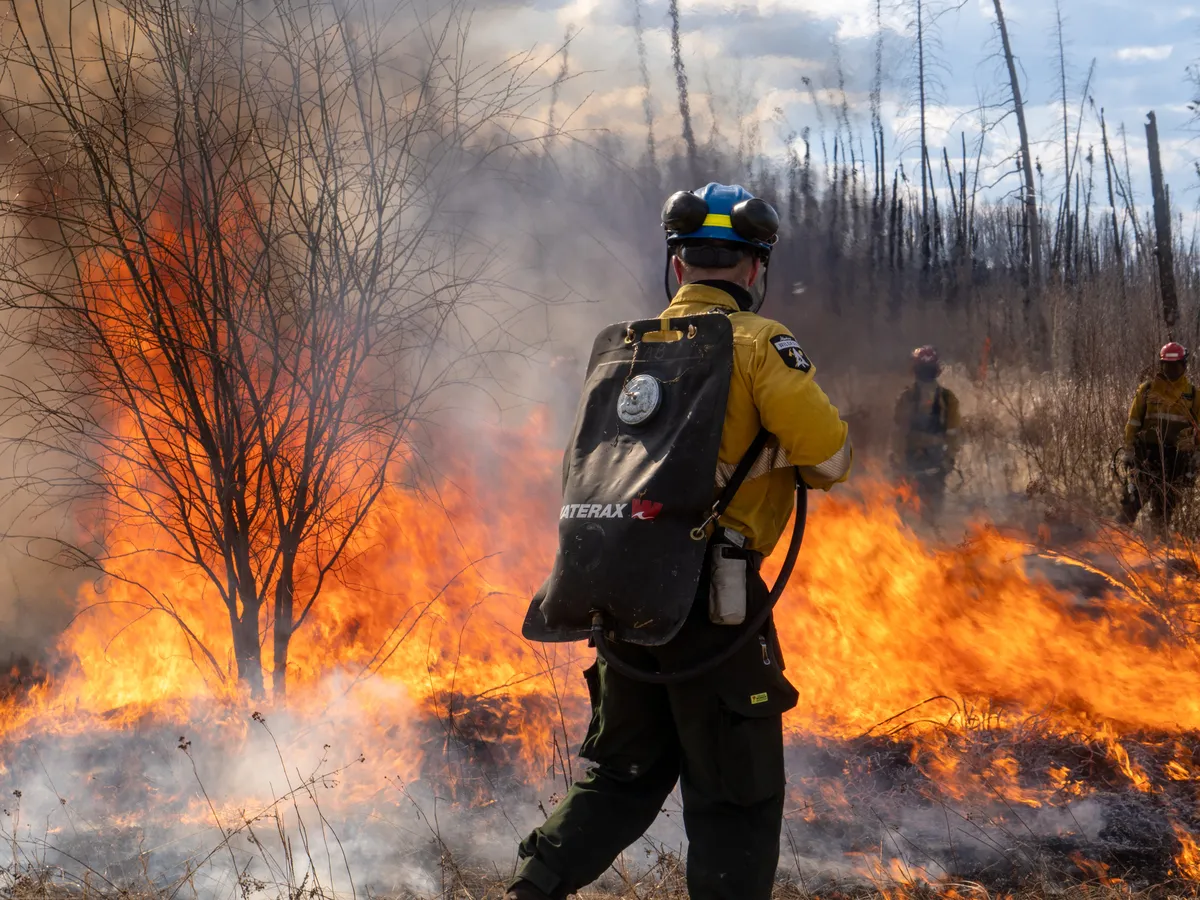
Skip to Content News Archives Economy Energy Oil & Gas Renewables Electric Vehicles Mining Commodities Agriculture Real Estate Mortgages Mortgage Rates Finance Banking Insurance Fintech Cryptocurrency Work Wealth Smart Money Wealth Management Investor Personal Finance Family Finance Retirement Taxes High Net Worth FP Comment Executive Women Puzzmo Newsletters Financial Times Business Essentials More Innovation Information Technology FP500 Podcasts Small Business Lives Told Tails Told Shopping Financial Post Store Obituaries Place a Notice Advertising Advertising With Us Advertising Solutions Postmedia Ad Manager Sponsorship Requests Classifieds Place a Classifieds ad Working Profile Settings My Subscriptions Saved Articles My Offers Newsletters Customer Service FAQ News Economy Energy Mining Real Estate Finance Work Wealth Investor FP Comment Executive Women Puzzmo Newsletters Financial Times Business Essentials HomeFP CommentMatthew Lau: Biased science reports fuelled climate alarmFirst the UN tilted its synopsis of 'the science' and then the media picked the juiciest bits from that. No wonder policy turned deep greenLast updated 55 minutes ago You can save this article by registering for free here. Or sign-in if you have an account.If journalists favour emphasizing the most severe projected climate impacts, so too do activists and politicians keen on imposing sweeping government interventions. Photo by ERROL MCGIHON/PostmediaThe journalistic rule, “If it bleeds it leads,” appears to be widely followed in reporting on climate change. In a new National Bureau of Economic Research (NBER) working paper, researchers compared newspaper articles from 10 major outlets in the United States and United Kingdom with scientific evidence from all six IPCC assessment reports from 1990 to 2023 (IPCC being the Intergovernmental Panel on Climate Change, a United Nations body). Their conclusion? “Public summaries of IPCC climate assessments lean toward the more severe end of the technical evidence.”Subscribe now to read the latest news in your city and across Canada.Exclusive articles from Barbara Shecter, Joe O'Connor, Gabriel Friedman, and others.Daily content from Financial Times, the world's leading global business publication.Unlimited online access to read articles from Financial Post, National Post and 15 news sites across Canada with one account.National Post ePaper, an electronic replica of the print edition to view on any device, share and comment on.Daily puzzles, including the New York Times Crossword.Subscribe now to read the latest news in your city and across Canada.Exclusive articles from Barbara Shecter, Joe O'Connor, Gabriel Friedman and others.Daily content from Financial Times, the world's leading global business publication.Unlimited online access to read articles from Financial Post, National Post and 15 news sites across Canada with one account.National Post ePaper, an electronic replica of the print edition to view on any device, share and comment on.Daily puzzles, including the New York Times Crossword.Create an account or sign in to continue with your reading experience.Access articles from across Canada with one account.Share your thoughts and join the conversation in the comments.Enjoy additional articles per month.Get email updates from your favourite authors.Create an account or sign in to continue with your reading experience.Access articles from across Canada with one accountShare your thoughts and join the conversation in the commentsEnjoy additional articles per monthGet email updates from your favourite authorsSign In or Create an AccountorThe biased media reporting takes place in two stages. The first is caused by the unusual nature of IPCC reports, in which the scientific assessments are condensed into a Technical Summary (TS) and then further condensed into a Summary for Policymakers (SPM). “The SPM reaches policymakers, journalists, and the public,” the authors of the NBER paper explain. “Before its release, representatives of all 195 IPCC member governments approve it line-by-line in plenary.” As a result, the SPM is “a politically negotiated artifact rather than a neutral summary of the underlying science.” Using large language models to analyze scientific claims made in these documents, the researchers find that for every IPCC assessment report from 1990 to 2023, the politically negotiated SPMs skew towards the more severe ends of what the scientific assessments actually show.Get the latest headlines, breaking news and columns.By signing up you consent to receive the above newsletter from Postmedia Network Inc.A welcome email is on its way. If you don't see it, please check your junk folder.The next issue of Top Stories will soon be in your inbox.We encountered an issue signing you up. Please try againNext, when journalists and editors use the SPM to write their articles, the same shift takes place: the more severe climate impacts are given more weight and emphasis. News editors “select among the SPM’s claims based on novelty, urgency, and salience, all of which favour the higher-impact end of any quantitative range,” and this bias is found in both left-wing and right-wing news outlets, the researchers found. Although their analysis covered newspapers in the U.S. and U.K., there is no reason to think Canadian media outlets are different.If journalists favour emphasizing the most severe projected climate impacts, so too do activists and politicians keen on imposing sweeping government interventions. For more than a decade, including in his 2021 book Value(s), Mark Carney backed large-scale climate initiatives premised on the idea that RCP 8.5 (an extreme scenario under which temperatures rise an estimated 4.5 degrees by 2100) was a likely outcome. But RCP 8.5 was always an extreme top-of-range scenario, and the new scenario framework published last month that will form the basis for the next IPCC assessment report excludes it from the range altogether. The emission projections under RCP 8.5, the scenario authors concluded, have “become implausible.”In fact, RCP 8.5 was known to be implausible for years. An article in Nature in January 2020 called it a “dystopian” scenario that was becoming “increasingly implausible with every passing year. Emission pathways to get to RCP 8.5 generally require an unprecedented fivefold increase in coal use by the end of the century, an amount larger than some estimates of recoverable coal reserves.” Ross McKitrick noted in a column in June 2020 that the assumptions RCP 8.5 relied on not only didn’t make sense, they also contradicted each other. But that hasn’t stopped Carney and others from using it to stoke climate alarm.In recent years, both the Canadian Climate Institute, which is funded by the federal government, and federal departments themselves have used RCP 8.5 prolifically. For example, in a five-part series of reports on climate change spanning nearly 400 pages, the Canadian Climate Institute used RCP 8.5 throughout as its “high-emissions” scenario, then featured alarmist claims based on these projections all across its website and throughout its news releases. These claims were then reported straight by the CBC and The Canadian Press, without any skepticism expressed.Earlier this year, the federal government published its “2025 Report on the Government of Canada’s Climate-Related Financial Risk Management.” The appendix lists 11 federal departments that used climate scenarios to stress-test the resilience of their assets, mainly buildings, to climate-related hazards. All 11 departments used RCP 8.5. To be fair, stress tests should use high-risk scenarios and the report stated that RCP 8.5 was a high-risk scenario and not a prediction. But why use a scenario known to be implausible?Even worse, in his foreword to the report, Finance Minister François-Philippe Champagne insisted, “The stakes of inaction are high. The Canadian Climate Institute estimates that climate disruption, if left unchecked, could cut median Canadian household income by nearly 20 per cent by the end of the century.” That Canadian Climate Institute estimate was based on — you guessed it — RCP 8.5. Join the Conversation This website uses cookies to personalize your content (including ads), and allows us to analyze our traffic. Read more about cookies here. By continuing to use our site, you agree to our Terms of Use and Privacy Policy.
Matthew Lau: Biased science reports fuelled climate alarm
First the UN tilted its synopsis of 'the science' and then the media picked the juiciest bits. No wonder policy turned deep green. Read on
1,269 words~6 min read