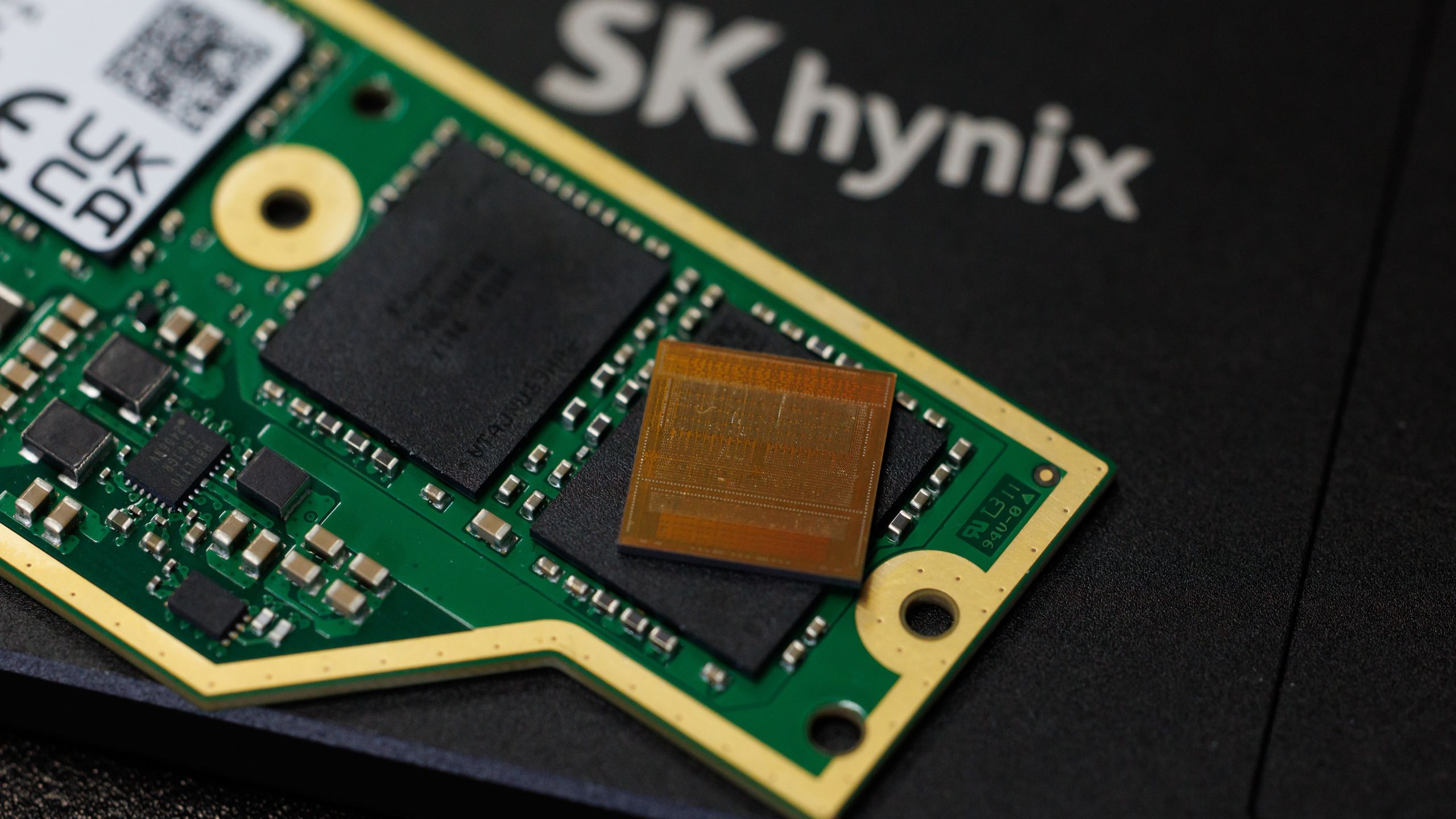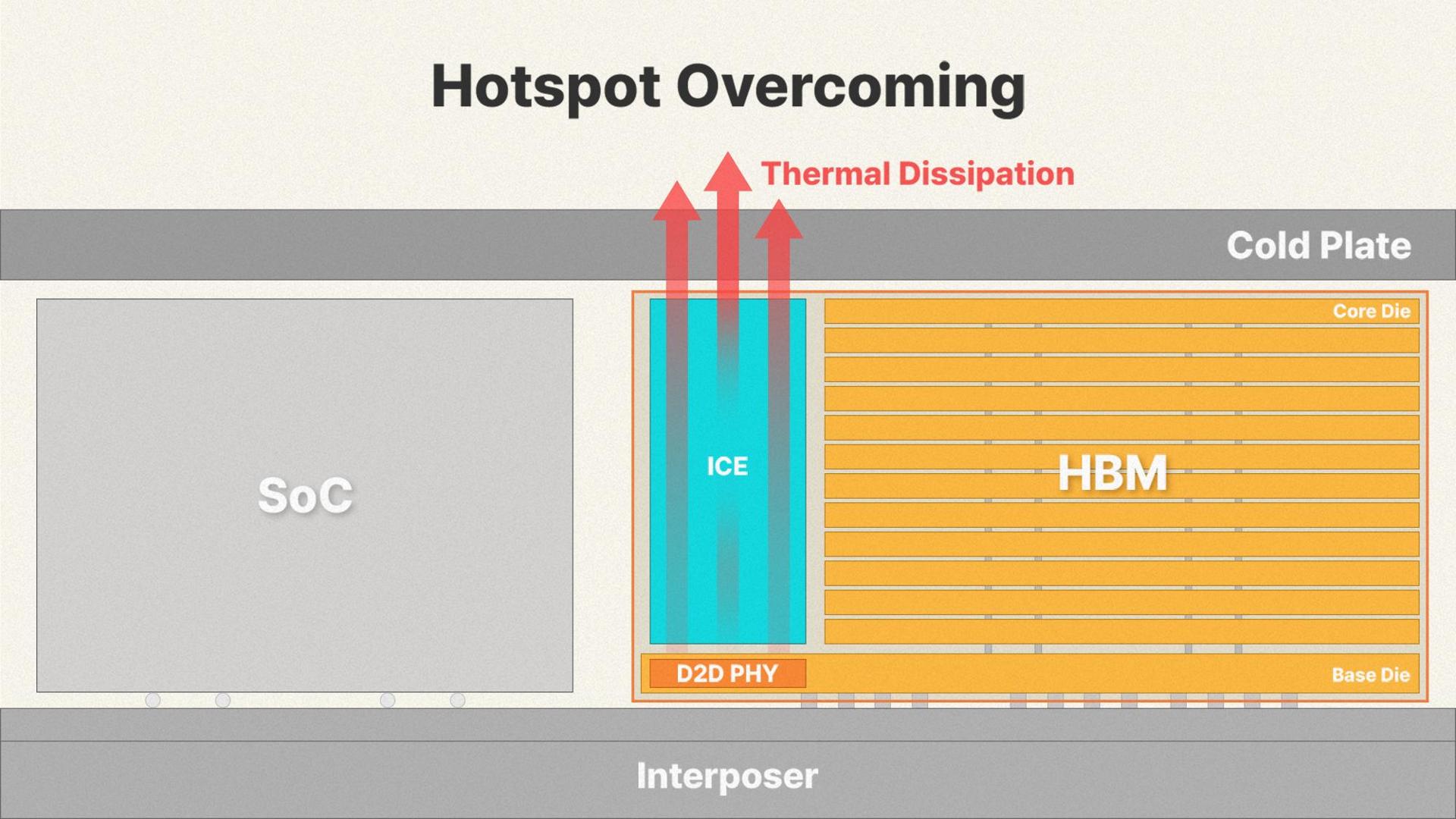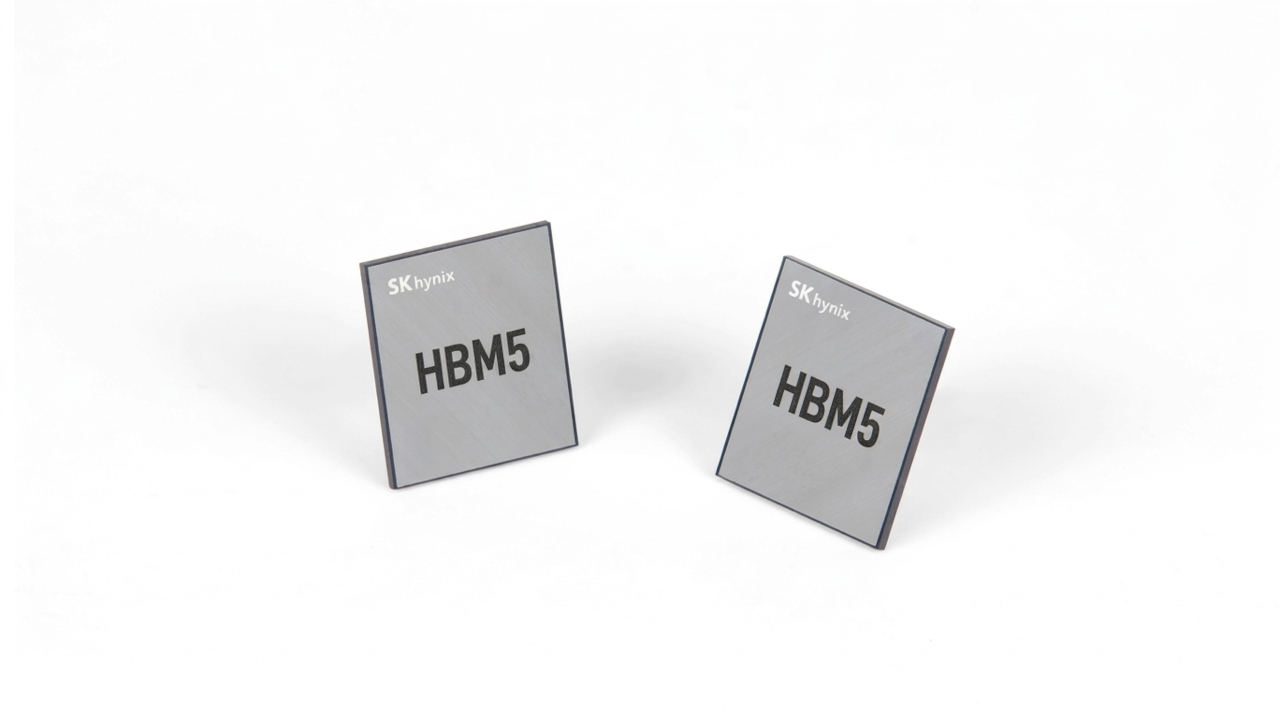
SK Hynix just embedded the air conditioning directly into the memory chip. The South Korean semiconductor giant introduced iHBM, short for Integrated High Bandwidth Memory, a cooling solution that places what it calls Integrated Cooling Elements, or ICEs, inside the HBM package itself rather than relying on external thermal management.
The result: a reduction in thermal resistance of over 30% compared to traditional indirect cooling methods.
What iHBM actually does
As you stack more and more DRAM layers to feed power-hungry AI chips, heat becomes the enemy. Specifically, the D2D PHY area, the die-to-die physical interface where data moves between stacked layers, turns into a thermal hotspot that can throttle performance or, worse, degrade reliability.
Traditional HBM designs handle this problem indirectly. Heat generated deep within the package has to travel through the core die before it can be dissipated. SK Hynix’s iHBM approach embeds cooling elements directly within the package, creating shorter thermal pathways that pull heat out closer to its source. The company says this is particularly critical for next-generation products like HBM5, where layer counts and data rates will push thermal envelopes even further.