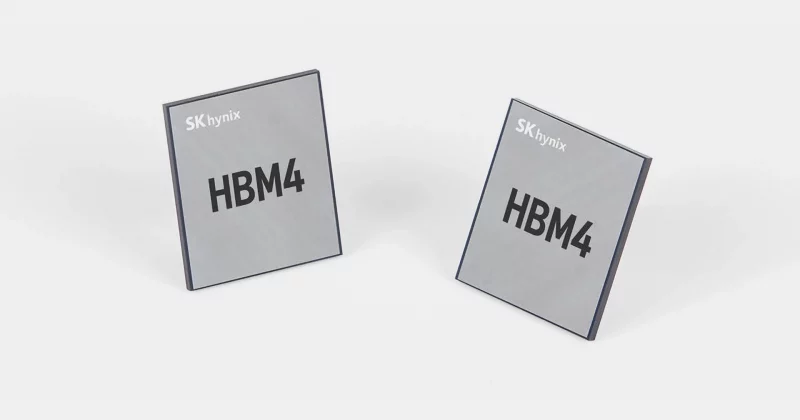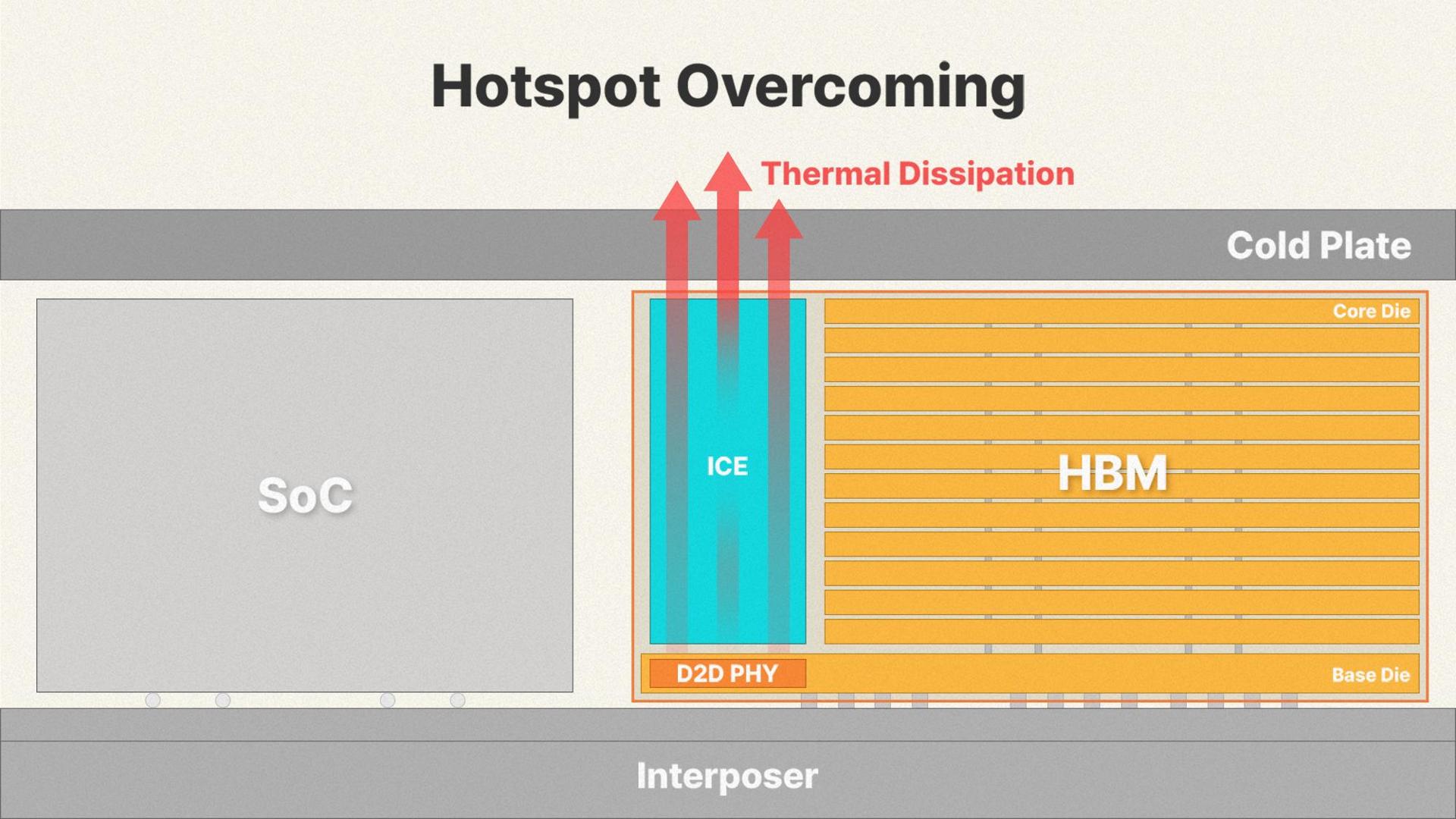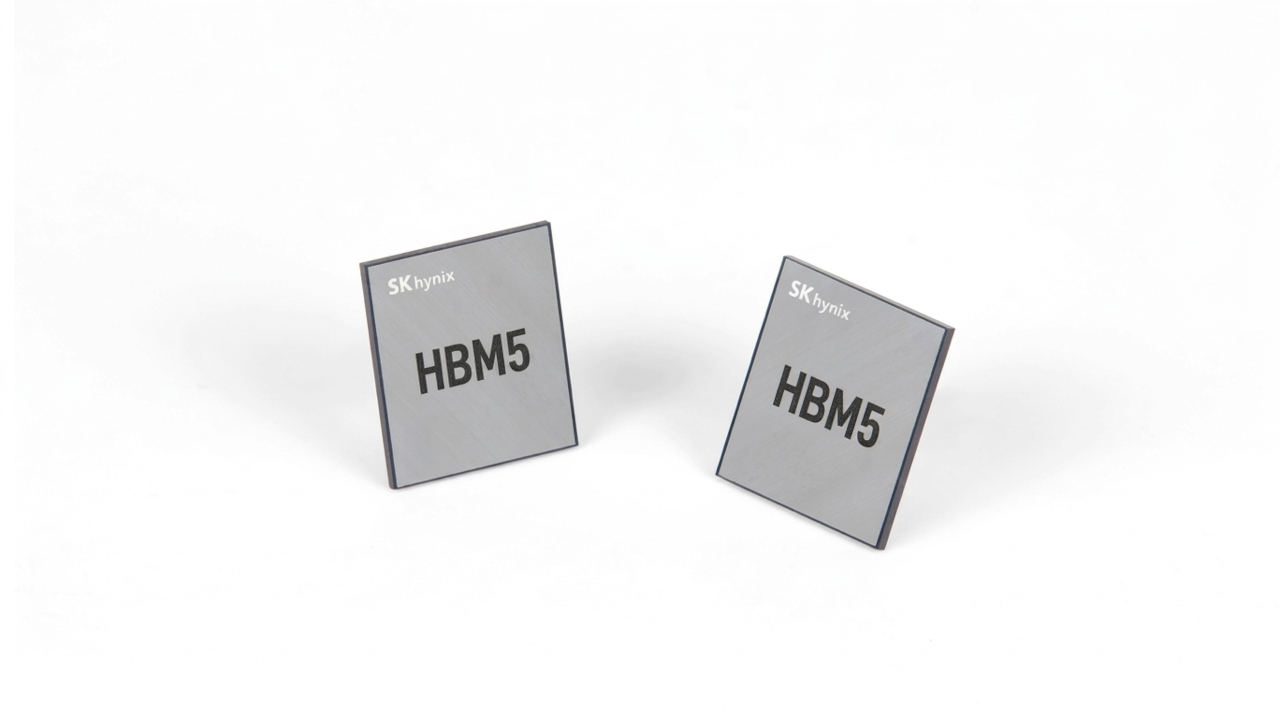
HBM4, SK hynix's current top-end AI memory, the generation that precedes the HBM5 chips its new iHBM cooling design is built for (Sk hynix) SK hynix on Tuesday introduced a packaging technology that builds cooling channels directly into its high-bandwidth memory chips to combat heat, one of the engineering challenges standing between today's AI memory and the next generation.High-bandwidth memory, or HBM, is the specialized memory stacked next to AI accelerator chips, and SK hynix is the world's leading supplier of it. As stacks grow taller and faster to feed AI workloads, they generate more heat, and that heat now caps how far the technology can scale. The hottest point sits along the high-speed link between the memory and the processor. This SK hynix diagram shows how iHBM pulls heat away from the hottest point inside the chip. (SK hynix) The new technology, called iHBM, places silicon-based cooling elements inside the package, next to that hotspot. Silicon conducts heat well but not electricity, so the elements open a dedicated escape path without interfering with the circuitry.SK hynix said the design cuts thermal resistance by more than 30 percent and holds performance steady under high-temperature, high-load conditions.The company also stressed that iHBM runs on its Advanced MR-MUF process, which has already been proven in mass production. It is built to fit customers' existing package layouts without major redesign, lowering the practical barrier to adoption.SK hynix plans to apply iHBM starting with HBM5, a generation that Counterpoint Research expects to arrive around 2029 to 2030, when the industry is also expected to shift to hybrid bonding, a method that connects stacked chips by joining copper directly without today's bump structure."iHBM is an optimal solution for minimizing heat, developed by combining our memory design capabilities with advanced packaging technology," said Lee Kang-wook, head of package development.The announcement comes as demand is running well ahead of what SK hynix can build. On its first-quarter earnings call last month, the company said customer requests for HBM over the next three years exceed its production capacity. That quarter brought record results: operating profit of 37.6 trillion won ($24.9 billion), up more than 405 percent from a year earlier, on revenue of 52.6 trillion won, with an operating margin of 72 percent that is rare for a manufacturer.The competitive landscape is not static. Counterpoint Research data shows Samsung Electronics reclaimed the top spot in overall DRAM revenue in the fourth quarter of 2025 after a year in second place, even as SK hynix held a commanding 57 percent of the HBM market.
SK hynix’s iHBM tackles heat choking next-gen HBM
SK hynix on Tuesday introduced a packaging technology that builds cooling channels directly into its high-bandwidth memory chips to combat heat, one of the engi
426 words~2 min read