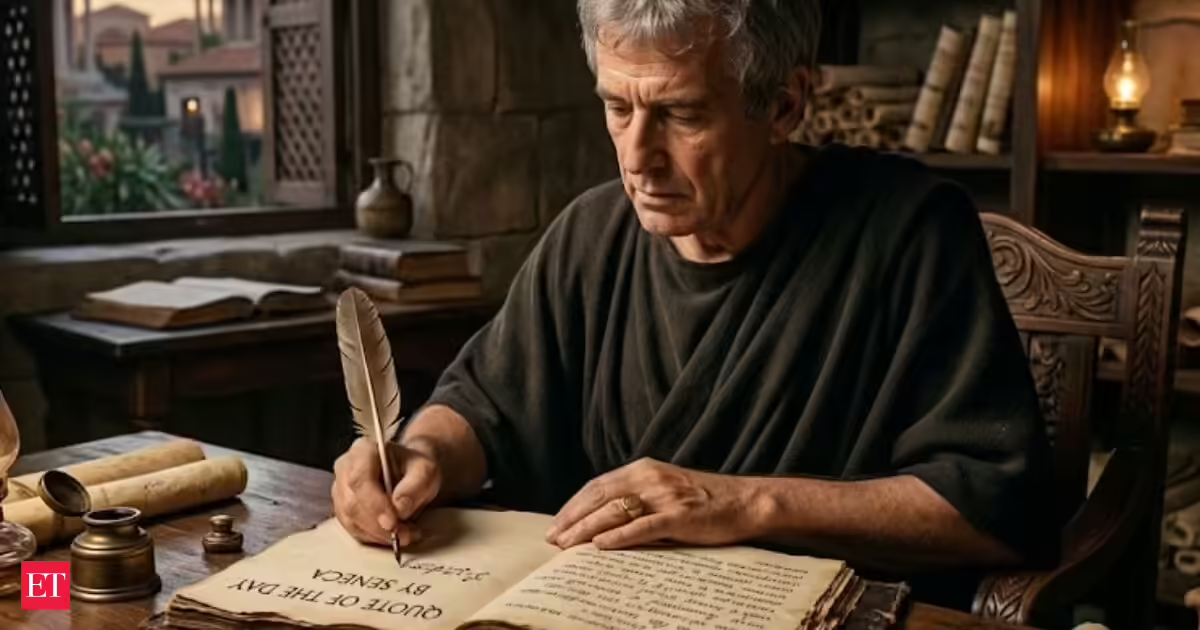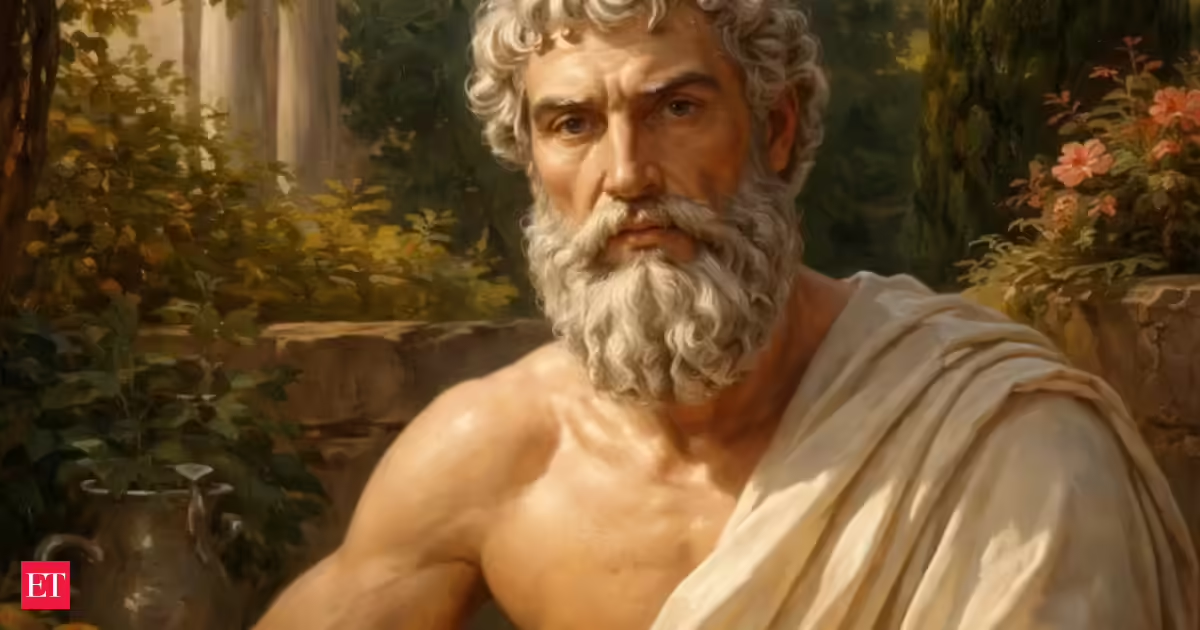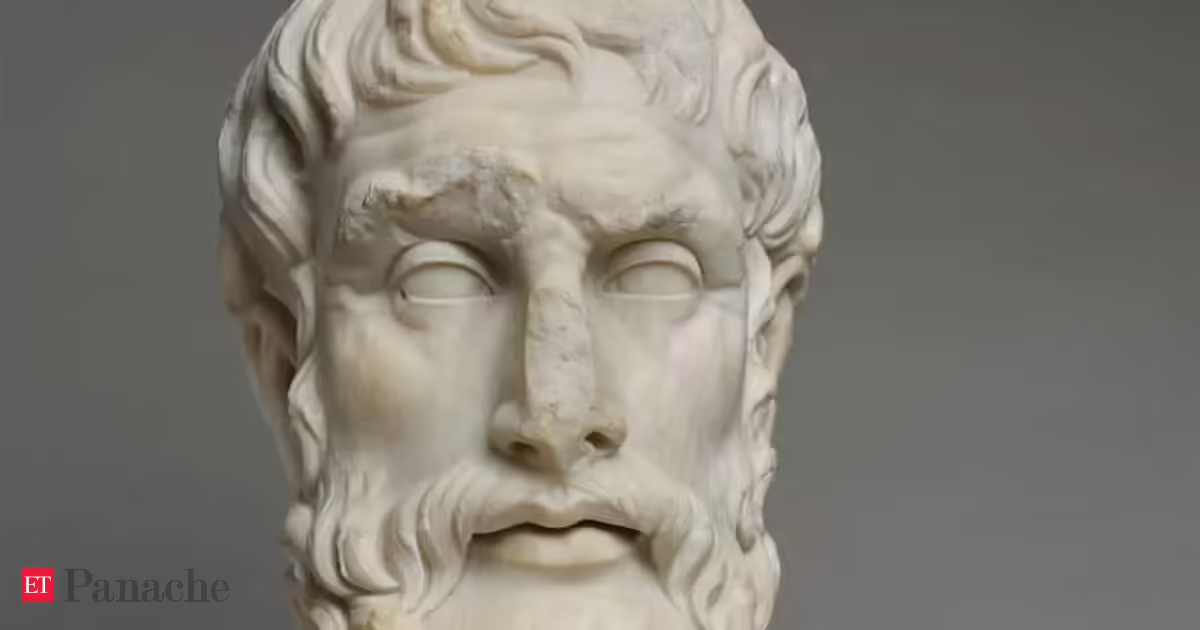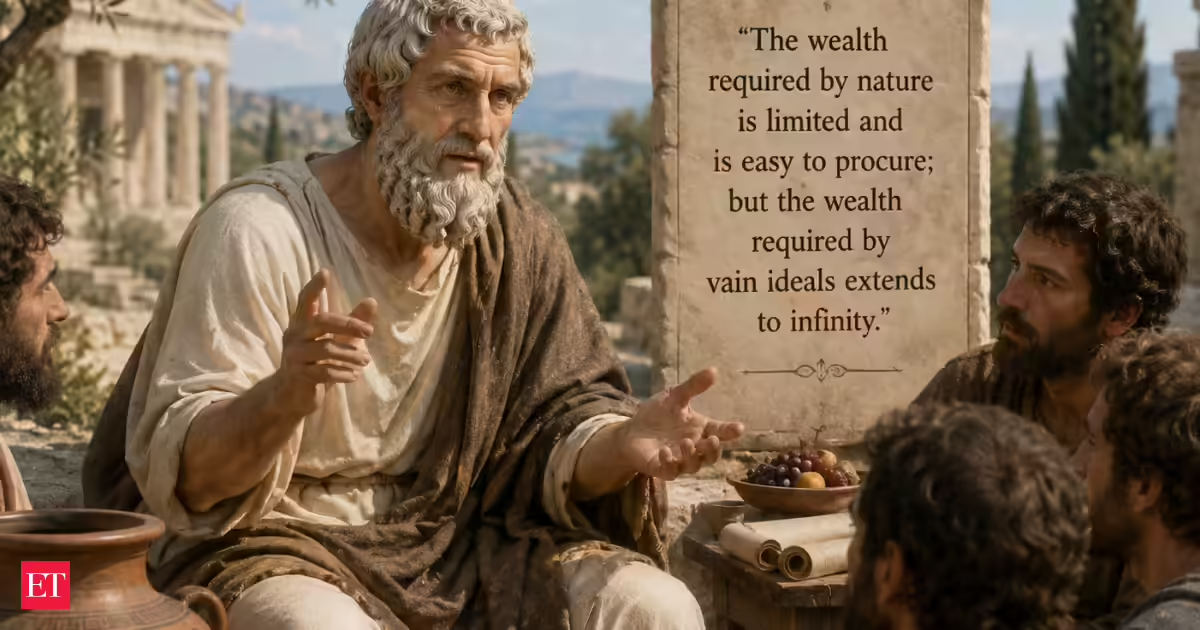
Quote of the Day by Lucretius: Contentment has always been a central theme in philosophical thought, shaping how people understand happiness, desire, and the meaning of a good life. It encourages individuals to look beyond constant pursuit and recognize the value of inner peace. True fulfillment is often found not in abundance, but in simplicity and mental clarity that frees a person from endless craving.His powerful quote, “The greatest wealth is to live content with little, for there is never want where the mind is satisfied”, highlights the idea that real wealth is rooted in the mind rather than material possessions. In today’s world of consumption, comparison, and constant desire for more, this quote remains deeply relevant. It reminds us that satisfaction comes from within and that a peaceful, content mind can transform even a simple life into one of abundance. Lucretius’s words continue to inspire reflections on minimalism, gratitude, and the importance of finding happiness in what we already have rather than what we still seek.Quote of the Day Today: Lucretius on contentment, inner peace and gratitudeQuote of the Day by Lucretius: “The greatest wealth is to live content with little, for there is never want where the mind is satisfied”Meaning of Lucretius’s Quote About ContentmentLucretius’s quote, “The greatest wealth is to live content with little, for there is never want where the mind is satisfied”, explores the deep philosophical idea that true wealth is not measured by material possessions but by inner peace and mental contentment. The phrase “content with little” symbolizes a life free from excessive desire, where happiness is not dependent on luxury or accumulation, but on simplicity and satisfaction with what already exists.The deeper meaning of the quote emphasizes that most human suffering comes not from lack, but from endless wanting. When the mind is constantly chasing more, it creates a sense of scarcity even in abundance. Lucretius suggests that a satisfied mind removes this feeling of “want,” allowing a person to experience peace regardless of external circumstances. In essence, he highlights that contentment is the highest form of wealth, because it cannot be taken away or diminished by external conditions.Why True Wealth Is a Satisfied Mind Rather Than Material PossessionsTrue wealth is often misunderstood as the accumulation of money, possessions, or external success. However, Lucretius’s philosophy suggests that a satisfied mind is the real source of wealth because it removes the constant feeling of lack and desire. Material possessions can bring temporary comfort, but they also create endless comparison and craving for more. A satisfied mind, on the other hand, allows a person to feel content regardless of external conditions. When the mind is peaceful, even simple living feels abundant, and happiness is no longer dependent on external gains. This inner stability protects a person from disappointment and dissatisfaction. In contrast, material wealth without contentment often leads to stress and restlessness. Therefore, true wealth lies not in how much one owns, but in how peacefully one can live with what one already has and appreciate life without constant wanting.About LucretiusLucretius, fully known as Titus Lucretius Carus, was a Roman poet and philosopher best known for his work on Epicurean philosophy. He lived during the 1st century BCE and is considered one of the most important philosophical poets of ancient Rome. His most famous work, De Rerum Natura (On the Nature of Things), explains the universe through reason, nature, and the idea that fear and desire disturb human happiness.Early Life of LucretiusVery little is known about Lucretius’s early life, and much of his biography remains uncertain. It is believed that he was born into a Roman family of some social standing around 99 BCE. Because historical records are limited, his personal life is largely reconstructed through references by later writers. Despite this lack of detail, his intellectual contributions suggest a deeply reflective and philosophical upbringing influenced by Roman culture and Greek philosophical thought.Philosophy and Intellectual InfluenceLucretius was heavily influenced by the Greek philosopher Epicurus, whose teachings focused on achieving happiness through simplicity, reason, and freedom from fear. He adopted and expanded these ideas in his writing, emphasizing that the universe operates through natural laws rather than divine intervention. His philosophy encouraged people to let go of fear—especially fear of gods and death—and instead focus on peaceful, rational living.Literary Work and ContributionsLucretius’s most significant contribution is his epic philosophical poem De Rerum Natura. In this work, he explains complex ideas about atoms, nature, the universe, and human psychology in poetic form. His writing combines science, philosophy, and poetry, making abstract ideas accessible and deeply expressive. Through his work, he sought to free humanity from superstition and guide people toward intellectual clarity and emotional calm.Legacy and Lasting InfluenceLucretius’s influence continued long after his death, even though his work was not widely circulated in his own lifetime. He is now regarded as one of the earliest thinkers to present ideas that resemble modern scientific and psychological understanding. His philosophy of simplicity, contentment, and freedom from fear continues to resonate in today’s world, where people often struggle with materialism and mental restlessness. His timeless wisdom reminds us that true wealth lies not in possession, but in peace of mind.Life Lessons from Lucretius’s Famous QuoteThe powerful quote teaches that true wealth is not found in material possessions, but in a peaceful and content mind. When a person learns to be satisfied with little, they free themselves from endless desire and comparison. The quote highlights that most feelings of “lack” are created not by reality, but by the mind’s constant craving for more. A content mind transforms simple living into a rich and fulfilling experience. In today’s world of consumerism and constant ambition, this lesson is especially important because it reminds us that happiness does not come from accumulation, but from appreciation. Lucretius encourages a mindset where inner peace replaces constant wanting, making life feel complete even in simplicity.Why This Quote Still Matters TodayLucretius’s message remains deeply relevant in modern life because people are constantly surrounded by messages that promote more—more money, more success, more possessions. This creates pressure, dissatisfaction, and emotional restlessness. The quote reminds us that fulfillment does not depend on external abundance but on internal satisfaction. In a world driven by comparison and competition, learning to be content becomes a powerful form of mental freedom. It helps individuals reduce stress, appreciate what they already have, and focus on meaningful living rather than endless pursuit. Lucretius’s wisdom continues to offer guidance for building a calmer, more balanced, and emotionally stable life.Life WisdomLucretius’s quote, “The greatest wealth is to live content with little, for there is never want where the mind is satisfied,” reflects a timeless truth about happiness and human desire. Real peace is not created by wealth or possessions, but by a mind that is free from constant craving. Life should not be measured by how much we accumulate, but by how satisfied we feel with what we already have. This wisdom continues to remain relevant because it highlights the importance of simplicity, gratitude, and inner stability. True contentment is not about having everything, but about needing less and appreciating more.
Quote of the Day by Ancient Roman poet Lucretius: “The greatest wealth is to live content with…” – Inspiring lessons on human nature, simplicity, gratitude and why happiness comes from within by the philosopher known for deep reflections of human desire
Quote of the Day by Lucretius: Lucretiuss quote, “The greatest wealth is to live content with little, for there is never want where the mind is satisfied” explores the idea that true richness is not measured by material possessions, but by inner peace and contentment. The quote suggests that when a persons mind is satisfied, external desires lose their power, and life feels abundant even with minimal resources.
1,183 words~5 min read