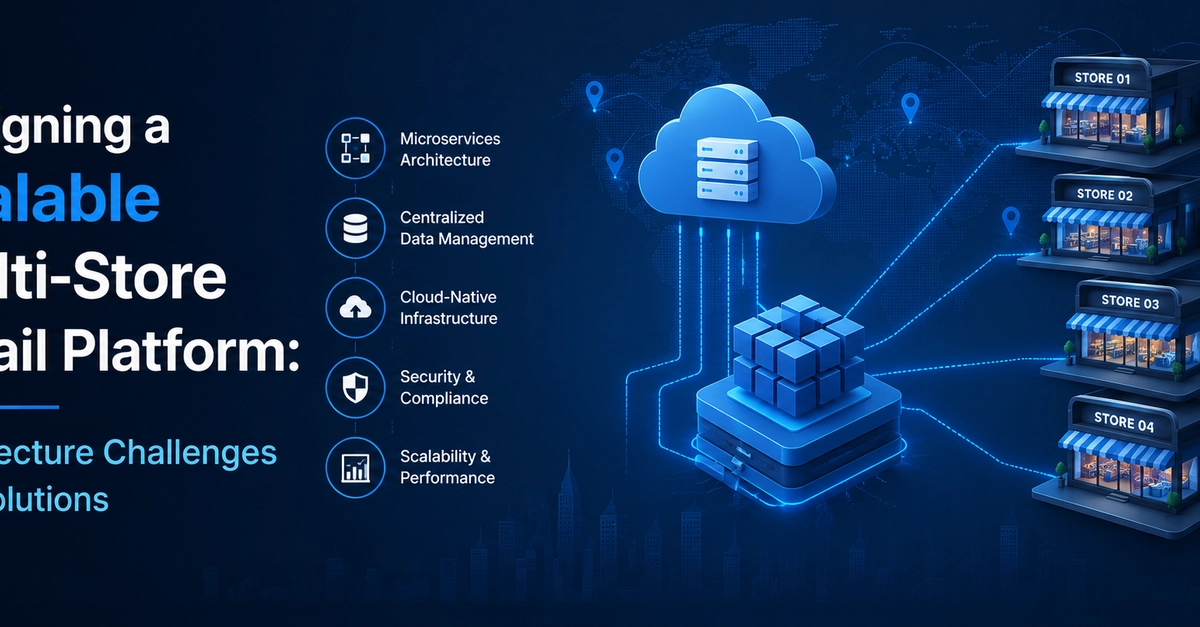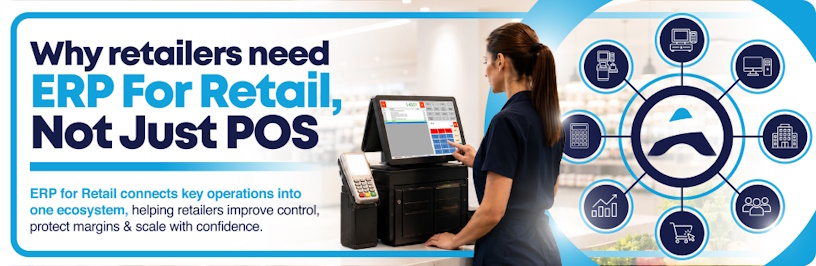
“Many Australian retailers built theirs during a period of rapid channel expansion, adding ecommerce, POS and inventory systems, then connecting them. It worked, but it also introduced layers of co-ordination between platforms that were never designed to operate as one.”Broughton says those limitations are becoming more visible as consumers become more price sensitive and quicker to move between brands.“In that kind of market, execution gaps show up quickly,” he says.Shaun Broughton, managing director APAC and Japan at Shopify. “A campaign that slips, inventory that doesn’t line up, or customer data that fragments is no longer operational noise, it’s lost revenue.”In Australia and New Zealand, the pressure is showing up in speed and precision. Retailers are operating in a market shaped by frequent promotions, cost-of-living sensitivity and high expectations around delivery. There is less margin for delay or inconsistency.That is prompting a broader rethink of how commerce systems are structured.Increasingly, retailers are moving away from fragmented integrated models towards unified commerce approaches, where core data and workflows operate within a single system rather than across multiple connected platforms.The distinction is becoming harder for retailers to ignore.“CFOs in Australia are increasingly viewing this as an operating model question, not just a technology cost,” Broughton says.“The visible spend – licences, middleware and support – is only part of the picture. The harder part is the ongoing effort required to keep everything aligned.”Counting the real costBroughton says retailers are now assessing fragmentation across three areas.“Duplicated spend sits in overlapping systems. Maintenance lock-in absorbs technical and operational capacity. Opportunity cost is the growth investment that doesn’t happen because resources are tied up elsewhere,” he says.For many Australian retailers, the question is shifting from whether the stack works to how much effort is going into keeping it working.Teams spend increasing amounts of time reconciling data, checking outputs and managing duplicate processes across platforms. Inventory accuracy becomes harder to maintain consistently. Campaign execution slows as people wait for systems to align.“The stack might look connected, but it behaves like a constraint,” Broughton says.“This is the crux of the fragmentation tax. It’s not just technology cost, but the cumulative impact of workarounds, rework and lost time.”Timing is becoming more important in retail competition. Campaigns can be launched faster, changes made with less risk, and trading decisions executed closer to real time. In a promotion-driven environment, that timing can materially affect performance.In many organisations, even relatively small changes can require co-ordination across multiple teams and systems, reducing speed to market and increasing operational risk.Simplifying the stackBrand Collective encountered many of those challenges as its portfolio expanded.Headquartered in Melbourne, the retail group operates more than 300 stores and over 24 ecommerce storefronts across brands including Reebok, Superdry, Everlast, Hush Puppies, Shoes & Sox and Volley.After merging with PAS Group in 2022, the business inherited a mix of ecommerce systems spanning Magento, BigCommerce, Salesforce Commerce Cloud and bespoke builds. Different platforms required separate upgrade cycles, integrations and workflows, creating growing operational complexity as the business scaled.Brand Collective group general manager, digital and ecommerce Aaron Gard says simplification became essential as the business expanded.“When you’ve got such a big portfolio of brands, standardisation and simplification is everything,” Gard says.“If you’ve got 19 brands using 19 different technologies, you’re never going to get anywhere.”Brand Collective group general manager, digital and ecommerce Aaron Gard. Routine tasks including security updates, payment integrations and promotional launches increasingly required duplicated work across multiple systems, consuming developer time and slowing execution.The group consolidated much of its commerce infrastructure into a single operating structure. According to a Shopify case study, the shift contributed to a 60 per cent reduction in maintenance overhead, a 50 per cent reduction in new brand launch timelines and 10 per cent year-on-year online sales growth across the group.Gard says the operational impact extended beyond technology consolidation.“We don’t want to focus on all the hardcore technical aspects behind the scenes,” he says.“Shopify can handle those things for us, which gives Brand Collective the space and resources to worry about our customers, our products, and our brands.”The operational bottleneckThe Good Guys faced a different version of the same problem.The retailer’s previous ecommerce infrastructure relied on a highly customised legacy system that became increasingly difficult to maintain as online operations expanded. Developers spent significant amounts of time managing pricing updates, deployments and business-as-usual operational tasks rather than customer-facing improvements.The retailer’s ecommerce architecture relied heavily on batch-based data processing, limiting the ability to make updates in real time. Deployments were resource intensive and often required overnight engineering work to avoid disrupting customers.“Our old ecommerce system was a spiderweb of extensions and data duplications,” says Good Guys general manager of engineering Alberto Simongini.“It was very painful and prone to mistakes. We were constantly working around limitations. It wasn’t just hard to innovate, it was hard to operate.”As part of a broader digital transformation, The Good Guys modernised its ecommerce architecture using Shopify’s headless framework.Good Guys general manager of engineering Alberto Simongini. The shift contributed to online sales growth of close to 20 per cent, a doubling in site speed, five times faster deployment cycles and a 50 per cent reduction in campaign setup time.Simongini says the operational gains extended beyond speed improvements.“As technology engineers, our developers should be investing time in helping the business grow and building new capability, not changing a link in the middle of the night,” he says.The capital questionBroughton says retailers are increasingly assessing technology decisions through this operational lens.“The more advanced retailers are stepping back from the systems discussion and looking at capital,” he says.“Specifically, how much investment, talent and time is tied up maintaining the current model versus driving growth.”That is shifting how organisations evaluate technology investment.“Technology is no longer assessed on features alone, but on how it improves execution and releases capacity back into the business,” Broughton says.Independent research from EY cited by Shopify found Shopify POS delivered a 22 per cent lower total cost of ownership on average alongside an 8.9 per cent uplift in sales.Broughton says the gains are less about software itself and more about reducing dependencies and co-ordination overhead.“The more important point is reallocation,” he says.“Reducing complexity isn’t just about efficiency. It’s about creating the capacity to invest in the parts of the business that actually drive growth.”Accuracy follows closely. Customers expect inventory, pricing and delivery promises to hold up across every channel. Australia Post data shows 73 per cent of shoppers are more likely to buy online when the delivery experience is strong – which increases the cost of getting it wrong.“In Australia and New Zealand, the pressure is showing up in speed and precision,” Broughton says.“Retailers are operating in a market shaped by frequent promotions, cost-of-living sensitivity and high expectations around delivery. There is less margin for delay or inconsistency.”Retail technology choices are increasingly becoming operating model decisions. Rather than optimising individual systems or channels, retailers are reassessing how the organisation functions when inventory, customer and operational data operate from a single core.For many executive teams, the question is no longer whether integrated systems can work – it’s how much time, cost and organisational capacity is required to keep them working.To find out more, please visit Shopify.
Why retailers are consolidating systems to move faster
Across Australia and New Zealand, many large retailers are now finding the systems that once supported growth are becoming harder and more expensive to manage.
1,191 words~5 min read