Quarterly roadmaps, layered approvals, and monolithic systems — the backbone of traditional AI strategy in retail — are the very things holding back many retail companies today.
These were not bad decisions. They were rational responses to a world where building and shipping technology was slow, expensive, and difficult to reverse. That world is gone. The Brookings Institution reports that enterprise AI adoption jumped from 55% to 78% in a single year, still a bulk of organizations are deploying it as a single, monolithic capability rather than a flexible, federated system.
Research from MIT Sloan found that AI tools are already increasing developer output by up to 39%, compressing delivery cycles that once took quarters into weeks. Technology is clearly not the chokepoint; the Stanford University Digital Economy Lab finds that 77% of the hardest challenges in enterprise AI deployment remain organizational — not technical.
The operating model built for scarcity is now the primary constraint in an environment where scarcity no longer exists.
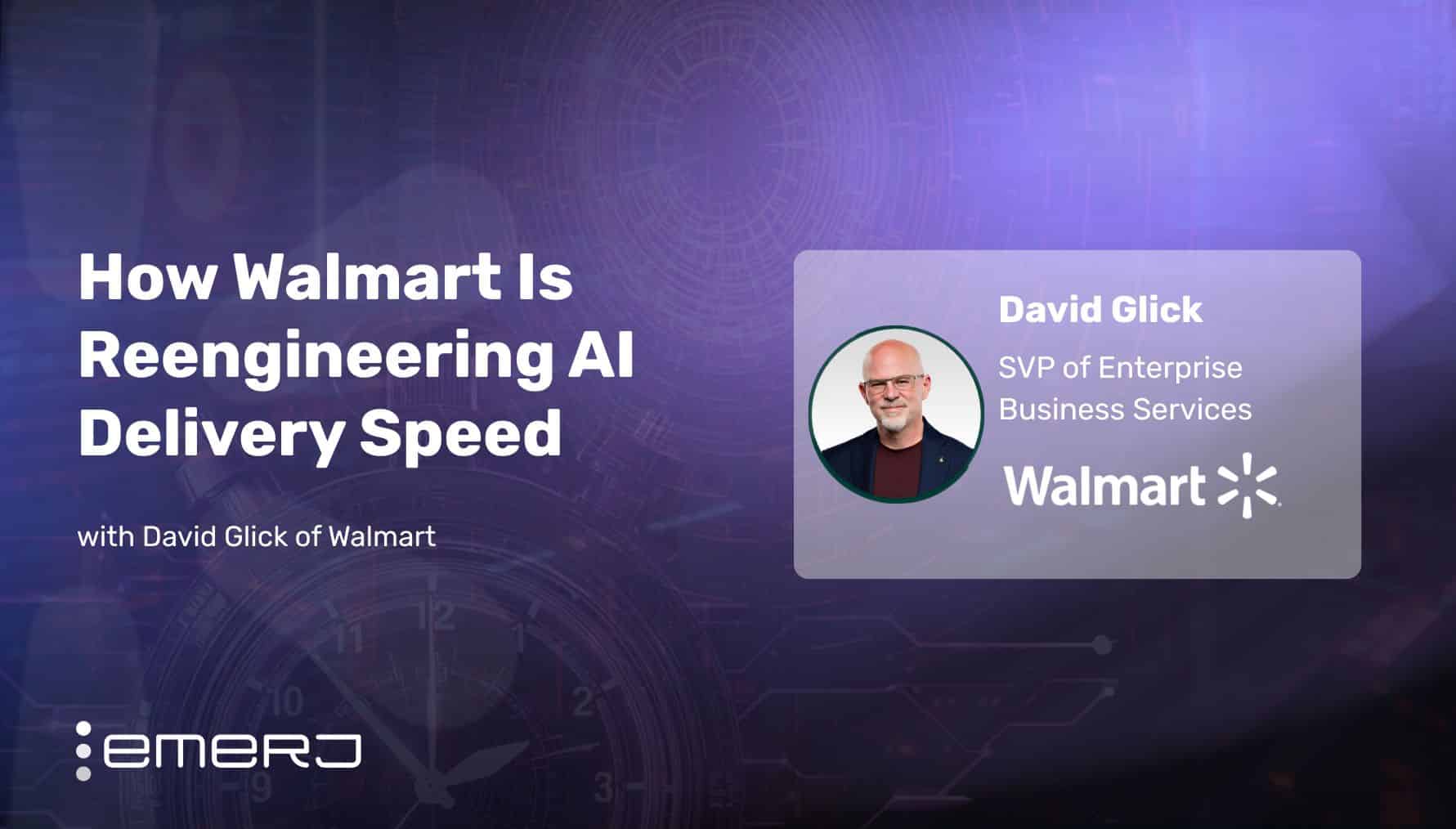
David Glick, SVP of Enterprise Business Services at Walmart, joined Emerj’s Matthew DeMello to examine why enterprise AI stalls when operating models don’t change — and how shifting from quarterly planning to real-time iteration, federated agent architecture, and automated governance unlocks measurable gains in speed and reliability.