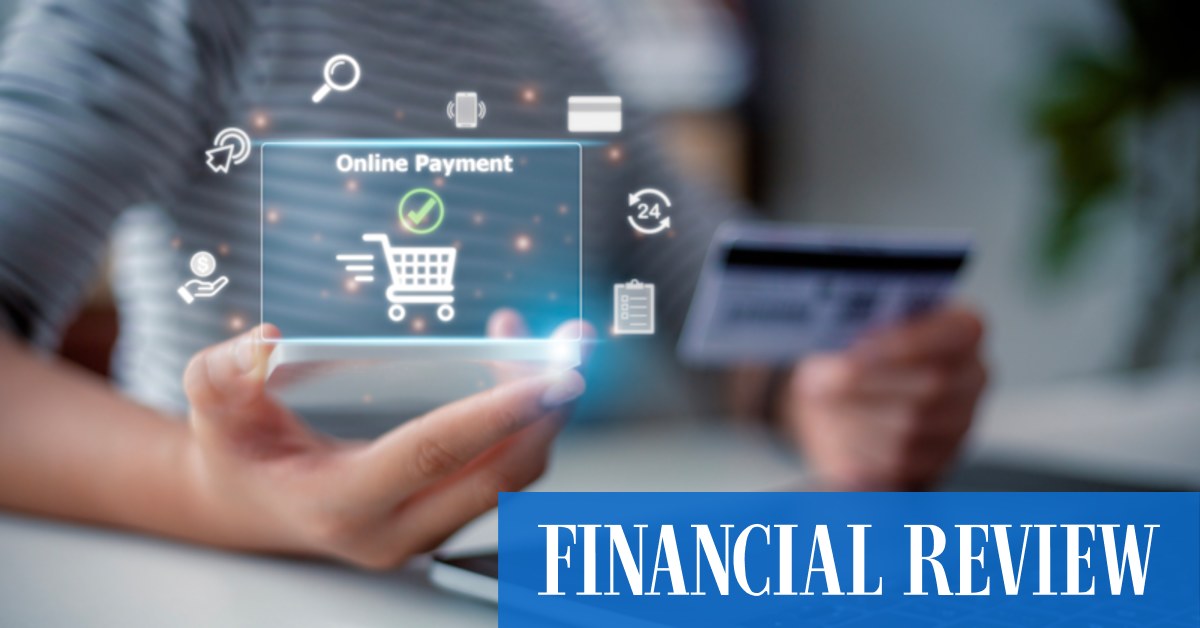
Research commissioned by PayPal found that 31 per cent of Australians say they will abandon a purchase if they cannot see the payment method they want to use, while 45 per cent say they will abandon a purchase if checkout becomes too complicated or requires them to navigate too many screens.“Every click is friction,” he says. “The faster you can see the product you want and check out without having to type in things like your name, your address and all those sorts of things, the better the experience becomes.”Simon Banks, managing director of PayPal Australia. The challenge for retailers is that customer expectations continue to evolve. Consumers increasingly expect purchasing experiences that are simple, intuitive and tailored to their preferences. If a preferred payment option is difficult to find, some shoppers may leave before reaching the checkout page.“If a consumer wants to use Pay in 4, you don’t want to make them go looking for it,” he says. “Making it visible early in the cycle is something that we believe could help online retailers drive sales.”Rather than focusing solely on transaction processing, retailers are paying closer attention to how payment choices influence purchasing decisions throughout the customer journey.For many retailers, average order value has become an increasingly important metric as customer acquisition costs rise. Once a shopper arrives on a website, businesses are looking for ways to increase basket size without creating additional friction.Flexible payment options are increasingly being used as a conversion tool, particularly when retailers make them visible early in the purchasing journey.Banks points to common retail scenarios where consumers add additional products to qualify for free shipping thresholds.“One of the areas we quote is that if you put PayPal Pay in 4 messaging early in the flow, you can see sales growth of approximately 13 per cent,” he says.Flexible payment options can influence how consumers approach purchasing decisions by providing additional choice in how they pay.For retailers, the objective is not simply to offer more payment options. It is to integrate those options in ways that support conversion while maintaining a seamless customer experience.The practical impact of these decisions can be seen in businesses such as The Monogram Shop, an Australian personalised gifting and embroidery retailer.Jonathan Gregorace, owner of The Monogram Shop, says changing customer behaviour following the pandemic prompted the business to rethink how customers completed purchases online.“With the world being such a place of uncertainty for some time now since COVID-19, we noticed that people were making a lot more last-minute purchases, only ordering items they required when absolutely necessary,” Gregorace says.Jonathan Gregorace, owner of personalised gifting and embroidery retailer The Monogram Shop. The business also began receiving requests for payment flexibility from customers who wanted to spread the cost of purchases over time.Gregorace says some customers began asking for layby-style purchasing arrangements that would allow them greater flexibility in how they paid for orders over time.That feedback contributed to the decision to introduce PayPal Pay in 4, allowing customers to split purchases into instalments while receiving products immediately.“This allows the customer to purchase their item from us as they need it but then also make their payments in four instalments to make the purchase a more manageable experience,” Gregorace says.The retailer has since observed changes in customer payment preferences and purchasing behaviour.“Since implementing PayPal Pay in 4 on our website, we have personally seen that more customers have used this payment method,” he says.Perhaps more importantly, Gregorace says reducing complexity throughout the purchasing process has contributed to stronger commercial outcomes.“This is a huge point being an ecommerce store,” he says. “Things need to be easy to use, and less clicks could result in more sales as it takes away the complexity and more opportunity for things to go wrong.”He says the approach appears to have contributed to increased orders and fewer abandoned shopping carts.As competition intensifies and customer acquisition becomes more expensive, businesses are paying greater attention to the design of customer journeys and the factors that influence purchasing decisions.The result is a growing recognition that conversion does not begin at checkout. It begins much earlier, shaped by the information customers see, the payment options available to them and the ease with which they can move from browsing to buying.For retailers navigating an increasingly competitive ecommerce environment, the customer journey is becoming more than a user experience consideration. It is increasingly a commercial lever that can influence conversion, basket size and long-term customer value.To find out more, please visit PayPal.*PayPal Pay in 4 is a continuing credit contract provided by PayPal Credit Pty Ltd (Australian Credit Licence 568848). Merchant and customer eligibility criteria and terms apply. See paypal.com/au for details. Individual results may vary.
Retailers reshape customer journeys to boost conversion
As customer acquisition costs rise, retailers are paying closer attention to what happens after a shopper arrives on a website.
781 words~4 min read


 shopify.com