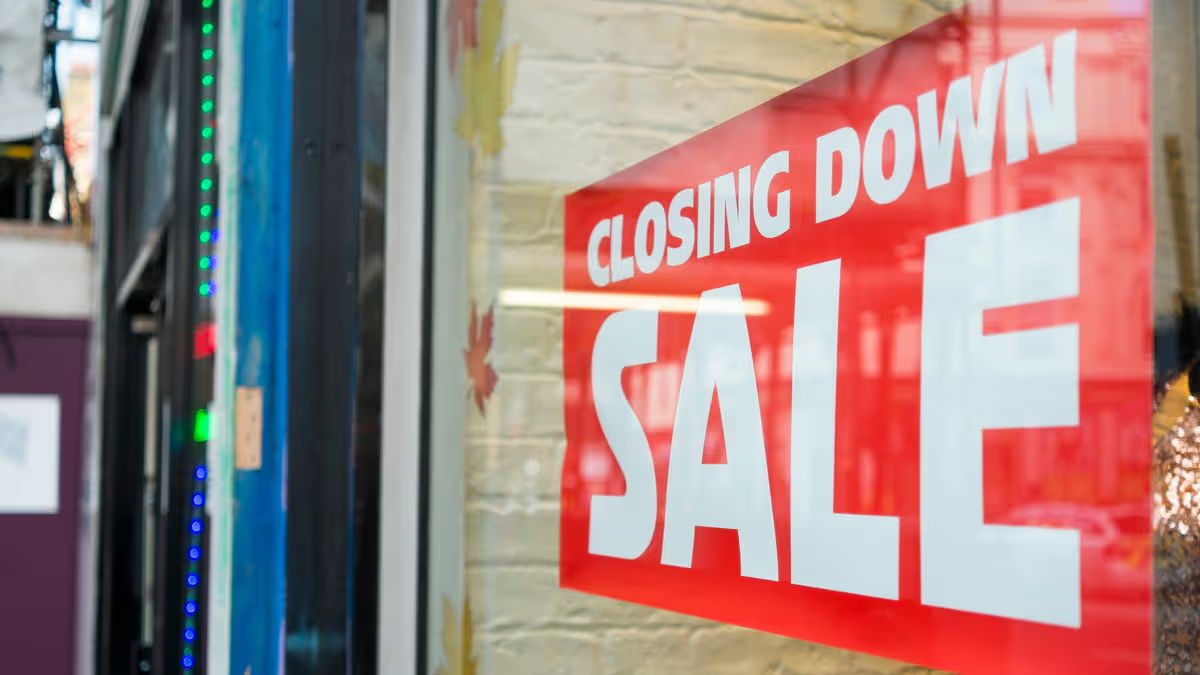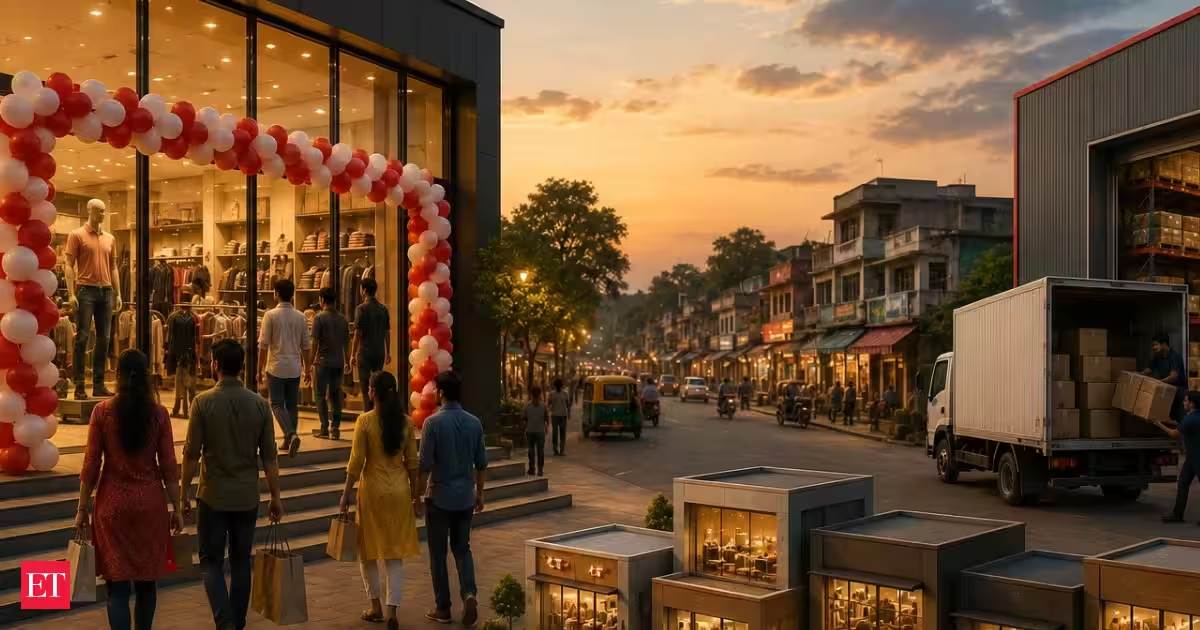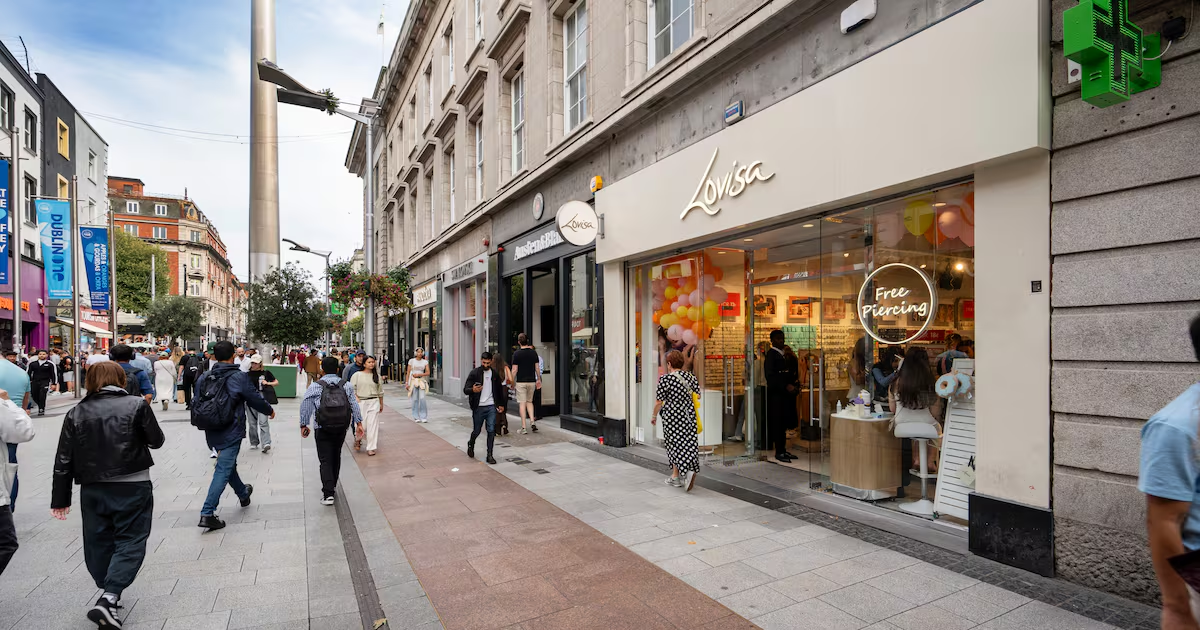
The rise of ecommerce has had a profound impact on economies, world trade, social mobility and urban landscapes. The €20 trillion retail industry (excluding food) is migrating at pace from brick-and-mortar shops to online channels. Here’s the scale: last year An Post delivered 75 million parcels, and expects to deliver well over 100 million parcels this year. All this in a country of just two million homes. At its peak in December, An Post was delivering three million parcels a week. Currently the explosion in ecommerce sees An Post parcel deliveries up 40 per cent in the first quarter of 2026 compared with the same period in 2025 (partly due to the closure of Fastway couriers, but mostly from exponential market growth). Ecommerce accounts for only 20 per cent of retail sales in Ireland (the EU average), while it is 38 per cent in the UK and well above 50 per cent in South Korea. The growth will continue for years to come.We are witnessing legacy postal services transform from their historic role of delivering letters into new technology-driven networks at the forefront of the ecommerce revolution. Surprisingly to some, An Post is one of Ireland’s leading indigenous technology companies. This is largely positive: postal organisations had been declining in relevance for decades. Now they have almost by stealth become essential infrastructure for trade. But EU legislation – the cross-border directive and the postal directive – is outdated. To cope with the vertiginous growth, the EU is drafting new legislation aimed at reducing regulation and ensuring consistency in this increased cross-border ecommerce trade. Earlier this month I attended a meeting with EU commissioner Stephane Sejourne, along with my counterpart postal chief executives in the EU, to discuss the delivery act. The distinction between postal companies and platforms such as Amazon and TikTokShop is critical for traders, especially SMEs. If postal networks aren’t capable of supporting SMEs – and most Irish companies are in this bracket – then they are forced on to the platforms to trade internationally at huge cost to them (paying margins of up to 50 per cent if their products are sold via a platform). [ David McRedmond: ‘An Post has been brilliant. I’ve never been remunerated less and enjoyed a job more’Opens in new window ]If postal companies handle SMEs’ logistics, the costs are just the postal charge and SMEs retain their independence. And of course the postal networks are important for citizens to trade person to person, including via services such as Vinted or Depop, the fastest-growing area of ecommerce. Deutsche Post, La Poste, PosteItaliene, and indeed An Post among others are a vital trade network for the EU. The European Commission is only now beginning to recognise this essential, democratic, liberal, role of postal organisations to society. With the delivery Act, the EU is moving positively to strengthen the postal industry by ensuring it is not regulated more than private platforms; by liberalising outdated and costly universal service obligations (on letter delivery); and facilitating cross-border transactions. And what of Ireland? The Government here has also underestimated the seismic change brought by ecommerce. It has just watched An Post grow its top line and earnings in sharp contrast to the gloomy official predictions of decline. When An Post publishes its 2025 results, people will see just that: a company in strong top-line growth, generating cash and increasing earnings for the third consecutive year as it emerged from the pandemic. The growth is so strong that An Post recently announced it was recruiting an additional 330 postal workers to increase network capacity, a big jobs announcement that went largely unnoticed. In the first quarter, An Post delivered 40 per cent more parcels than in the first quarter of 2025. An Post’s challenge is how to develop capacity to meet new growth. Meeting the challenge is made harder by slow decision-making and unnecessary intervention. The recent comments of the departing chief executive of Metrolink (surprised that a new headquarters that was already approved in his budget had to get another sign-off from officials) were no surprise to semi-State chief executives.Since the financial crash the levels of scrutiny and bureaucracy have increased and pace of decision-making slowed. The Taoiseach has called for faster decision-making and for the recent infrastructure task force called out for judicial reviews and planning laws to be simplified. An Post chief executive David McRedmond. Photograph: Nick Bradshaw The Government could help by liberating semi-State companies and their boards, especially for those, such as An Post, that do not receive State funding. Decisions not requiring government expenditure should not have to go to government for approval. An Post needs to invest now if Ireland is to have the trading capacity for 2030 and beyond.One difficult consequence of the ecommerce revolution is the loss of a retail presence in our cities and towns. In the recent UK local elections, the “death of the high street” was a top-four issue among voters. In London, the Oxford Street Regeneration Corporation is already thinking about this; the imminent Dublin city counterpart, to be headed by Robert Watt, will need to do the same. Towns throughout the State need now to rethink their purpose and their commercial mix, to and reimagine their streetscapes. There will be fewer shops, but ideally as part of a vibrant mix of shopping, leisure, culture, work and habitation.Another big consequence is a reglobalisation of the world economy. Goods are manufactured anywhere and delivered everywhere. In this type of environment, trade wars are inevitable. The EU is planning to remove a de minimis tax exemption from goods from outside the EU to stem the tsunami of Chinese imports. Unfortunately, the misguided target is the postal ecosystem, although 95 per cent of Chinese imports come in bulk through commercial channels (potentially avoiding the proposed charges) and are only then distributed by local players. A well-intended but misdirected move needs to be stopped, was the message from the postal chief executives to the commission.The delivery Act is a major EU directive under the Irish presidency. It must preserve the unique democratic, “common good” postal ecosystem, local and global, as a vibrant alternative to private global platforms. Locally, recognising the increasing relevance of An Post as essential infrastructure for the economy, for citizens and for SMEs will be important to Ireland. Developing a cohesive and dynamic trade policy must be near the top of the Government’s agenda if Ireland, and the single market, are to be winners in the ecommerce revolution.This is the positive sense of urgency that I feel as my term as chief executive of An Post comes to an end. David McRedmond is chief executive of An Post
Surge in ecommerce means we need to reimagine retail on the streets of our towns and cities
The €20tn retail industry (excluding food) is migrating at pace from brick-and-mortar shops to online channels
1,112 words~5 min read