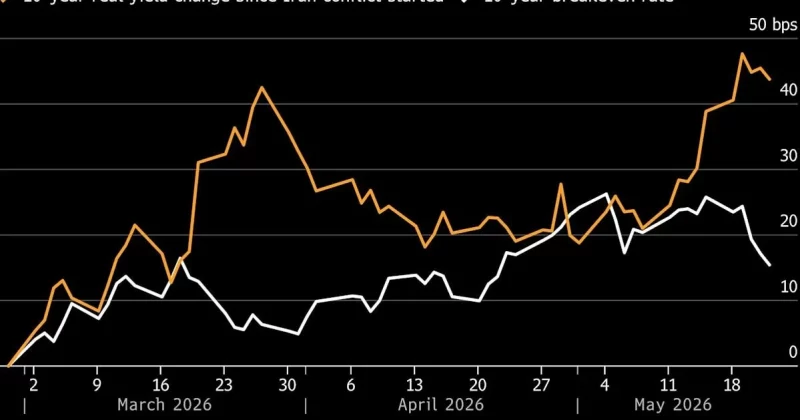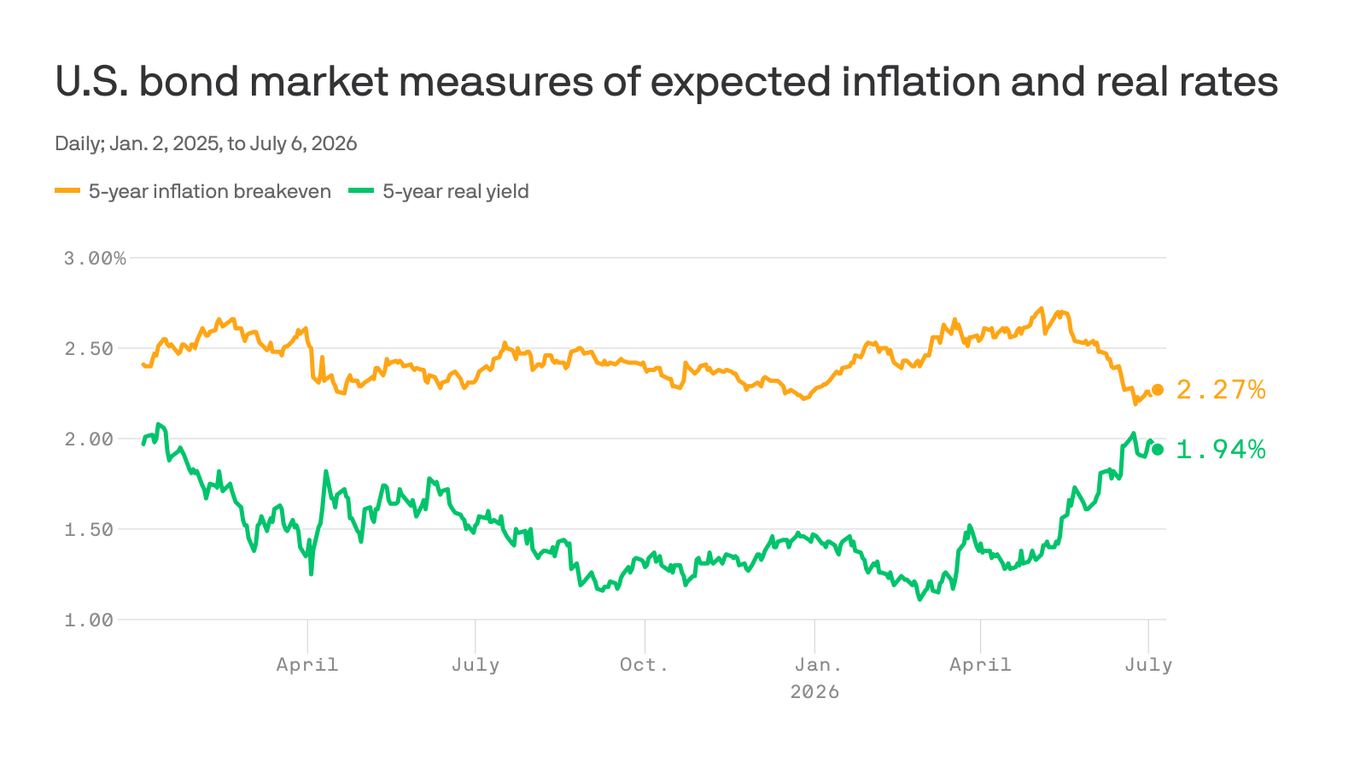
Beyond war-related inflation fears, longer-term borrowing costs in the US are increasingly being driven by a rise in so-called real yields, which strip out inflation, indicating bond investors aren't just worried about price pressures from the Iran war. Other culprits include signs already large public debt burdens will swell even further, fallout from the AI investment boom and the mounting chance central banks such as the Federal Reserve will raise rather than cut interest rates. The speculation, highlighted by strategists at ING Bank NV, Goldman Sachs Group and Barclays Plc, is that the recent jump in some long-term yields will not fully reverse even if the inflation spurred by costlier oil retreats. That risks keeping market borrowing costs elevated around multi-year highs even after the conflict ends, maintaining pressure on governments and economies. "The argument that duration is selling off globally due to inflation fears is hard to square with market pricing of medium- and long-term inflation risk," said Jonathan Hill, head of US inflation strategy at Barclays. "Instead, the interaction between rising debt levels, potentially higher neutral rates, and AI could be driving real rates higher." The neutral rate is the level which neither spurs nor slows the economy. While the surge in oil prices may be capturing headlines, breakeven rates that measure the inflation expectations of bond-markets haven't risen as far as overall rates in the US and UK. Hill notes that even amid war, 10-year breakevens are 50 basis points below where they were in the first half of 2022, when the US Fed was jacking up rates.
Strategists warn yields to stay high even after Iran war
US borrowing costs are rising due to factors beyond war inflation. Real yields are increasing, indicating bond investors are looking past immediate price pressures. Growing public debt, AI investment, and the possibility of central banks raising interest rates are also contributing. Experts suggest these higher borrowing costs may persist even after oil prices stabilize, impacting governments and economies.
261 words~1 min read