The war in the Middle East is doing what wars tend to do to financial markets: making everything more expensive and everyone more nervous. G7 government bond yields have climbed to around 4.6% on the 10-year, up from 3.2% before the US-Israeli military campaign against Iran began on February 28. That’s a 140-basis-point jump in roughly three months, the kind of move that reprices entire portfolios overnight.
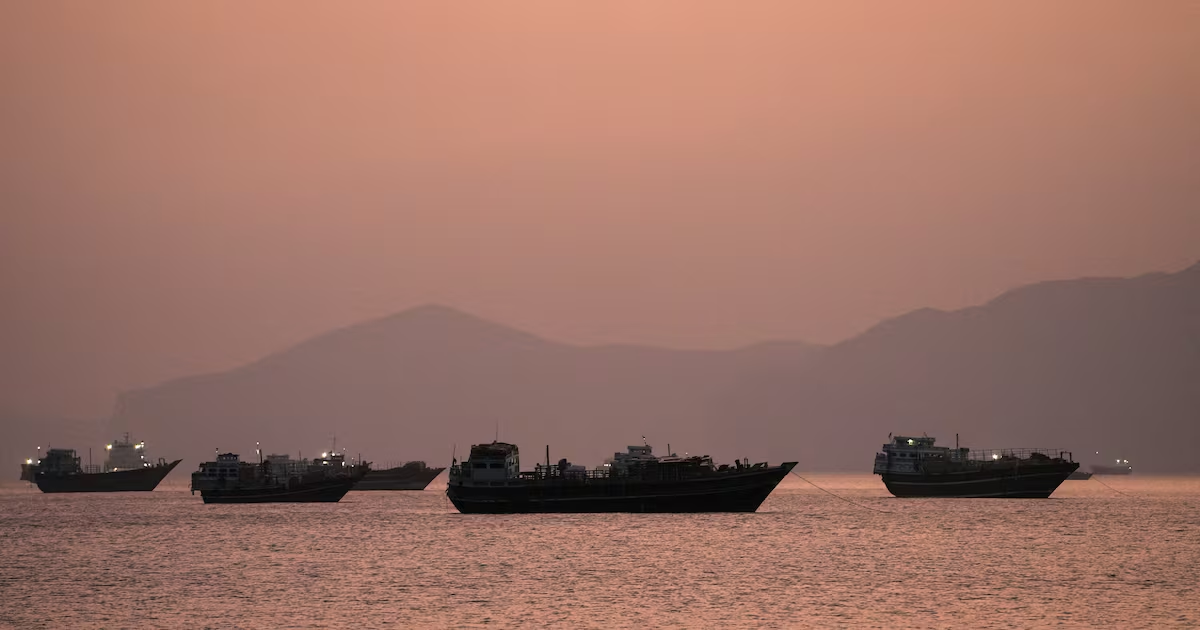
Brent crude hit $111 per barrel by mid-May, a level not seen since the worst of the post-Ukraine energy shock. The catalyst is straightforward: Iran’s closure of the Strait of Hormuz, the narrow waterway that handles roughly 20% of the world’s oil trade. Shut that down and you don’t just get an oil price spike. You get a global inflation problem.
The G7 response: concern without clarity
G7 finance ministers and central bank governors gathered in Paris from May 19-21 to address what has become the defining economic challenge of 2026. Their joint statement acknowledged that the conflict “heightens risks to both economic growth and inflation,” citing disruptions across energy, food, and fertilizer supply chains.
Here’s the thing about G7 joint statements: they’re designed to signal coordination without committing to specifics. This one was no different. The ministers flagged the problem. They did not announce a solution.