Computer rendering of artificial intelligence used in preliminary psychiatric interviews. Courtesy of KAIST
The standard intake interview in a psychiatric clinic is a delicate, time-consuming calculus: A clinician must extract highly structured medical histories while simultaneously evaluating a patient’s emotional state.
Now, researchers in Korea are outsourcing the administrative half of that equation to artificial intelligence (AI), attempting to solve a chronic bottleneck in mental health triage.
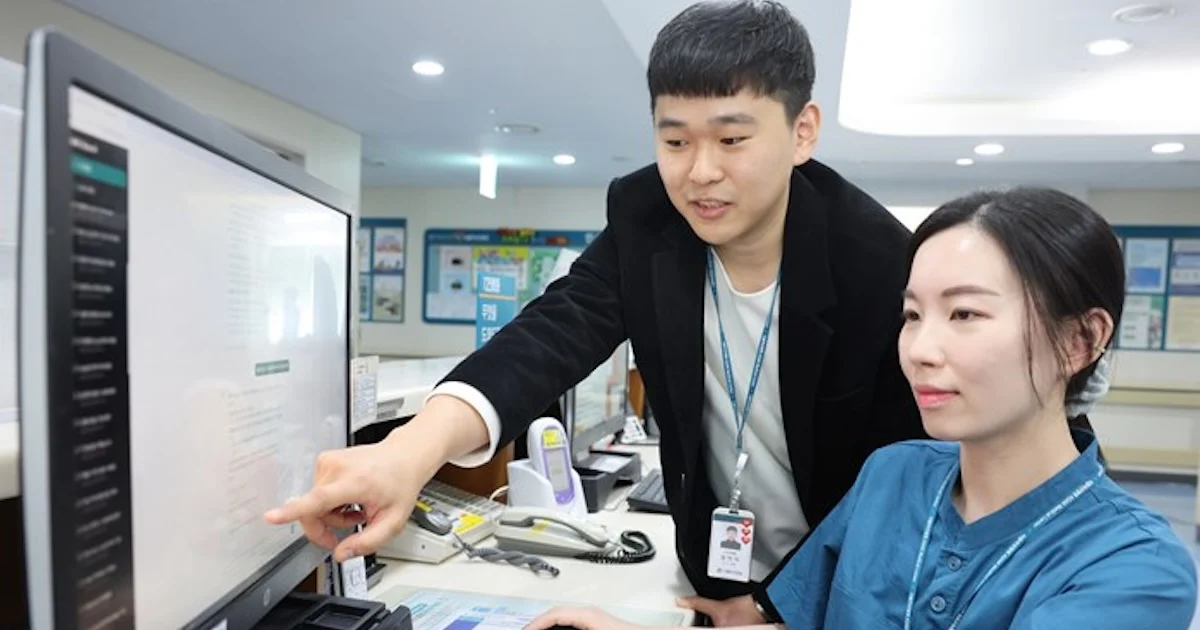
A joint team from KAIST and Gangnam Severance Hospital has developed a generative AI assistant designed to conduct preliminary psychiatric interviews. Built on a large language model, the system engages patients before they ever step into a doctor's office, mapping out symptoms and medical histories in real time to build a comprehensive clinical dashboard for the attending physician.
The research — led by Lee Ui-chin and Lee Tak-yeon of KAIST, alongside Kim Eun-joo, a professor of psychiatry at Gangnam Severance Hospital — was presented this month at ACM CHI 2026, a premier international conference on human-computer interaction.