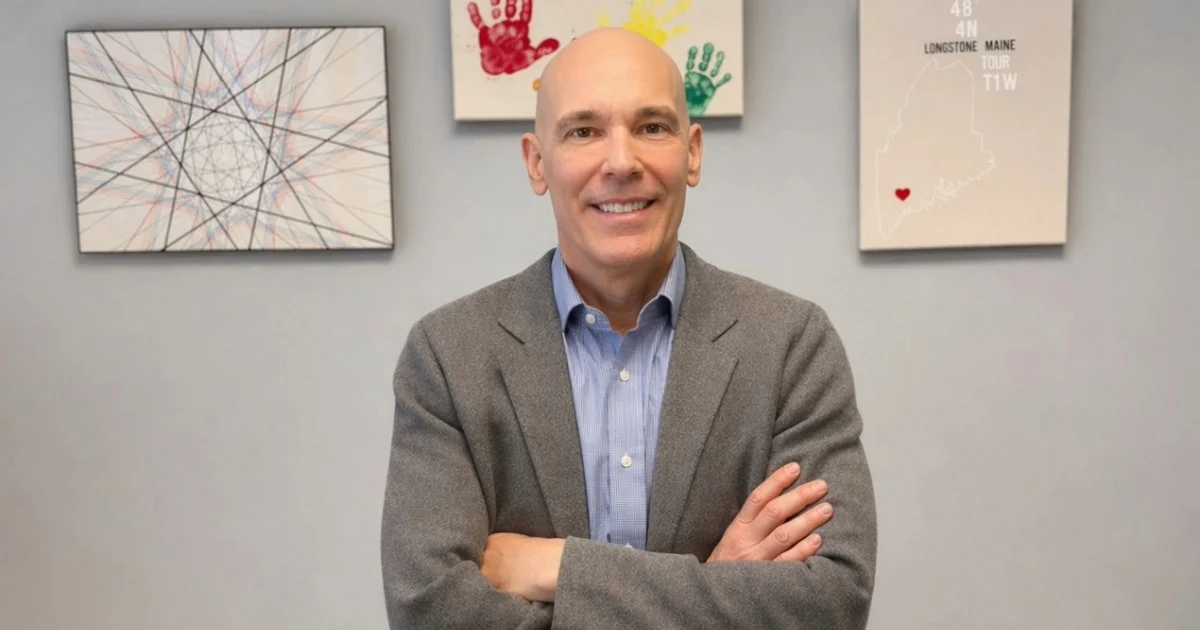
For years, hospitals have poured time, money and manpower into electronic health records, building sprawling digital systems meant to organize modern medicine. But somewhere along the way, many clinicians found themselves buried beneath the very technology designed to help them.At Children's Hospital of Orange County, known as CHOC Children's and part of the Rady Children's Health health system, Dr. Steven Martel believes a new wave of artificial intelligence tools may finally help reverse that trend."We've spent decades building the electronic health record into the operational backbone of healthcare," said Dr. Steven Martel, vice president and chief health information officer at CHOC Children's."Functionally, these systems have become structured, longitudinal databases optimized for documentation and billing – not for clinical insight generation," he added. "When we speak about clinician burnout, in large part, this is due to the cognitive burden associated with the struggle to extract data that is clinically relevant and actionable for a specific patient."Martel sees agentic and generative AI as more than another tech upgrade. He views it as a rare opportunity to fundamentally change how clinicians interact with patient information and how information systems generate insight from massive amounts of data.Faster answers for complex cases"Agentic and generative AI systems represent one of the most impactful opportunities in the last decade of IT advancement, that offers real hope to change the experience for clinicians in a positive way," Martel said. "Within our own health system, we leverage tools that provide contextually aware viewpoints that can be honed to specific diagnoses allowing clinicians to view the information from structured and unstructured data within a single context."The practical impact, he said, is already becoming clear inside the health system."Chart reviews of complex patients that could take an hour or more, are now able to be reliably managed within minutes," Martel said. "Most important, the rich body of information that lives within the scanned or innately created documentation is now surfaced face up complete with annotations and linkages to the source information in a way that could only have been dreamed of five years ago."For clinicians juggling packed schedules and medically fragile patients, shaving an hour-long review down to minutes can dramatically alter the pace and pressure of a workday. Martel argues the benefits extend beyond efficiency."We believe this creates a safer healthcare experience for our patients and improved EHR experience for our clinicians," he said.Guardrails before hypeStill, Martel is quick to caution against treating AI as a cure-all."Although I am bullish on the benefit that these tools can deliver, organizations should approach with skepticism some of the narratives that are offered about these technologies," he said.He said healthcare organizations need to understand exactly how AI models are built and whether the tools truly fit their patient populations."Understanding how these tools work, the underlying foundations of knowledge used to build their models, and careful assessment for applicability to your organization's patient population is critical in assessing whether a specific tool will be of benefit," Martel said.That measured approach reflects a growing reality across healthcare, where leaders are eager to embrace AI while also worrying about patient safety, flawed outputs and overreliance on automation.Building a smarter data cultureFor Martel, the bigger challenge is not simply adopting AI software. It is changing the way hospitals think about data itself."Health system leaders need to know that the opportunity with agentic and generative AI is not just adoption – it is about redefining the organization's approach to data and how clinical insights are generated and acted upon within the organization," he said.To make AI work well, he said, healthcare organizations need flexible data platforms and a willingness to experiment – even when some initiatives fail."For AI to fundamentally contribute to an improved experience, leaders should focus on treating data as an asset and creating a data platform foundation that allows flexibility to leverage tools in a beneficial way," Martel said. "Leaders should recognize that some tools will fail and that is more informative than those that succeed."He added that successful AI deployment often comes only after repeated testing and refinement."Building organizational tolerance for measured risk balanced with appropriate oversight and governance will allow the organization to advance despite the occasional failure of some AI initiatives," Martel said. "Moreover, when tools succeed it is often through trial-and-error, rounds of refinement, and constraint-setting. If leaders believe that the tools simply need to be 'turned on' and success will occur, they will be disappointed."Keeping humans at the centerEven as AI systems become more advanced, Martel said healthcare leaders cannot lose sight of the people at the bedside."Most important, as AI becomes more capable, we should not lose sight of the importance of keeping patients safe within the health system," he said.For that reason, he believes autonomous clinical decision-making should remain off limits."Autonomous workflows that involve clinical decision-making should be avoided," Martel said. "Preserving and operationalizing the human-in-the-loop framework for clinically related AI supported workflows is ideal to augment but not replace the clinical judgment of those delivering care."In many ways, the debate now unfolding inside hospitals is not simply about technology. It is about trust – in the data, in the tools and in the clinicians expected to use them. At CHOC Children's, Martel believes AI can help ease the strain that has long defined modern healthcare. But only if hospitals remember that the technology works best when it supports human judgment rather than trying to replace it.HIMSS is hosting the one-day AI Executive Leadership Summit in Boston on June 24, 2026, followed by its AI in Healthcare Forum June 25-26. Register separately for the two events here and here.Follow Bill's health IT coverage on LinkedIn: Bill SiwickiEmail him: [email protected]Healthcare IT News is a HIMSS Media publication.WATCH NOW: The cost savings of SDOH
AI's promise meets the pediatric frontline
At CHOC Children's, Dr. Steven Martel sees generative AI not as a magic switch, but as a tool that could ease clinician burnout, speed care and reshape how hospitals think about data.
955 words~4 min read