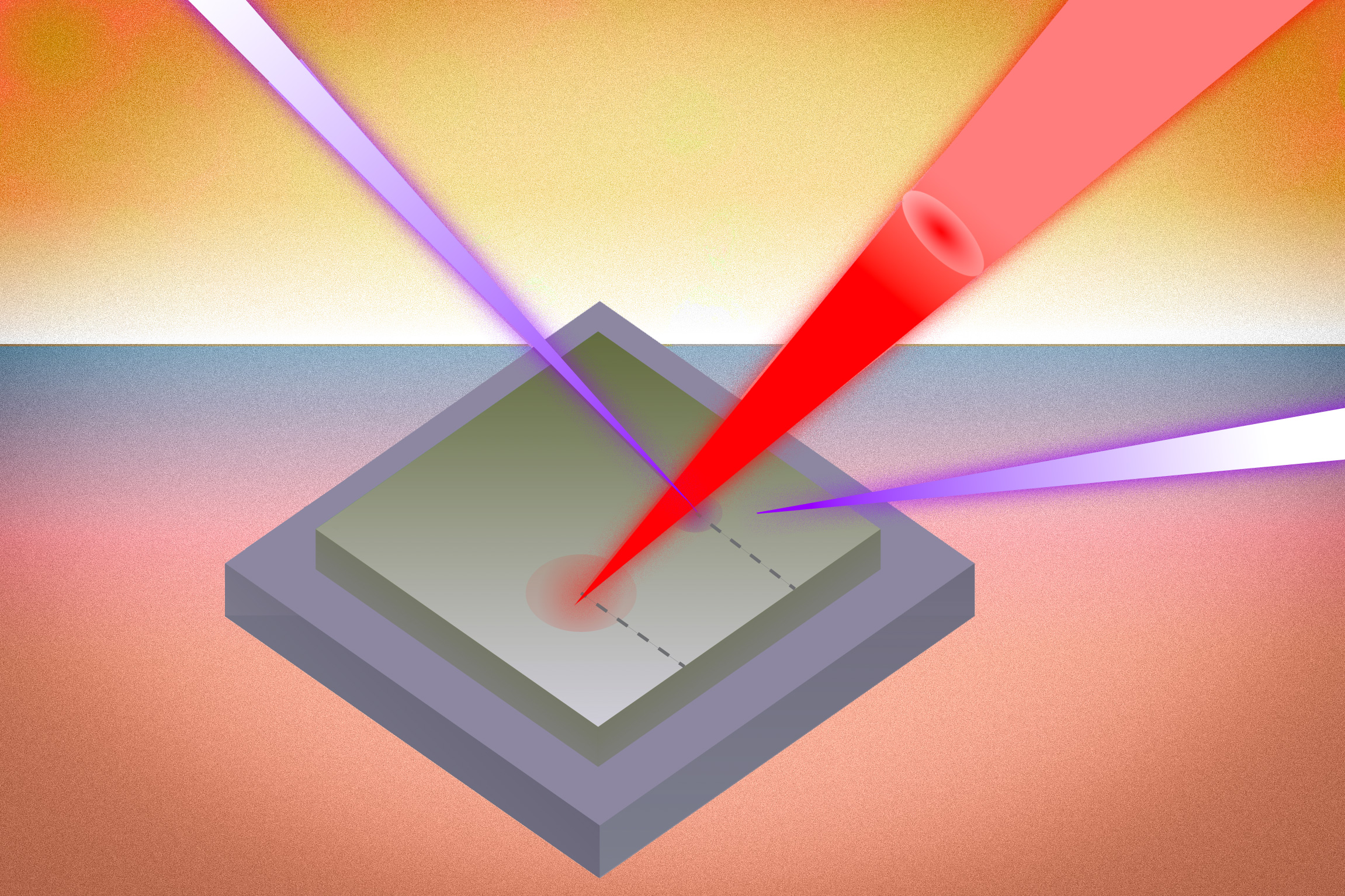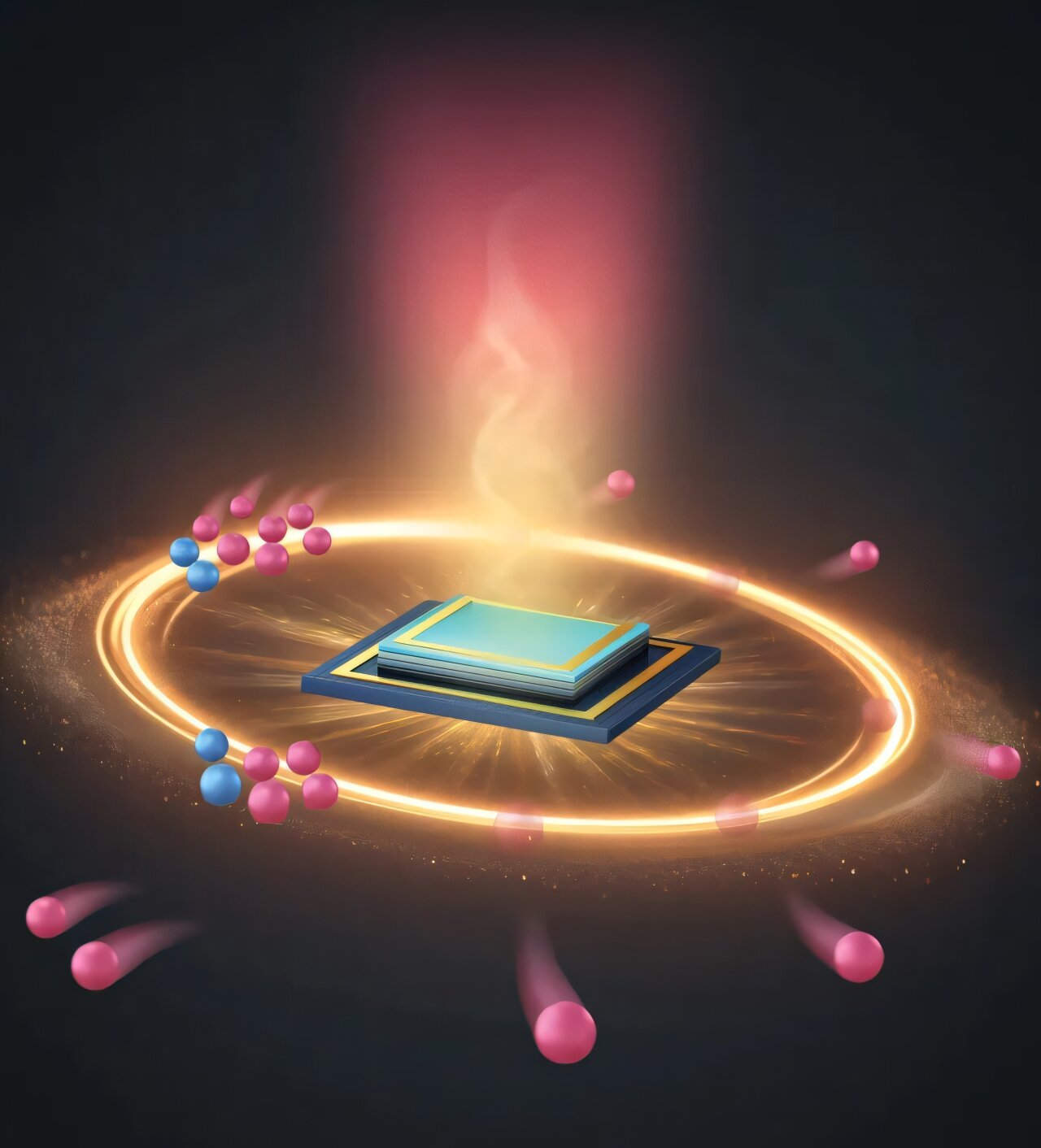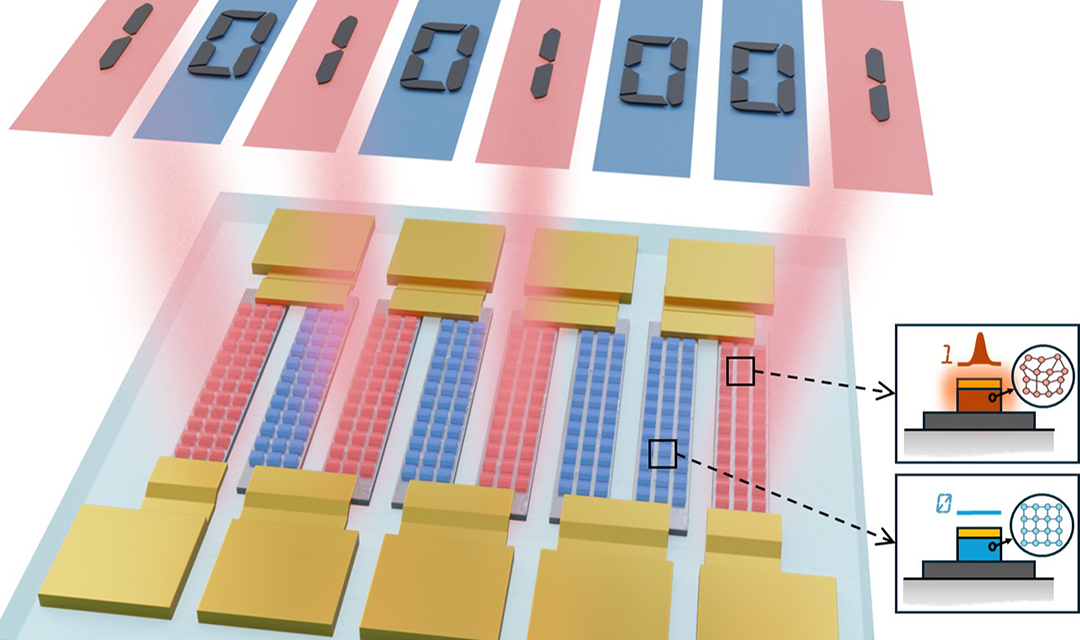
Pictured above:Illustration of a nanoscale computing device with multiple memory cells and a digital readout, with inset diagrams showing switching states.
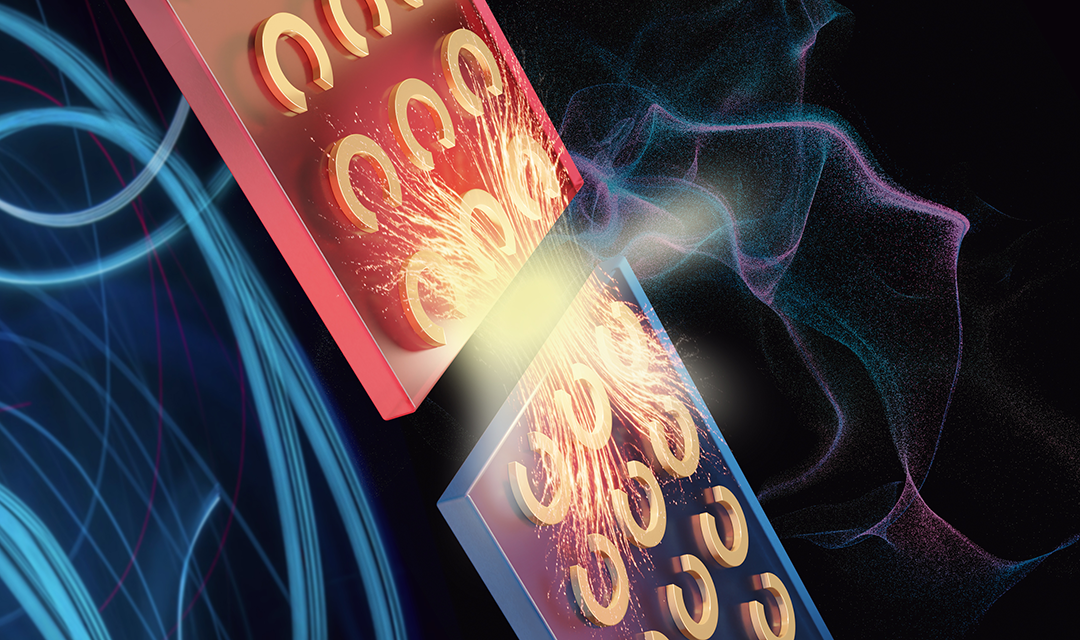
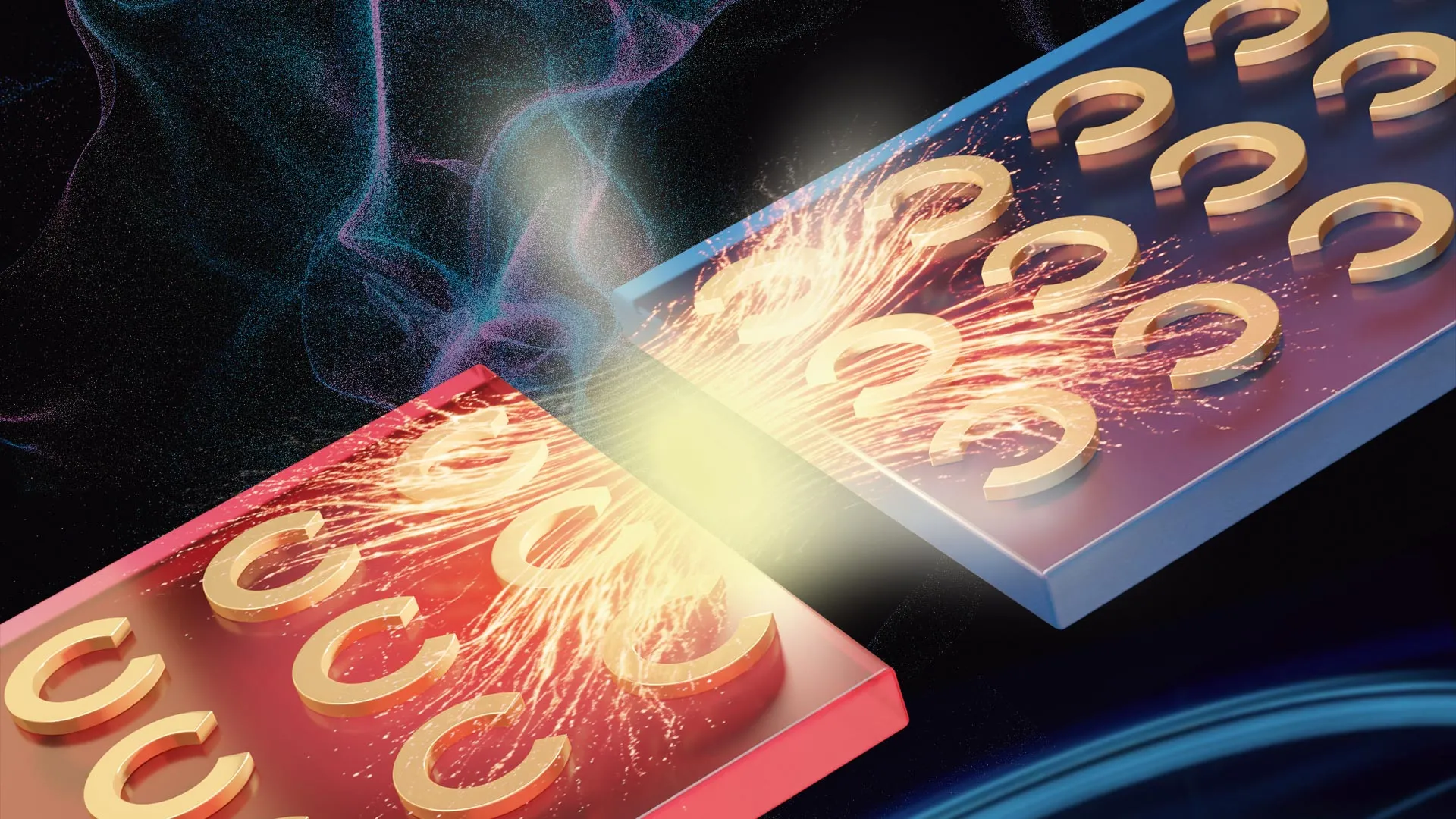
A Carnegie Mellon University research team has developed a pioneering technology that manipulates thermal radiation with the precision of pixels. The work, published in Science Advances, outlines a method for “digitizing heat,” allowing for the intelligent, high-speed, and continuous control of thermal emission. This breakthrough holds significant promise for applications ranging from advanced thermal camouflage to chemical sensing.
Every object emits thermal radiation, which is invisible to the human eye but can be detected by thermal cameras. Controlling this emission is extremely difficult. Hence, traditional methods rely on heating or cooling an entire object, which is slow and requires copious amounts of energy.
“Previously, we didn’t have this kind of digital-type design. Every piece was merged into a single one,” explained Xiu Liu, Ph.D. student in mechanical engineering and the lead researcher on the paper. “We could only simply switch the whole device into binary states—on or off.”
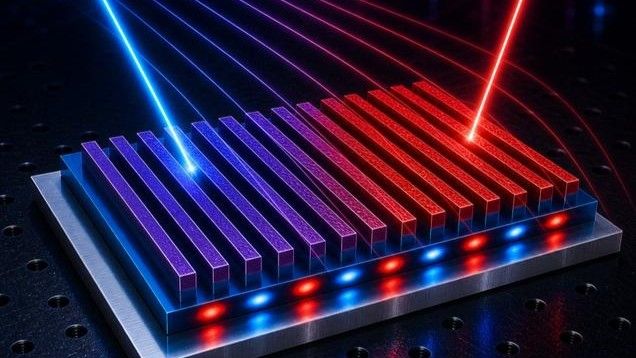
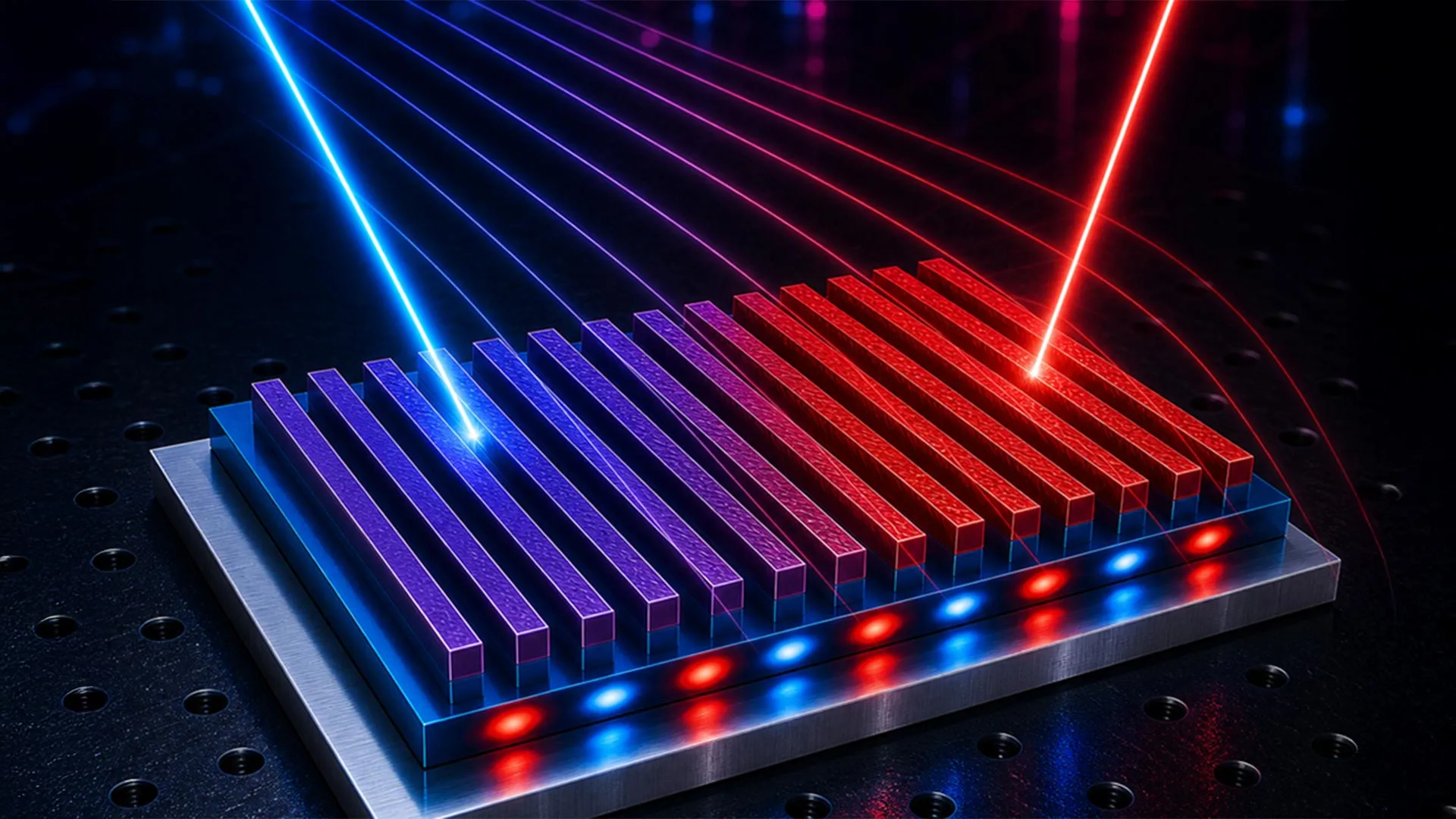
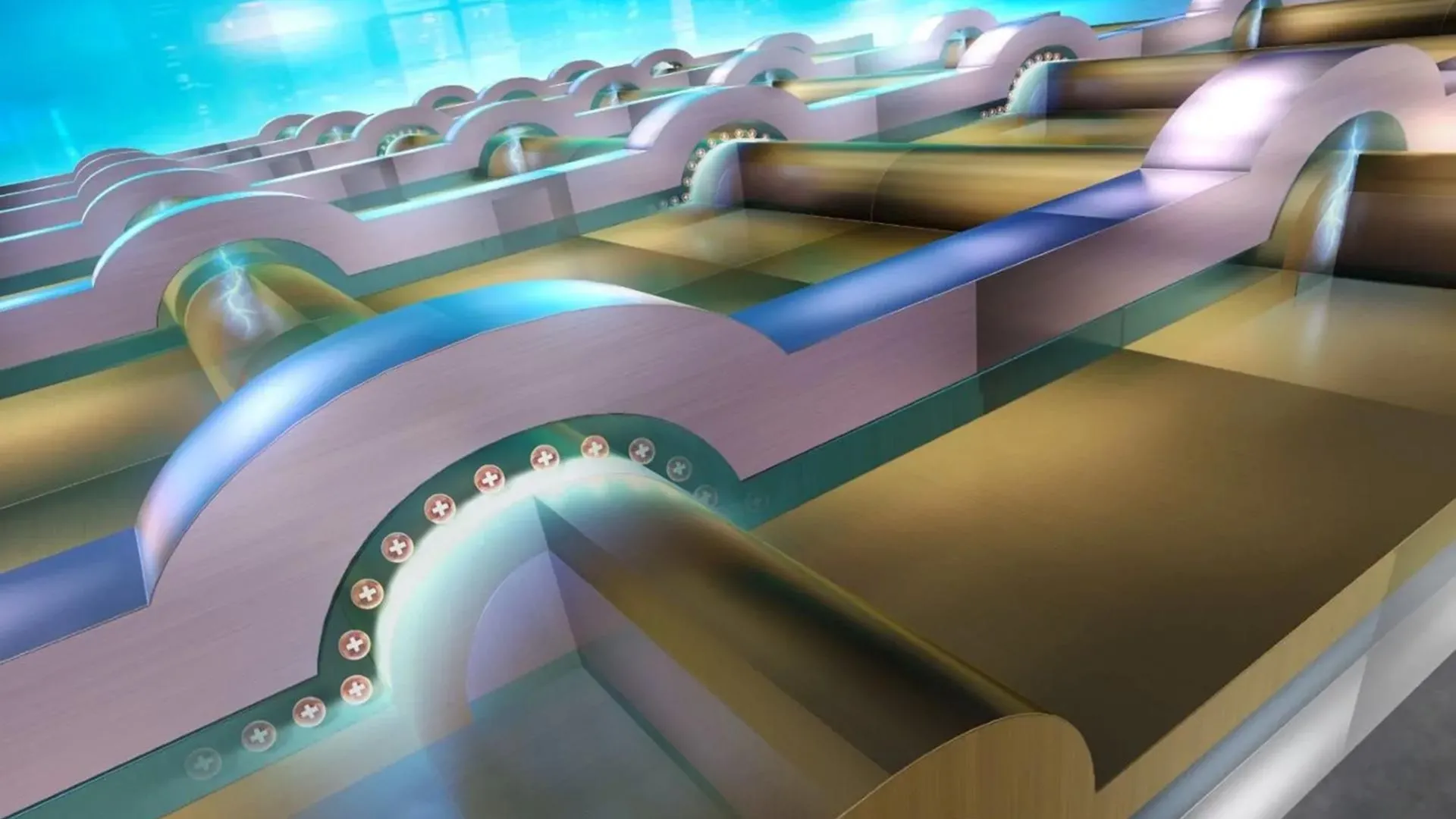
The team’s innovation combines metasurface concepts with a specific phase-change material called germanium telluride (GeTe). This material is commonly used in electronic long-term memory devices. GeTe is unique because it can change its physical state to alter how it emits heat, but it does not require constant power to maintain that state, making it non-volatile.