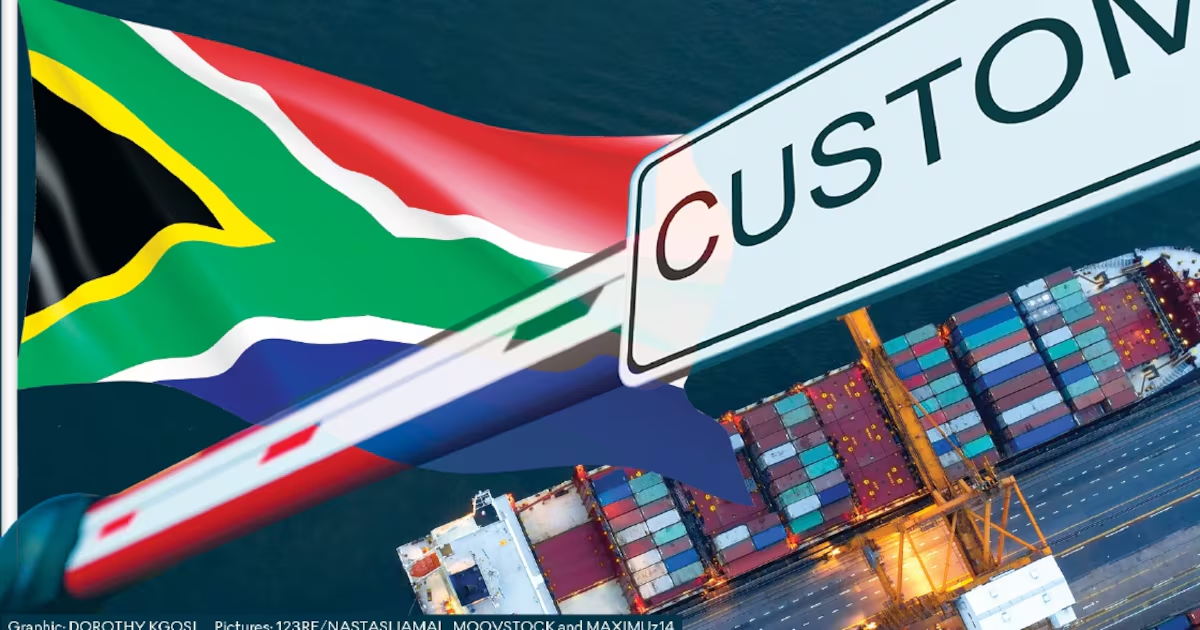
I have been critical of Botswana’s approach to agricultural trade in the region. In recent years the country has imposed frequent bans on imports of South African fruits and vegetables to protect its domestic farmers. Such an approach would be understandable if we were not all part of the Southern African Customs Union (Sacu) which, among other things, is intended to encourage free trade. The imposition of frequent nontariff barriers disrupts the South African farming community and businesses and imposes a cost burden on consumers in Botswana. One can sympathise with Botswana’s efforts to boost its food security by increasing domestic production and reducing reliance on South Africa. However, the regular blocking of products from other member countries in the absence of a national risk or disease threat amounts to protectionism, which runs counter to the spirit of the customs union. Botswana President Duma Boko made some encouraging comments on this issue in an article published in this newspaper before President Cyril Ramaphosa’s visit to the country earlier this week (“Botswana-SA relations improving to meet the challenges of our times”, May 20).The approach Botswana should consider is proper, effective co-ordination and communication with other Sacu countries, particularly South Africa. Botswana’s ambitions for agricultural expansion would benefit from the resources and expertise of South African agribusinesses and commodity associations. Others are already on this path, such as the Citrus Growers Association, whose technology not only benefits South African farmers but also others across Southern Africa. Agricultural input suppliers, machinery suppliers and others could also join this approach and support agricultural activities more ambitiously. However, as we encourage such steps the path to fair trade must continue with the removal of bans on certain fruits and vegetables and a firm commitment to fewer interruptions to agriculture and food markets in our region. South Africa’s agriculture has a lot at stake as Botswana is an important trading partner. The country accounts for 6% of South Africa’s $15.1bn total agricultural exports in 2025, or $845m. The top products South Africa exports to Botswana include maize, rice, sunflower oil, cider and other fermented beverages, sugar, fruit juices, beer, milk, oilcake and ginger. Fruits and vegetables do not feature prominently because Botswana has been implementing regular import bans since about 2021. Beyond the Botswana-specific factors, South African policymakers should consider a review of the Sacu agreement, which is key to advancing our approach to agricultural export diversification. It is becoming clear that some countries are reluctant to engage seriously with South Africa on trade due to Sacu. To potential partners the customs union often appears opaque and unpredictable. Many are interested in South Africa itself, not the wider region. Pretoria should therefore press for Sacu reform while preserving the development programmes that provide social support to neighbouring states. In today’s evolving global trade environment countries must be agile in negotiating new agreements to sustain their economies. South Africa is on a path of export expansion and when other countries see their interests aligned with ours the government must be able to sign trade agreements. As things stand South Africa is obliged to consult Botswana, Eswatini, Lesotho and Namibia as members of Sacu. In the past, this practice worked well as there was no urgency and most trade matters took years to be concluded. Negotiating as a customs union also ensured that countries interacting with the region could access a slightly larger market. But the world has changed and each country must put its own interests first. For South Africa, unlike other countries in the region, there are pressures in markets such as the US and a need to expand export markets as the domestic industry increases output across various sectors of the economy. South Africa must therefore have the flexibility to move at its own pace in finalising trade matters. The modern version of trade arrangements in this region should allow countries to enter into bilateral trade agreements with various partners while maintaining low tariffs within the bloc.• Sihlobo is chief economist at the Agricultural Business Chamber of South Africa.
WANDILE SIHLOBO | Botswana’s import bans put Southern African Customs Union to the test
Frequent nontariff barriers disrupt regional trade and undermine co-operation
674 words~3 min read