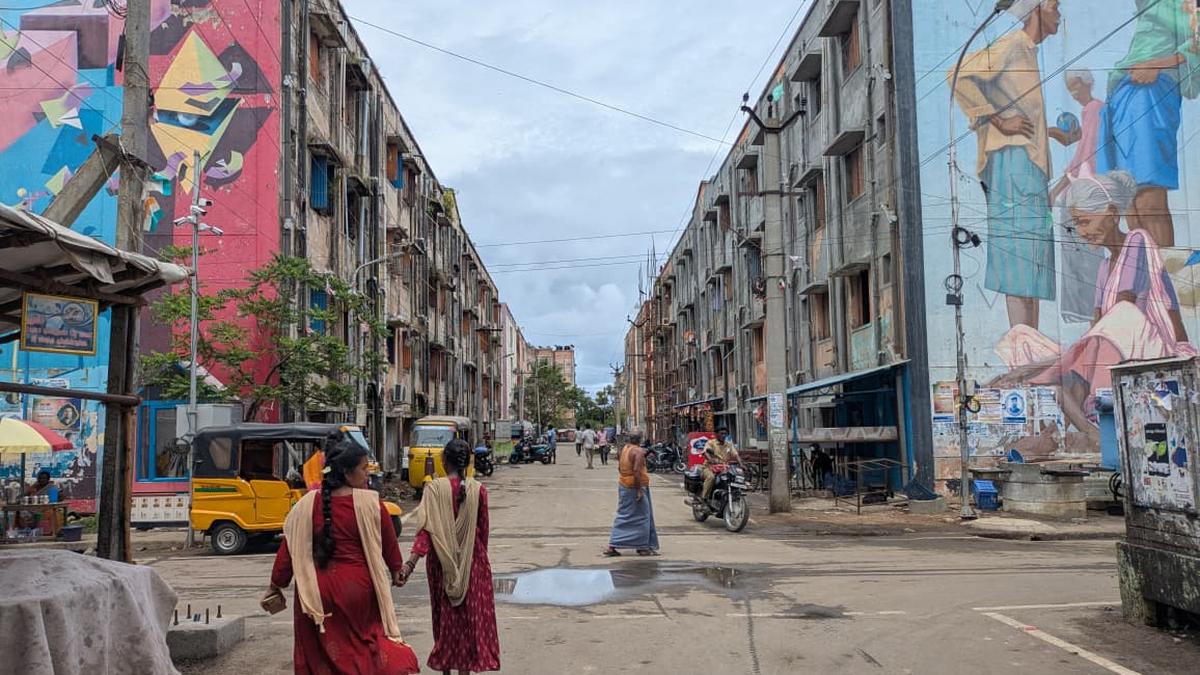
The queue outside the Primary Health Centre (PHC) in Perumbakkam, a neighbourhood on the southern outskirts of Chennai, begins forming early, before the sun climbs fully overhead and the concrete starts radiating heat. By 10.30 a.m., pregnant women occupy most of the verandah — some seated on benches, others leaning against walls, clutching medical files and water bottles that turn warm within minutes.Ceiling fans push thick air around the room but offer little relief. Outside the PHC, row after row of grey tenements built by the Tamil Nadu Urban Habitat Development Board stand packed tightly together, their numbered blocks stretching into the distance, a maze of concrete. Between them are narrow passages, some strewn with debris and dirt, and almost no shade. There are few trees, barely any open ground, and little room for air to move.
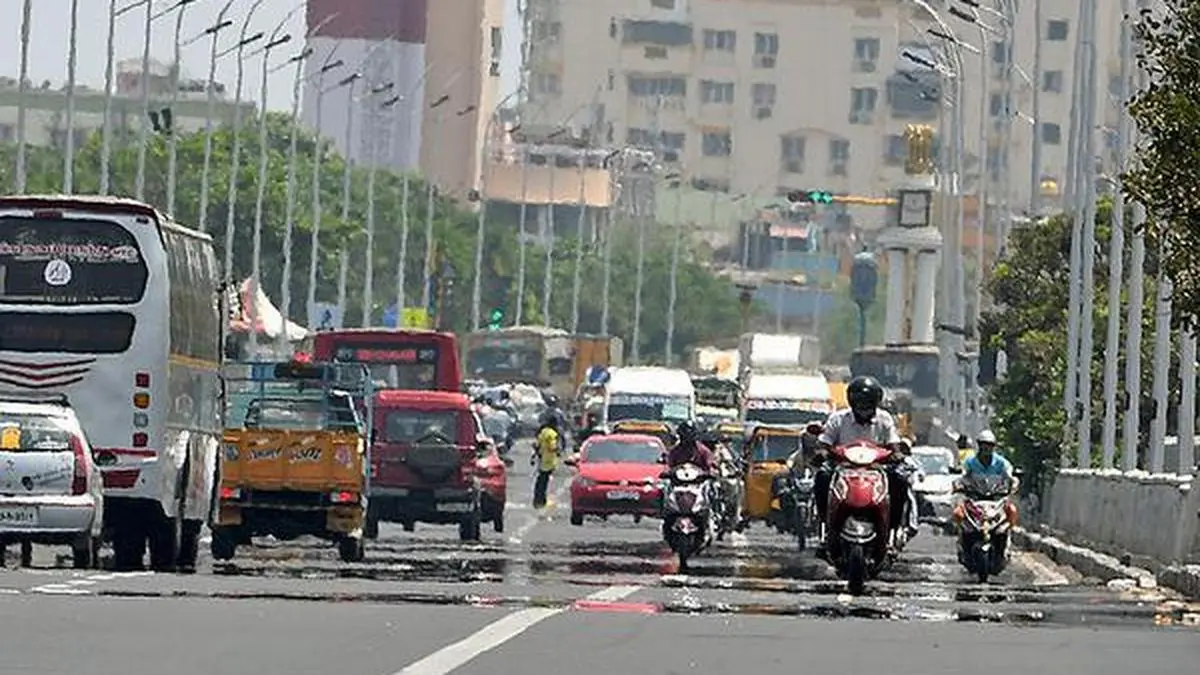
Pregnant women face higher physiological strain from heat, increasing risks of dehydration and exhaustion
| Photo Credit:
Special Arrangement
Pregnancy and heatTwenty-four-year-old Priya has been here since morning. Five months pregnant with her second child, she shifts uncomfortably in her seat while keeping one eye on her four-year-old son, who darts between the benches and the doorway. She says the worst part of summer is not the daytime heat but the nights. “From midnight till almost 4 a.m., I don’t sleep properly,” she says. “It’s too stuffy inside our house.”In the single-room apartment she shares with her family, the heat settles into the walls and lingers long after sunset. Sweat leaves rashes and pale patches across her hands and face. Doctors at the PHC tell her she is anaemic and underweight at 47 kg, and repeatedly advise her to drink more water, eat iron-rich foods and rest. But rest is difficult to come by.Priya has also been diagnosed with a low-lying placenta and advised to avoid strain. Yet every morning she works cleaning discarded rubber medical equipment for a company, scraping dirt and residue from gloves and tubing using a knife. When she returns home, there is cooking, cleaning and caring for her family. Sleep comes in fragments between heat, discomfort and household responsibilities.“I have to come again for another blood check-up,” she says. “It’s very difficult to come during the day in this heat. But I have no choice because there is work at home too.”Around her, similar stories unfold in the waiting area outside the PHC.Nilofer, another resident of the Perumbakkam tenements, waits for her third-month check-up. She says her earlier pregnancies felt easier. “For my first two children it wasn’t this bad,” she says, exhausted after the short walk to the PHC. “Now I feel tired just walking here.”Across Chennai’s resettlement colonies such as Perumbakkam and Ezhil Nagar, families relocated from informal settlements into public housing now live in dense clusters of low-cost apartment blocks built by the State government. In many buildings, narrow staircases trap heat through the day, corridors remain dim even at noon, and windows open into walls of neighbouring blocks rather than open spaces. In some apartments, a weak cross-breeze reaches the upper floors, but in many others the air feels stagnant.The absence of green cover is striking. Concrete dominates the landscape — concrete roads, terraces and courtyards absorbing and radiating heat through the day and into the night. Children play in cramped corridors because there are few shaded outdoor spaces. Women spend most of their days indoors in poorly ventilated homes where temperatures remain high even after sunset.A recent study by Climate Trends, which monitored indoor temperatures across 50 low- and middle-income households in Chennai between October 2025 and April 2026, found that homes remained dangerously hot through the night, with temperatures in many houses frequently exceeding 32°C and rarely dropping below 31°C even after sunset.Researchers said concrete structures commonly used in urban housing absorbed heat during the day and released it slowly at night, while high humidity levels further intensified discomfort and disrupted sleep. The study highlights how poorly ventilated housing and heat-retaining buildings expose vulnerable groups, including pregnant women, to prolonged heat stress with little opportunity for physical recovery.Costs of hydrationIn one of the Ezhil Nagar blocks, 18-year-old Lakshmi (name changed), holding her eight-month-old child against her shoulder, says she rarely stepped outside during her pregnancy. “There’s no proper place to walk here,” she says. “My family was scared to let me go outside alone.” Even now, she says, feeding her child outdoors feels uncomfortable because of the lack of privacy and space.Safety concerns repeatedly emerge in conversations with women here. Thirty-one-year-old Anandhi, pregnant with her fourth child, says she barely lets her daughters outside during the summer holidays. She recently stopped working at a canteen in an IT company because of exhaustion and health complications. Diabetic and dependent on insulin injections during pregnancy, she spends most days trying to manage fatigue, childcare and the heat.“The doctor tells me to drink enough water and eat foods with more water content,” she says. But hydration itself becomes a challenge in neighbourhoods where heat is constant, electricity cuts are frequent during summer, and cramped living conditions leave little room for comfort. Most residents in the TNUHDB tenements rely on purchased drinking water cans, and many say they struggle to afford additional cans during the summer months, even as rising temperatures increase household water consumption and strain already tight budgets.Jaishree Gajaraj, head of the department and senior consultant in obstetrics and gynaecology at Varam Women’s Superspeciality Centre, MGM Healthcare Chennai, says pregnancy naturally increases the body’s metabolic rate, which in turn raises sweating and the risk of dehydration during hot weather.“When we talk about dehydration, we often think only about water loss, but the body also loses electrolytes,” she says, adding that fluids such as buttermilk, citrus fruits and traditional drinks with salt content can help replenish them.Dr. Gajaraj says planned, moderate physical activity during pregnancy is important and should not be confused with routine household labour. “Walking around the house while doing chores is different from purposeful walking or exercise,” she says, explaining that structured movement helps improve circulation, regulate metabolism and support overall maternal health during pregnancy.What happens to bodiesFor 24-year-old Durga, however, even stepping downstairs has become difficult. Living on the third floor of a tenement in Ezhil Nagar, she underwent a cervical cerclage procedure during pregnancy and has been advised to limit movement. But confinement inside her apartment has its own consequences.“My body feels hot all the time even though I don’t have a fever,” she says.The staircase outside is steep, and she avoids climbing down unless absolutely necessary. A table fan runs continuously in the corner of the room, but the air barely circulates. “There’s not much breeze inside the house,” she says. Dr. Gajaraj says the body usually regulates its core temperature despite external heat or cold, but prolonged exposure to extreme temperatures can overwhelm this mechanism. “When the body is unable to maintain its normal core temperature, that is when problems arise,” she says.A 2024 study published in the journal BJOG by researchers from Sri Ramachandra Institute of Higher Education and Research, Chennai found that pregnant women exposed to high temperatures faced significantly higher risks of miscarriage, preterm birth, low birthweight and intrauterine growth restriction. The study followed 800 pregnant women in Tamil Nadu between 2017 and 2022 and found that nearly half were exposed to unsafe heat levels. Researchers also recorded higher levels of dehydration and physiological heat strain among women exposed to heat.Vidhya Venugopal, who led the study, says the risks are particularly severe for women living in informal settlements and overcrowded housing. “Heat stress impairs the body’s ability to regulate temperature during pregnancy, restricts blood flow to the placenta and reduces oxygen to the foetus,” she says. “The risk of preterm delivery rises with every degree increase in ambient temperature.”For women already vulnerable because of anaemia, undernutrition, poor housing and demanding work, extreme heat compounds existing risks. “These women cannot stop working when temperatures peak because losing even a day’s wages is not an option,” Prof. Venugopal says. “After spending hours in dangerous heat, they return to homes that trap warmth and allow no recovery. Their bodies never get the chance to recuperate.”