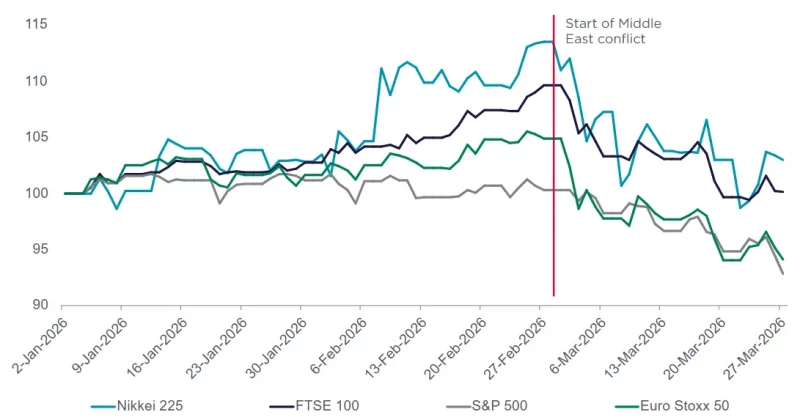
The European Commission’s spring forecast points to a weaker-than-expected economic outlook for both Bulgaria and the wider eurozone, coupled with higher inflation pressures across the region. According to the report, the slowdown is driven by a mix of fiscal strain in member states and external shocks, including the ongoing conflict in the Middle East, which is feeding into higher energy costs and broader economic uncertainty across Europe.
For Bulgaria, Brussels projects GDP growth of 2.5% in 2026 and 2.2% in 2027, while inflation is expected to stay elevated at 4.2% this year before easing to 2.6% in 2027. The Commission links the weaker performance to rising fiscal pressure, largely shaped by higher public sector wages and increased social spending. At the same time, private consumption is expected to soften, while public spending continues to play a stabilizing role in supporting overall growth.
On the eurozone level, growth is also revised downward, with expansion expected to slow to 0.9% in 2026 compared with earlier projections of 1.2%. The Commission attributes this to renewed energy shocks triggered by the Middle East conflict. As noted in the report, “the conflict in the Middle East has caused a new energy shock, which is again increasing inflation and shaking economic sentiment.” Inflation expectations have been significantly revised upward, reaching 3.0% in the euro area this year, compared with an earlier estimate of 1.9%.