Travel has always been a story of how much friction we’re willing to tolerate to get somewhere.
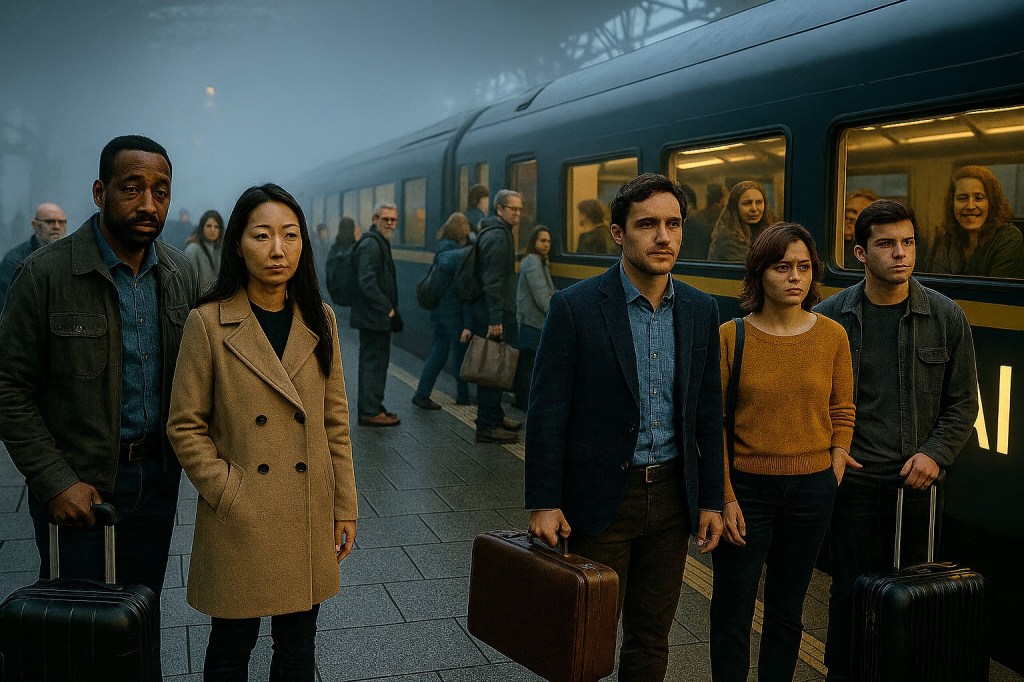
A century ago, a long-distance journey began at a train station thick with smoke and shouting — porters calling out platforms, conductors checking tickets by hand, departure boards updated by men on ladders sliding metal placards into wooden frames. To find your train, you asked. To know if it was on time, you asked. To navigate the station itself, you read paper signs, listened for announcements, and trusted strangers in uniforms. Information lived in people, on walls, and on paper. Getting it requires your active attention at every step.
AI-generated image of a bustling urban train station full of business travelers, circa 1896
Flash-forward to today. Most of us have been there: sprinting through an unfamiliar airport on a tight connection — gate changed, wrong terminal, boarding in nine minutes. Scanning digital signage for your flight details, checking your airline app on your phone, asking a stranger for directions you’re not sure you can trust. The infrastructure has become extraordinary in the century since the great train stations. Vast real-time departure boards. Multilingual overhead announcements. Phone apps pushing gate changes before you’ve thought to check. Ride-shares that know you’ve landed. Using face recognition to pass you through security. None of this felt like a revolution as it arrived, but each one is the first glimpse of something bigger: intelligence that reaches you before you reach for it.