Want smarter insights in your inbox? Sign up for our weekly newsletters to get only what matters to enterprise AI, data, and security leaders. Subscribe Now
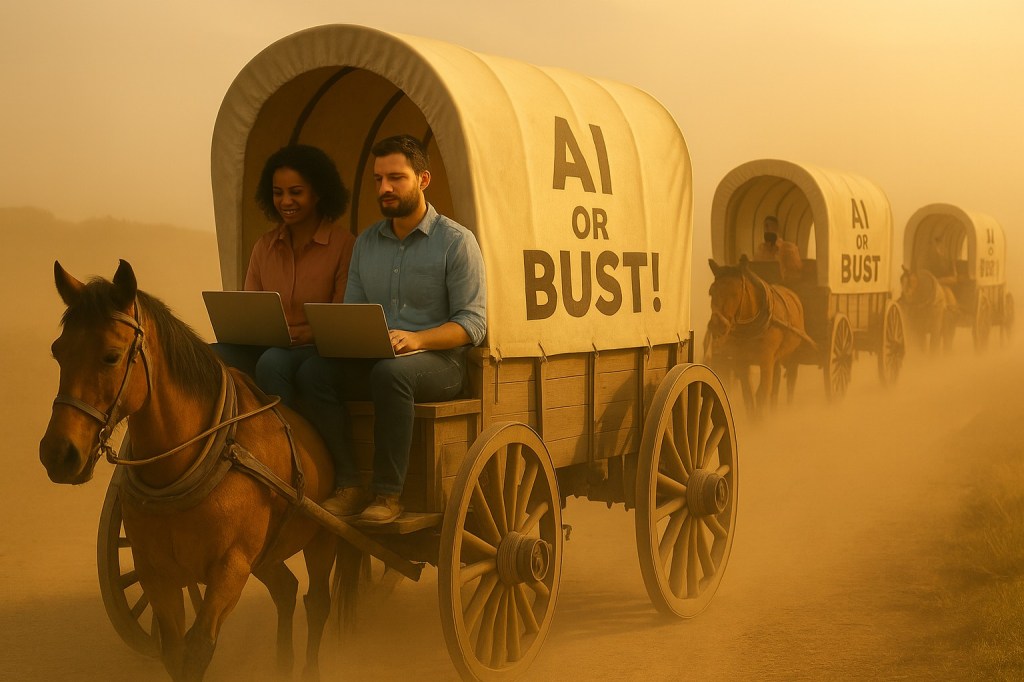
Cognitive migration is underway. The station is crowded. Some have boarded while others hesitate, unsure whether the destination justifies the departure.
Future of work expert and Harvard University Professor Christopher Stanton commented recently that the uptake of AI has been tremendous and observed that it is an “extraordinarily fast-diffusing technology.” That speed of adoption and impact is a critical part of what differentiates the AI revolution from previous technology-led transformations, like the PC and the internet. Demis Hassabis, CEO of Google DeepMind, went further, predicting that AI could be “10 times bigger than the Industrial Revolution, and maybe 10 times faster.”
Visa’s $3.5B Bet on AI
Intelligence, or at least thinking, is increasingly shared between people and machines. Some people have begun to regularly use AI in their workflows. Others have gone further, integrating it into their cognitive routines and creative identities. These are the “willing,” including the consultants fluent in prompt design, the product managers retooling systems and those building their own businesses that do everything from coding to product design to marketing.