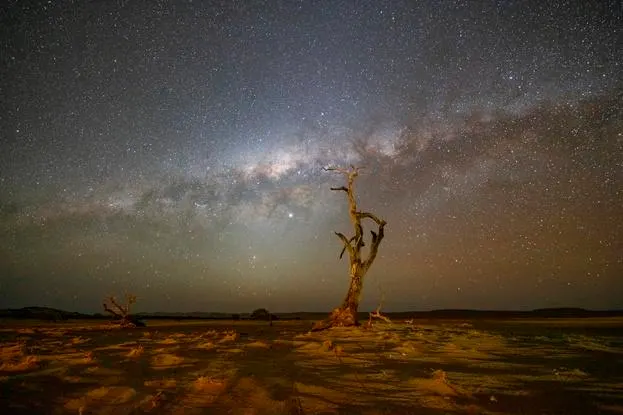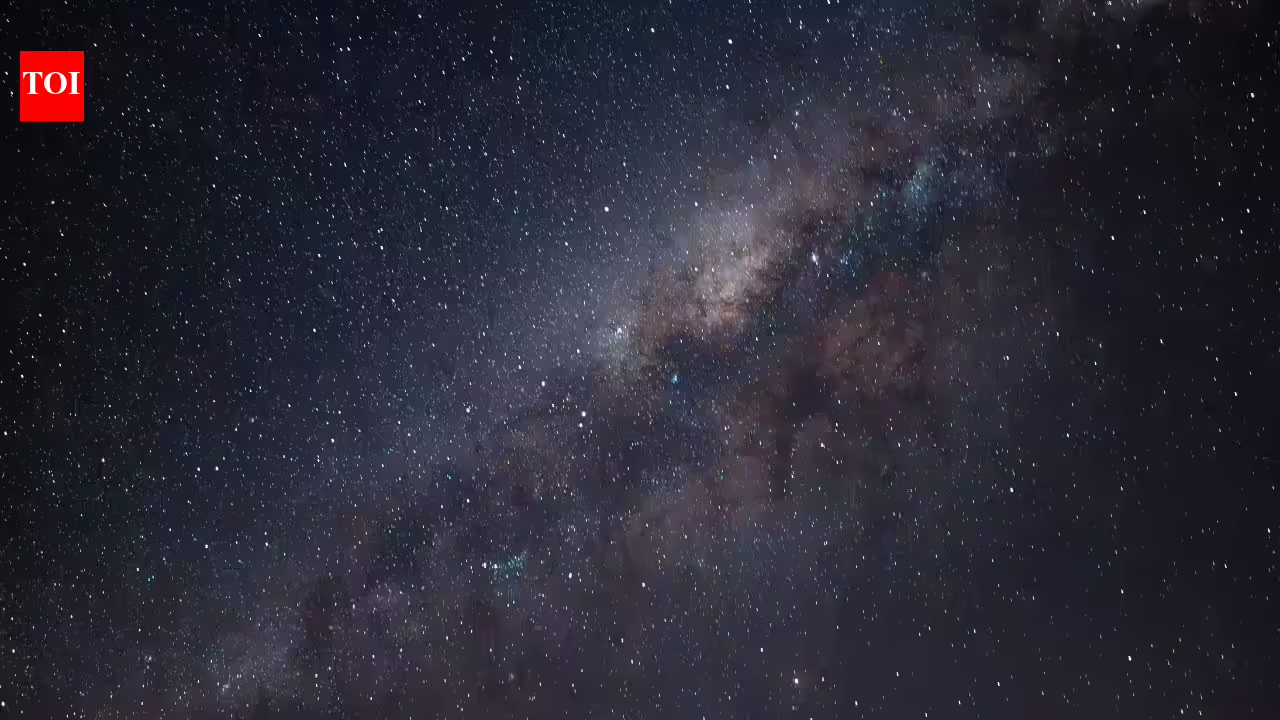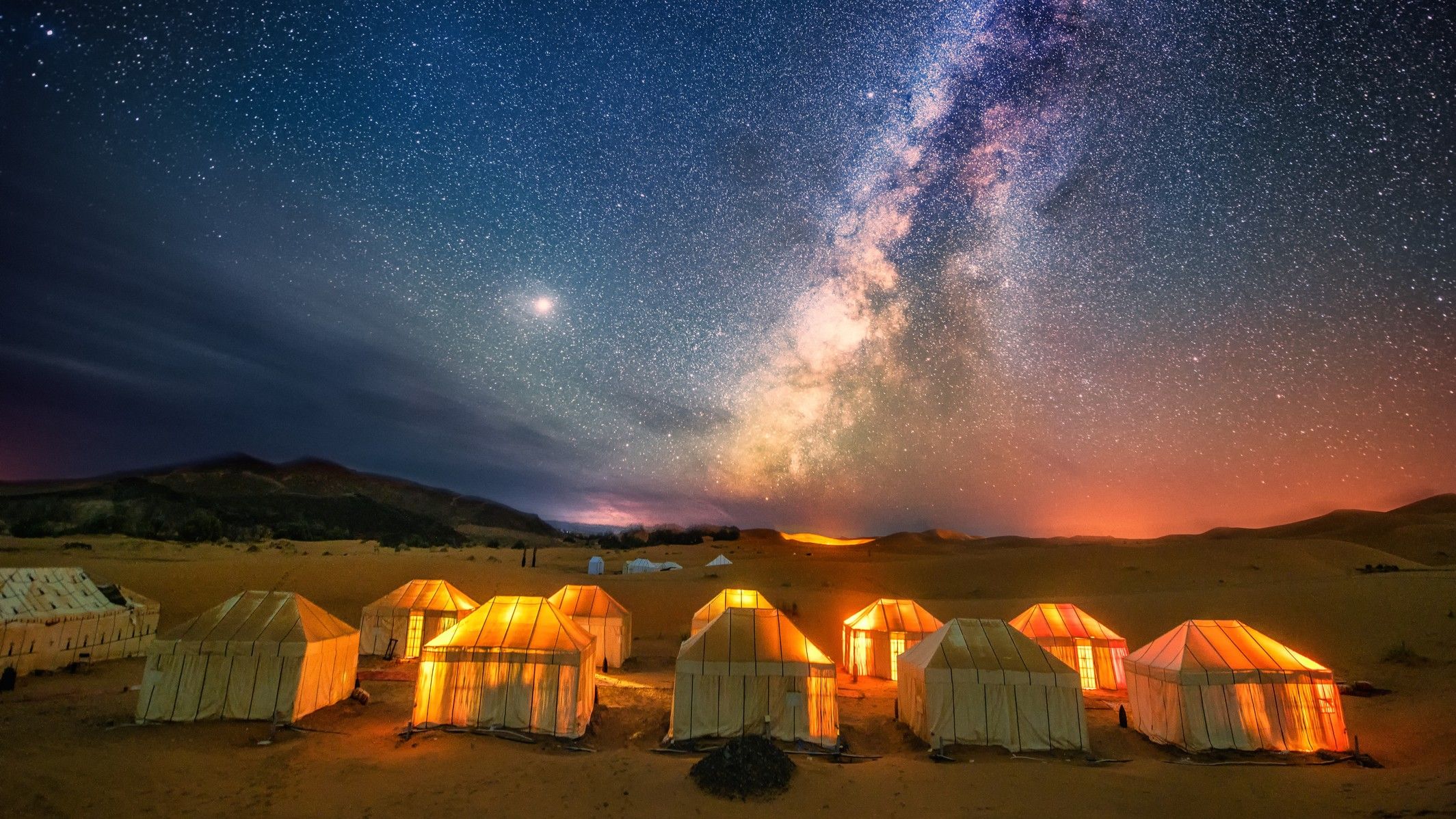
Seeing the Milky Way — here in the Sahara Desert, Morocco — takes careful planning.
(Image credit: ProPIC via Getty Images)
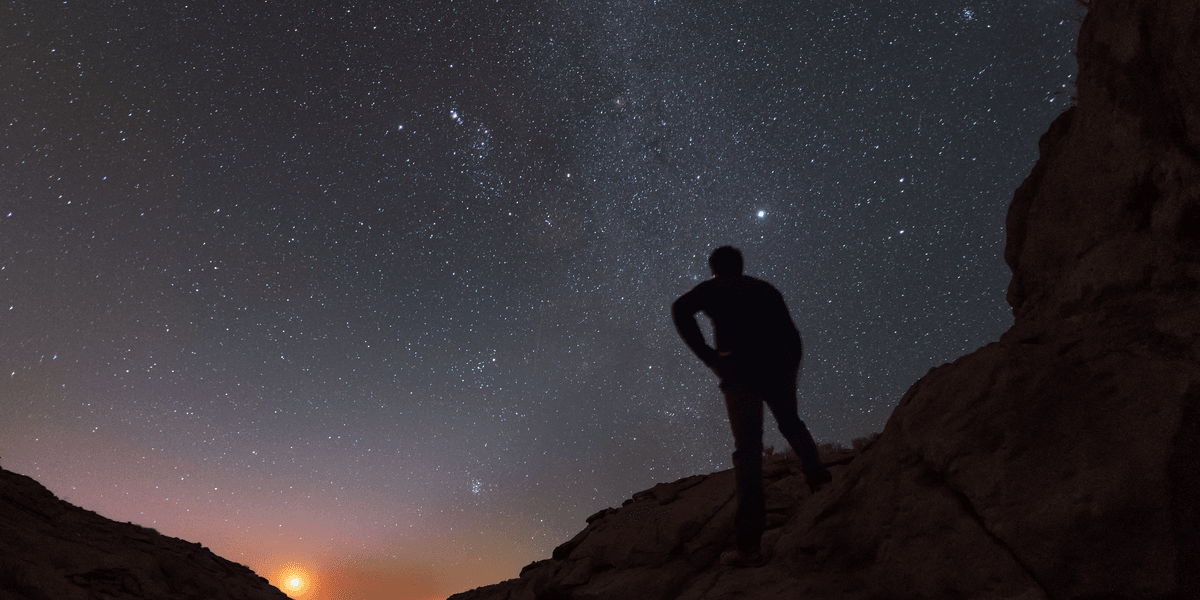
Decades ago, when I was beginning my journey as a stargazer, I found myself at a so-called "night sky experience" in a remote location that, on paper, ticked every box. We were a small group — enthusiastic, hopeful and excited, having driven into the middle of nowhere to meet an astronomer. We were all standing under a dark, protected sky.But there, on the rise as the session began, was a big, bright, just-past-full moon. There was no Milky Way, and just a few bright stars clung on.People were polite. Someone asked where the Andromeda galaxy was. We were shown a very faint smudge in a telescope, which was then pointed at the moon. Within 20 minutes, people were drifting away. There was no wow factor … just moonlight.That night taught me something I've never forgotten: darkness is not a given, and very often astrotourism is planned around the convenience of the host or the venue, not the night sky. A dark, moonless night sky is something you have to plan for — precisely and deliberately — or your stargazing experience can instantly collapse.When and where to do astrotourism