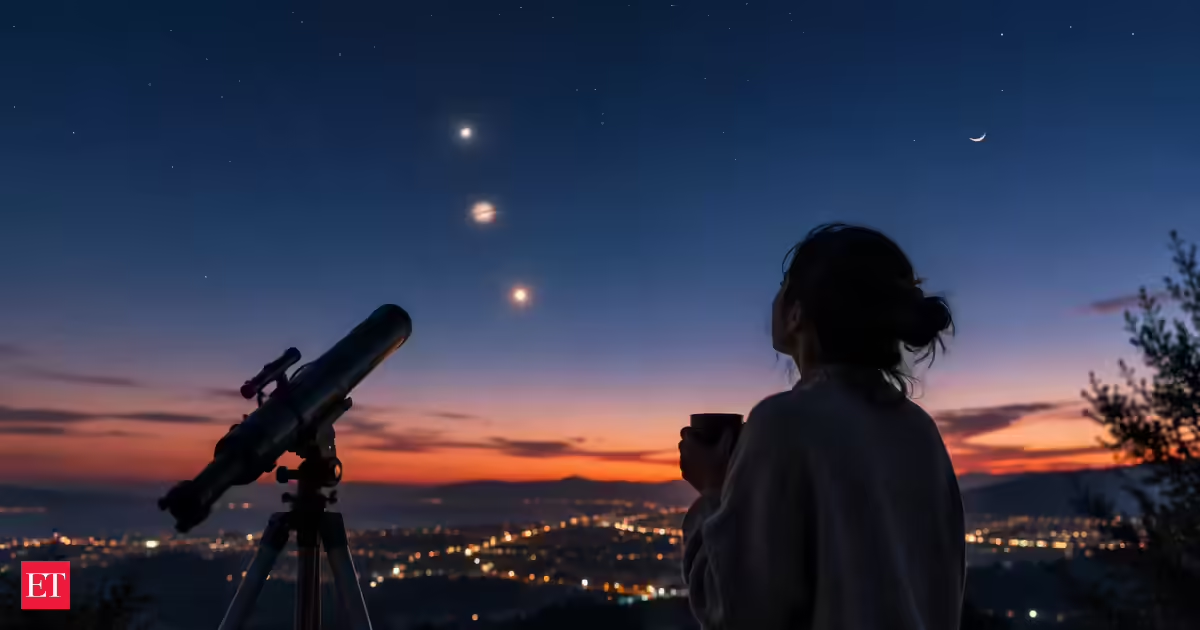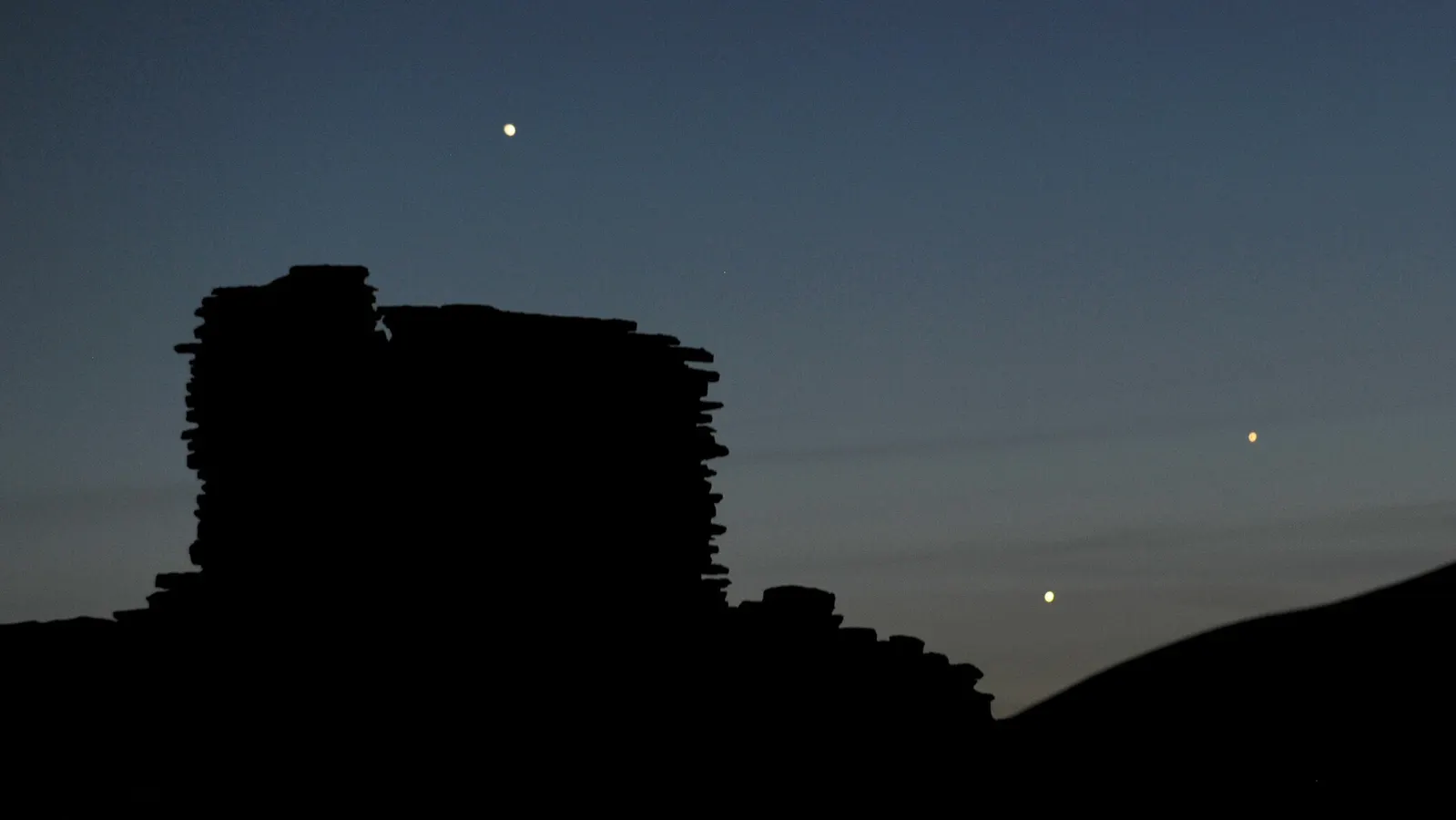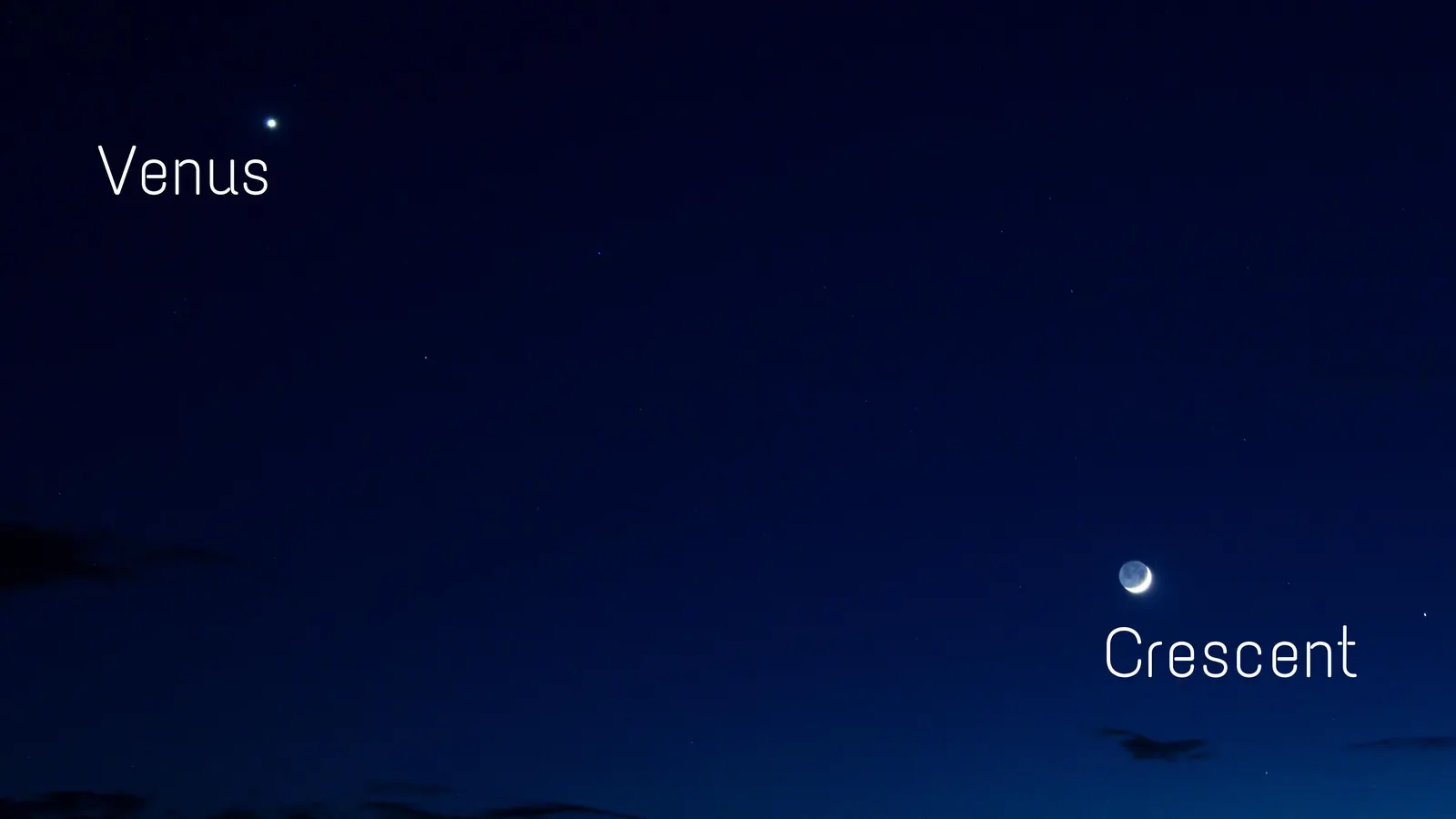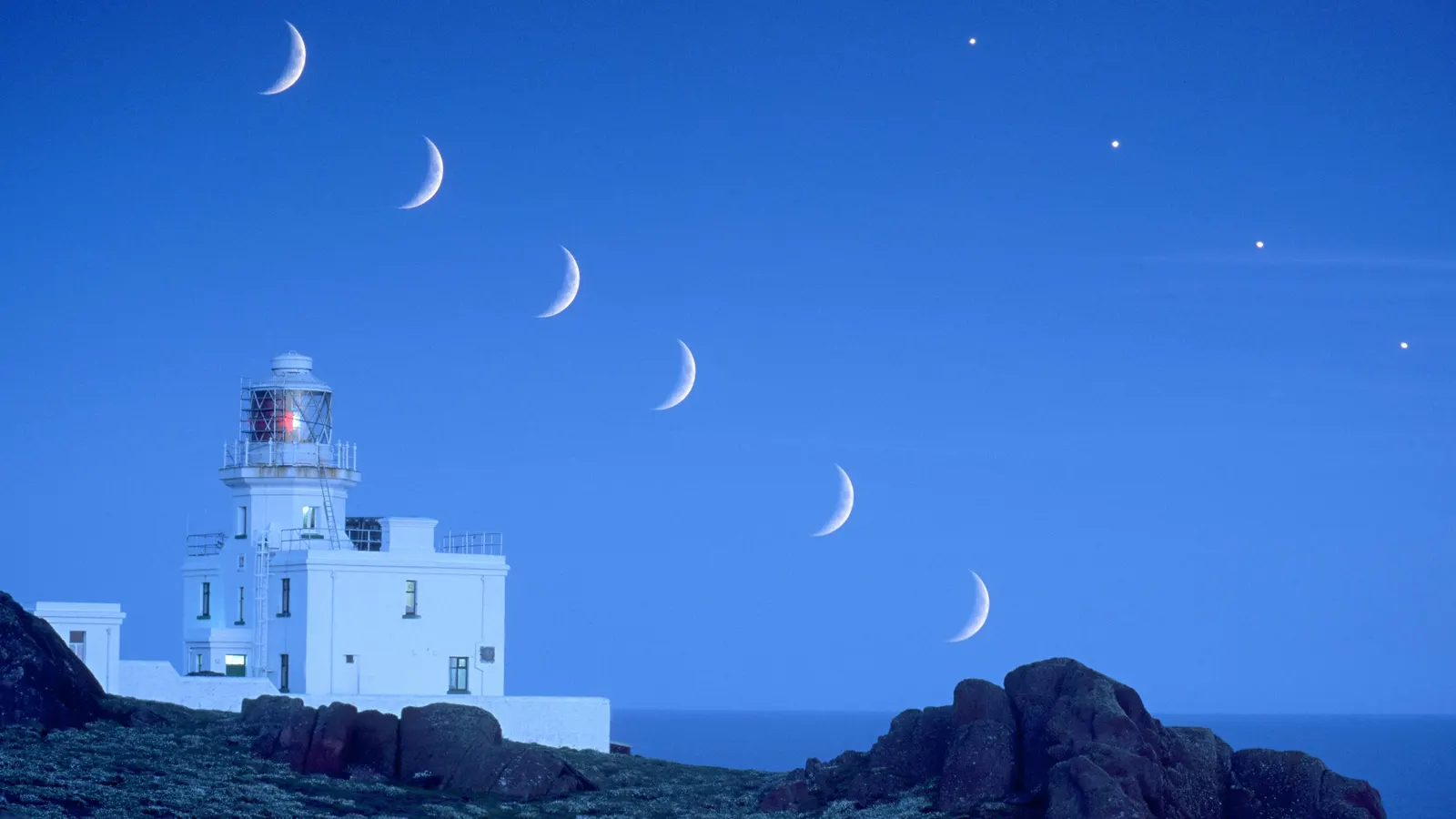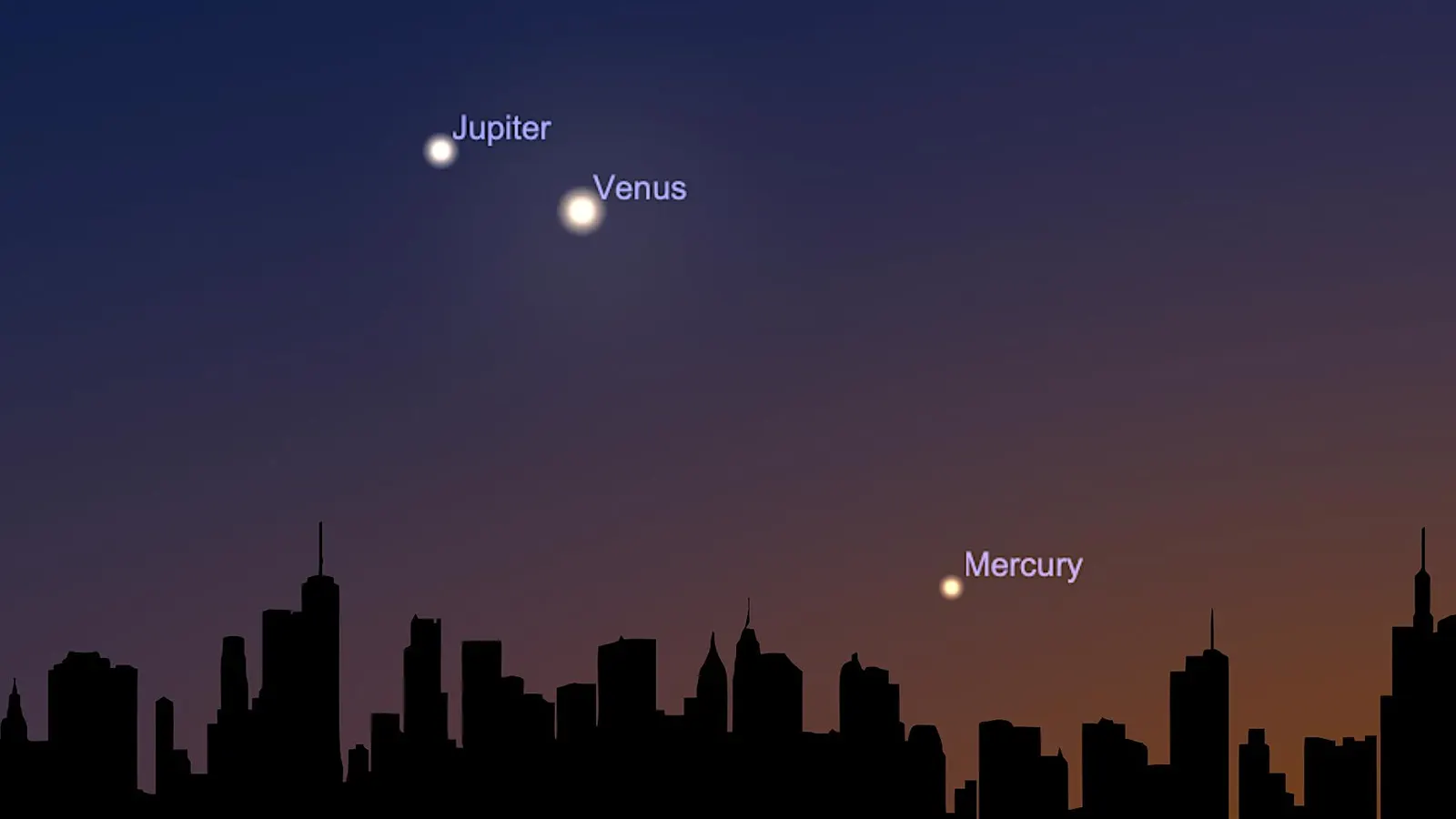
ToplineThis weekend is about a simple but satisfying alignment in the early evening sky. As the moon brightens and climbs higher after sunset, two planets — Jupiter and Venus — will be easy to see in the western sky. Look carefully, and you could also glimpse tiny Mercury, which is now rising higher into the sky with each passing night. Here’s everything you need to know about stargazing and planet-watching this weekend. Jupiter, Venus and Mercury will be on parade n the post-sunset night sky this week (artist's Illustration shows three exoplanets).gettyTimelineFriday, May 22The 45%-lit waxing crescent moon is now leaving the planets behind, tonight passing close to Regulus, the brightest star in the constellation Leo.Saturday, May 23Look west just after sunset, and you’ll see Jupiter shining above a slightly brighter Venus, with dim Mercury close to the horizon. For the latter, you may need binoculars.Sunday, May 24There’s another chance to find Jupiter, Venus and Mercury, with a bonus observation of bright star Capella — the famous “Goat Star” from the constellation Auriga. It will form an equilateral triangle with Venus and Mercury.See Jupiter, Venus and Mercury, with Capella, on Sunday, May 24. StellariumA Planetary Encounter Draws NearThis weekend sees the build-up to one of the year’s most striking planetary encounters. Night after night, Venus and Jupiter will appear noticeably closer together in the western sky after sunset, creating a beautiful changing tableau in twilight. Brilliant Venus dominates low in the west, with Jupiter nearby as the gap between them steadily narrows ahead of their close conjunction on June 9-11 — an encounter that will also have Mercury in attendance.What’s Next In The Night SkyOver the next few weeks, the moon continues to wax, reaching full phase again on May 31 and creating a rare Blue Moon, which will be best seen rising at dusk on May 30 — also the night of “Manhattanhenge” at sunset in New York City. As June begins, attention shifts to the evening sky, where Venus and Jupiter draw steadily closer. There’s a brief dark-sky window around a New Supermoon — the biggest of the year — on June 15, before the summer solstice on June 21 brings the shortest nights of the year.The times and dates given apply to mid-northern latitudes. For the most accurate location-specific information, consult online planetariums like Stellarium.Further ReadingForbesIn Photos: Full ‘Flower Moon’ Lights Up Night Sky Around The WorldBy Jamie CarterForbesWhat Is That Bright Star In The West After Sunset?By Jamie CarterForbesIt’s 100 Days Until A Total Solar Eclipse. Here’s How To See ItBy Jamie Carter
See A ‘Planet Parade’ As Three Worlds Shine After Sunset This Weekend
North America’s celestial highlights for the weekend ahead, which also apply to mid-northern latitudes in the northern hemisphere.
427 words~2 min read