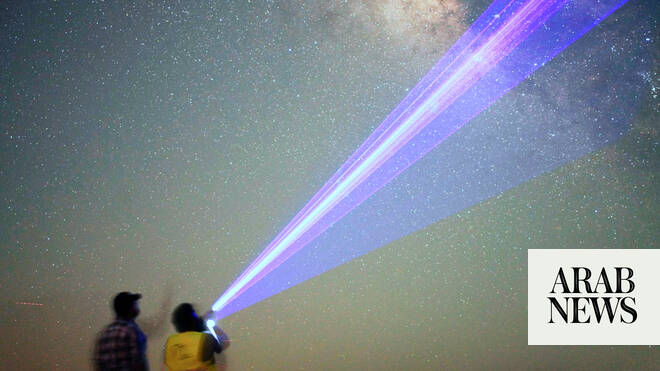
LONDON: Within living memory, knowledge of the famously vivid night skies over Arabia was essential for the safe passage of sailors on the high seas, and travelers crossing the region’s great, trackless deserts.
Now, fascination with, and knowledge of, the heavenly bodies over the deserts of Saudi Arabia is flourishing once again as astronomy and simple stargazing are poised to play a starring role in the development of the Kingdom as an attractive destination for cultural tourism.
The science of astronomy flourished during the Golden Age of Islam, from the 9th to the 13th centuries, to the extent that many stars still have their original Arabic names, including Altair in the constellation Aquila, and Aldebaran in Taurus.
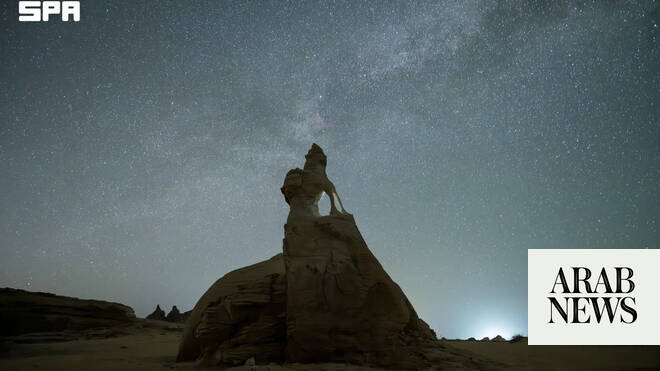
In the dramatic landscapes of northwestern Saudi Arabia astronomy is becoming a subject of particular interest once again. (Shutterstock)
The astronomical terms azimuth and nadir, still in universal use, are also Arabic in origin, and Arab scientists are credited with the invention of navigational tools such as the astrolabe, an ingenious mechanical computer that could be used to fix a ship’s position by the stars, or to indicate the direction of Makkah.