Image by Pascal Küffer via Pexels
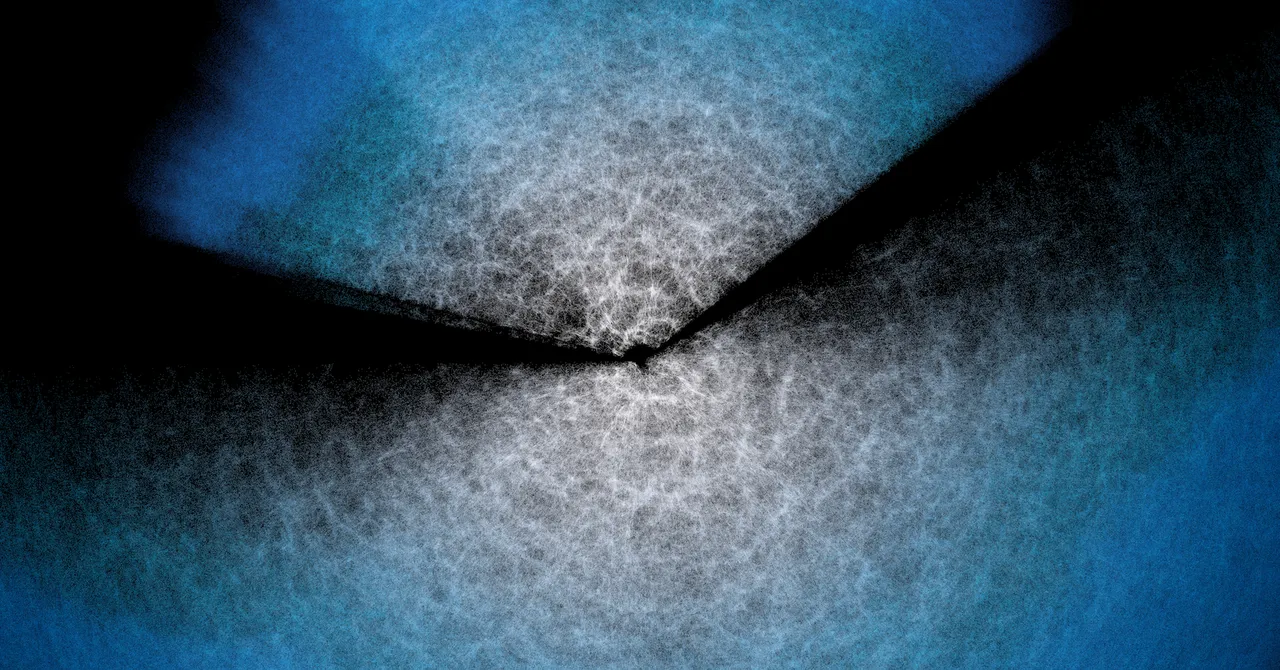
A new study has suggested that the universe might not be as perfectly balanced as scientists once thought. For decades, the standard cosmological model, known as the Lambda-CDM model, has assumed that the universe is homogeneous and isotropic when viewed on extremely large scales. “Lambda” refers to dark energy, the unknown phenomenon believed to drive the accelerated expansion of the universe, while “CDM” means cold dark matter, an invisible form of matter thought to move relatively slowly compared with light. The model is built on the cosmological principle, the assumption that the universe should look roughly the same in every direction and have matter distributed evenly overall. But recent evidence points to something different: the universe could instead be “lopsided.”
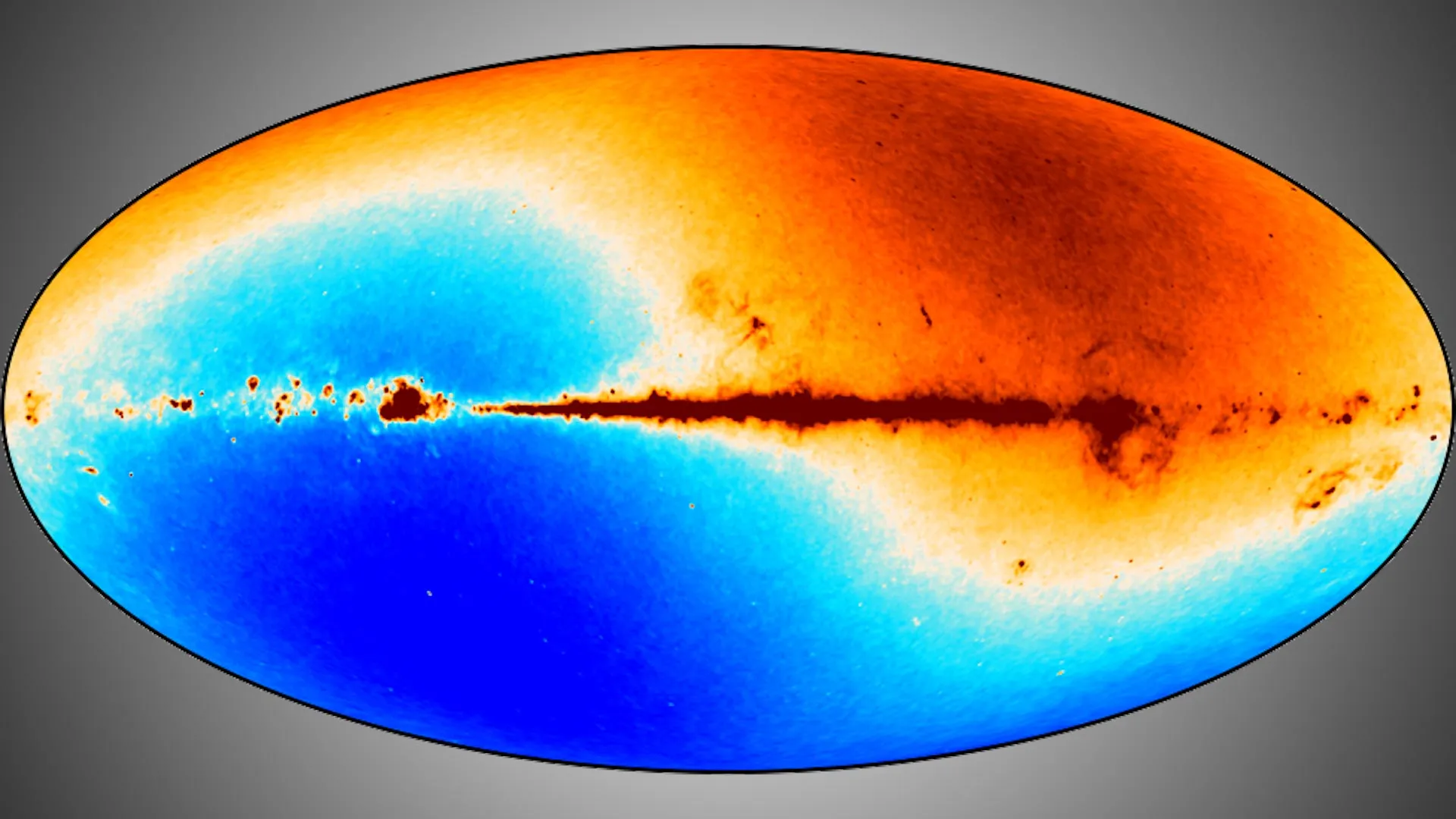
The key issue is something called the cosmic dipole anomaly. To understand this, it helps to begin with the cosmic microwave background (CMB), the faint microwave radiation left over from roughly 380,000 years after the Big Bang, when the young universe cooled enough for light to travel freely through space. The CMB is one of the strongest pieces of evidence supporting modern cosmology because it preserves a snapshot of the early universe. Although the radiation is remarkably uniform, it contains tiny temperature variations known as anisotropies. One of the most important is the dipole anisotropy, where one side of the sky appears slightly hotter and the opposite side slightly cooler. Scientists have traditionally interpreted this pattern as the result of the Solar System moving relative to the universe’s “rest frame,” producing a Doppler-like effect.