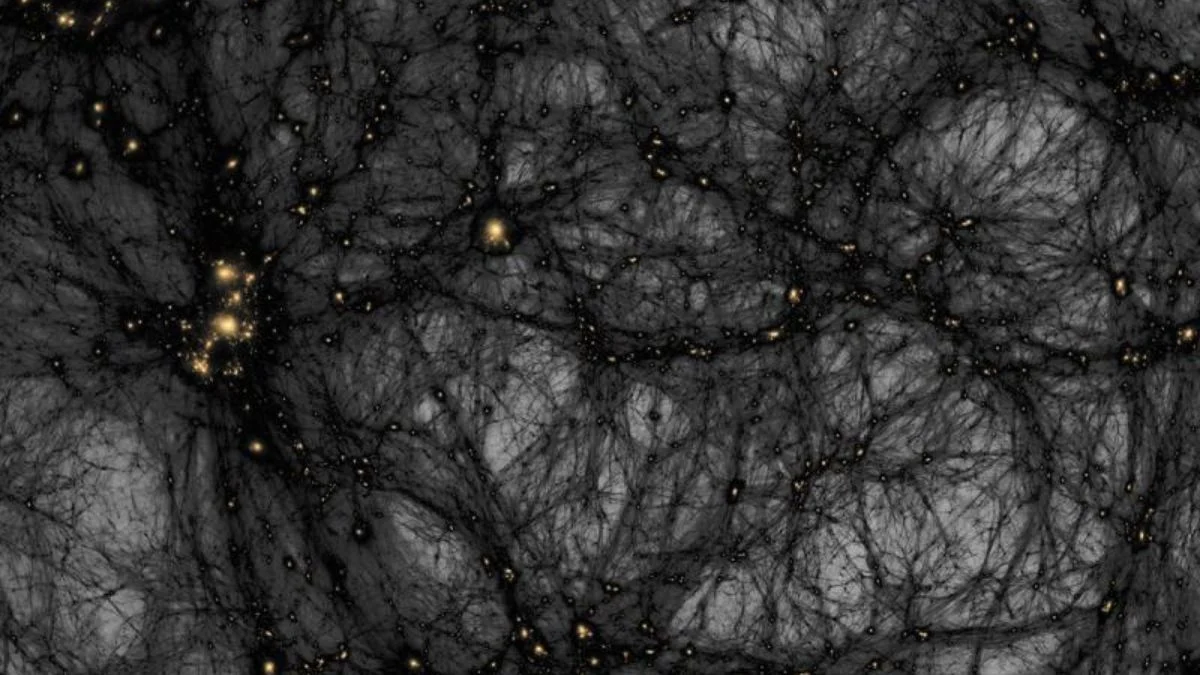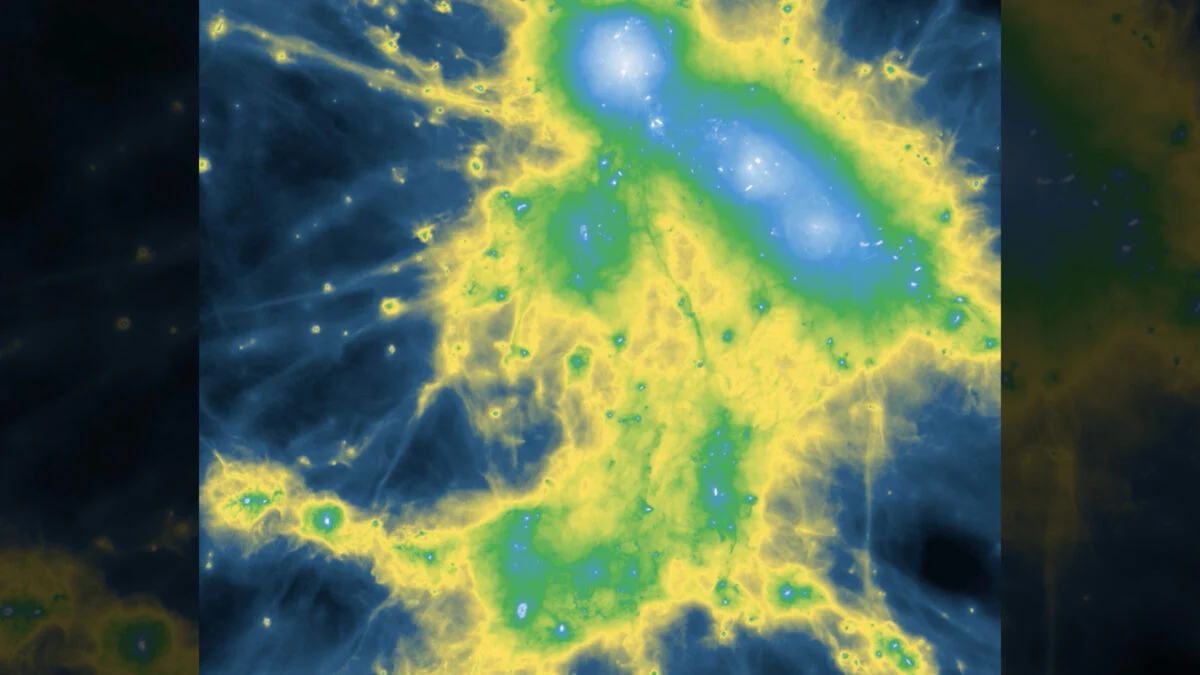
A huge chunk of the universe is missing. It’s nowhere to be seen, at least not with anything that humanity is technologically capable of capturing at this moment. But astronomers know that there’s something there—the gravitational influence of an invisible material that constitutes roughly 85% of the universe’s mass. As of now, the best explanation scientists have for this is dark matter, a hypothetical form of matter that doesn’t absorb, emit, or reflect light. Accounting for dark matter solves a lot of unexplained cosmological phenomena, and this convenience means that most astronomers readily accept that dark matter exists. Accordingly, many top-notch institutions worldwide dedicate resources toward carefully designed, technologically extraordinary experiments for detecting dark matter. All that said, we’ve yet to find irrefutable proof of dark matter. Now, it’s worth emphasizing again that, as you’ll see, the indirect and theoretical evidence largely rules in favor of dark matter. But in physics, there’s always the slim possibility that we’re completely off the mark, and nature had other plans for how reality works.
So, in this Giz Asks, we asked experts to at least consider the question—what if dark matter doesn’t actually exist? What makes us so certain that dark matter is the right answer? And even if it is, what if it’s physically impossible for humanity to find dark matter? All things considered, what are the alternatives—however “fringe” they may be—to explain the missing mass of the universe?