Let’s start with what’s probably the most tired, overused joke in math: A topologist is someone who can’t tell a coffee cup from a doughnut. Both, you see, have a hole in them.
Topology is usually described as a sort of “rubber sheet” geometry in which two shapes are considered the same if one can be stretched or compressed into the other without tearing it. But this summary leaves out something essential: How do topologists, and the many other mathematicians who rely on their methods, rigorously account for all this stretching? They don’t look at a doughnut and a coffee cup, squint, and say to themselves, “Sure, I can intuitively see how to squeeze one into the other, so they must be the same.” Rather, they describe a shape in a way that can “forget” about distance while respecting the underlying structure in a flexible way, allowing it to bend and stretch.
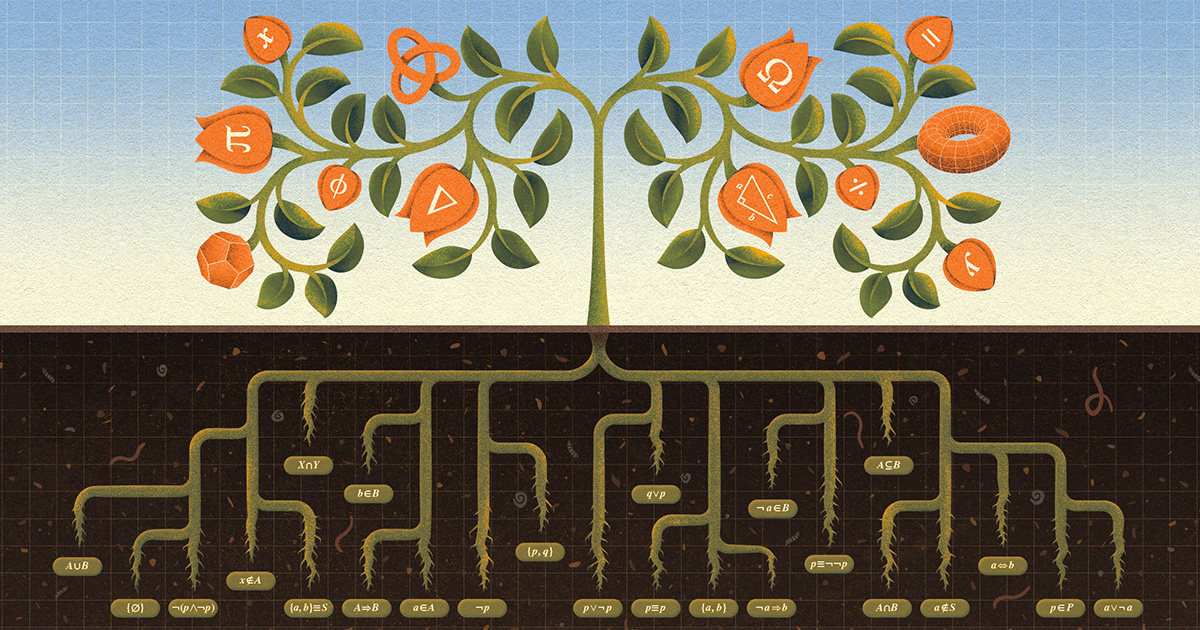
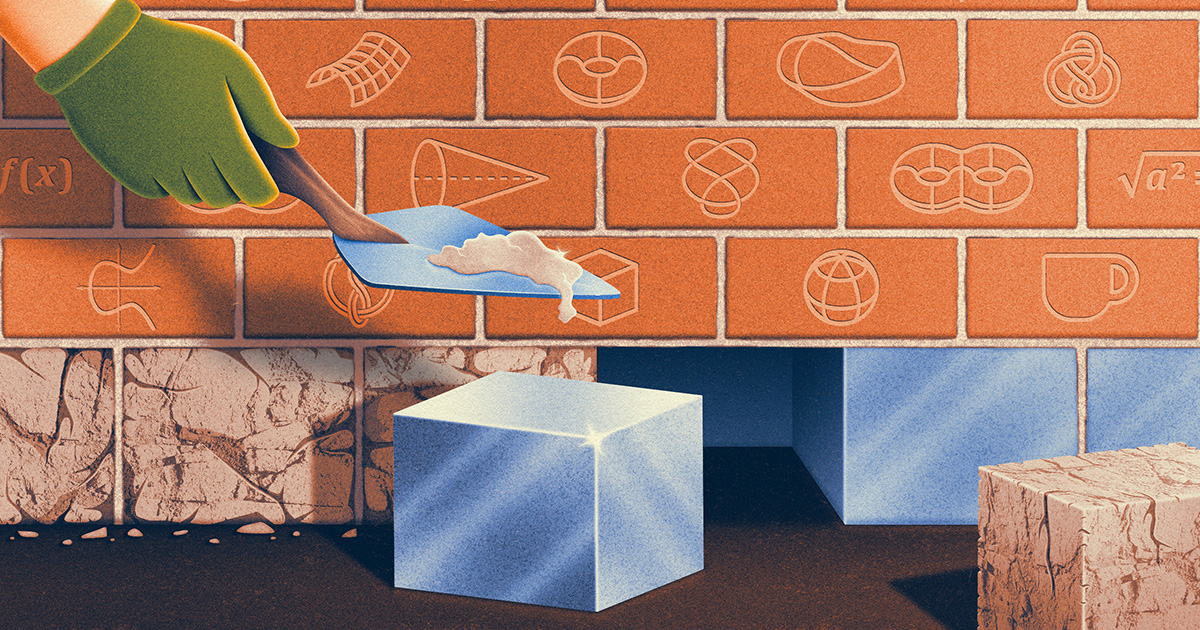
When these “topological spaces” were developed over 100 years ago, they played a major part in the revolutions in logic and set theory that marked the boundary between 19th-century and modern mathematics. Their birth was a crucial waypoint on math’s inexorable march from the numbers and shapes that people encounter in everyday life into ever more abstract caverns of thought. Topological spaces have since become the foundation for huge chunks of mathematics. If you think of math as a skyscraper, topological spaces are concrete pilings, driven deep into the bedrock of common sense that all of math ultimately rests on.