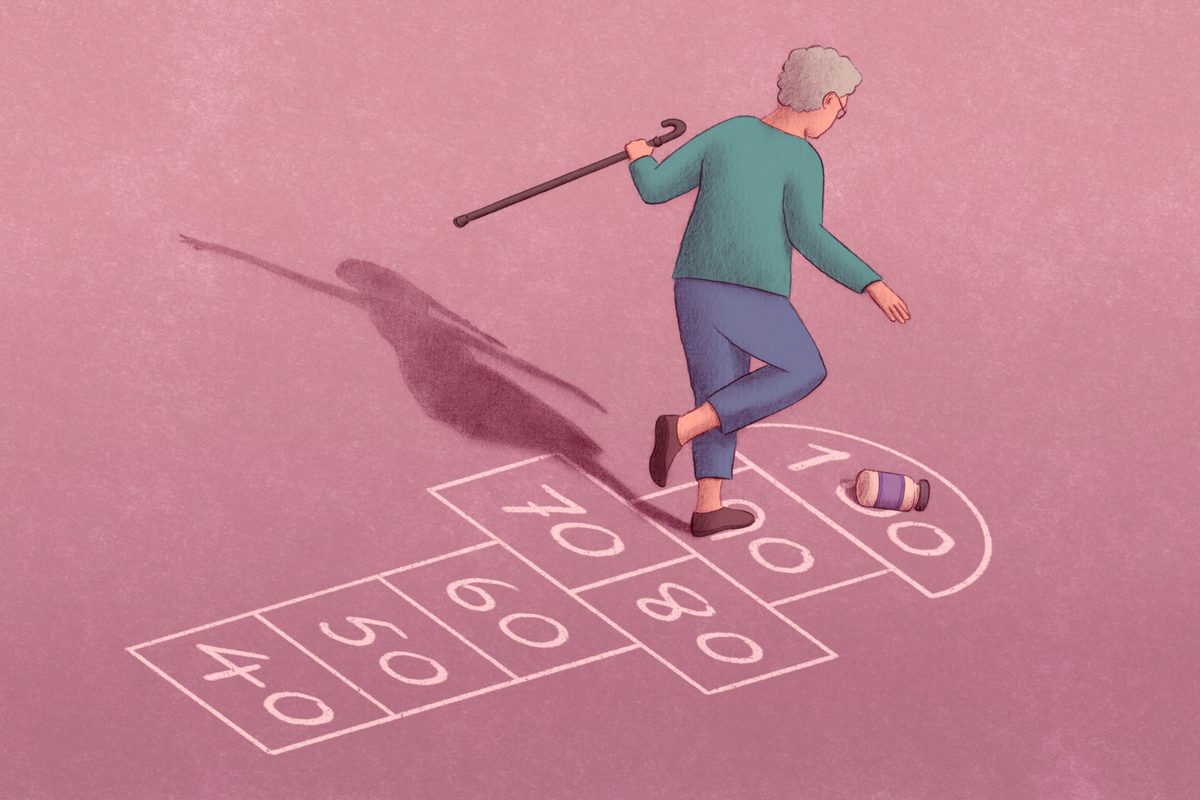
We're all a certain number of years and months and days old, but alongside this chronological age is a biological age: the rate at which our bodies are wearing down.Now it appears that steady and settled daily rhythms – with regular, consistent time carved out for both rest and activity – might help to slow down this biological aging.That's according to new research led by a team from the Johns Hopkins Bloomberg School of Public Health.We know that daily rhythms tend to change as we age, with older people tending to go to bed earlier, for example. The new findings suggest that these changes might be directly linked to biological aging.If it's put into place early enough, a routine that's predictable and balanced could hold the potential to have an anti-aging effect, and lead to a healthier, longer life, the research suggests.For now, though, these signals are just clues rather than definitive proof."Our findings suggest rest-activity rhythms may be useful markers of the rate of physiological aging in adults," says psychopathologist Adam Spira from the Johns Hopkins Bloomberg School of Public Health."If supported by future research, these rhythms might emerge as potential targets for interventions to slow the aging process."The researchers analyzed a week's worth of activity data from 207 elderly adults, checking for movement, sleep, and light exposure.The team looked at how consistent the patterns were, when rest and activity peaked, and how big the differences were between periods of rest and periods of activity.Four epigenetic clocks were used in the analysis to show how changes in the midpoint hour (x-axis) of rest (left) and sleep (right) were associated with biological aging (y-axis). (Lui et al., JAMA Netw. Open, 2026)This data was then checked against four 'epigenetic clock' scores. These clocks all use blood biomarkers in slightly different ways to assess biological age, looking at chemical markers on DNA that signify wear and tear.While the clocks didn't all agree exactly, there were significant associations between regular and predictable routines, and slower biological aging. Those with fragmented schedules, with a lot of switches between activity and rest, and inconsistent routines, showed evidence of faster biologing aging.The link was stronger in females and in White participants, the researchers report. Factors such as age, education level, and notable health conditions were factored in.It's worth noting this study is just a snapshot in time – the participants weren't followed over weeks or months to analyze the ongoing effects of their routines. So it's not entirely clear yet which factors were influencing each other – but these snapshots can still highlight important health links."We suspect that the associations we found in this study sample underestimate what is going on in the general population," says geneticist Brion Maher from the Johns Hopkins Bloomberg School of Public Health."We were looking at adults who had survived to older ages and were healthy enough to participate in the research, which meant that we were not looking at adults who aged more rapidly and had already died or were too unhealthy to participate."The findings align neatly with earlier studies, which have identified connections between disrupted daily rhythms and increased inflammation and brain shrinkage.In other words, it seems our bodies prefer expected, consistent schedules, in line with our 24-hour circadian rhythms.It's well known that circadian rhythms are closely linked to health, as our bodies tell us when it's time to rest and time to get active.When these rhythms get put out of sync, the risk of problems goes up – as can happen with night shift workers, for example.On the other hand, when we follow our natural, built-in routines, it's usually better for us. The next step for analyzing the link between schedules and aging will be to follow study participants over a lengthy period of time.Related: Coffee May Protect Against Aging, And Caffeine Isn't The Main Reason"We definitely need to do longitudinal studies over time, to see whether the weakening of rest-activity rhythms precedes physiological aging acceleration or vice-versa," says Liu.The research has been published in JAMA Network Open.
Your Daily Rhythms May Help Slow Biological Aging, Study Suggests
We're all a certain number of years and months and days old, but alongside this chronological age is a biological age: the rate at which our bodies are wearing down.
670 words~3 min read