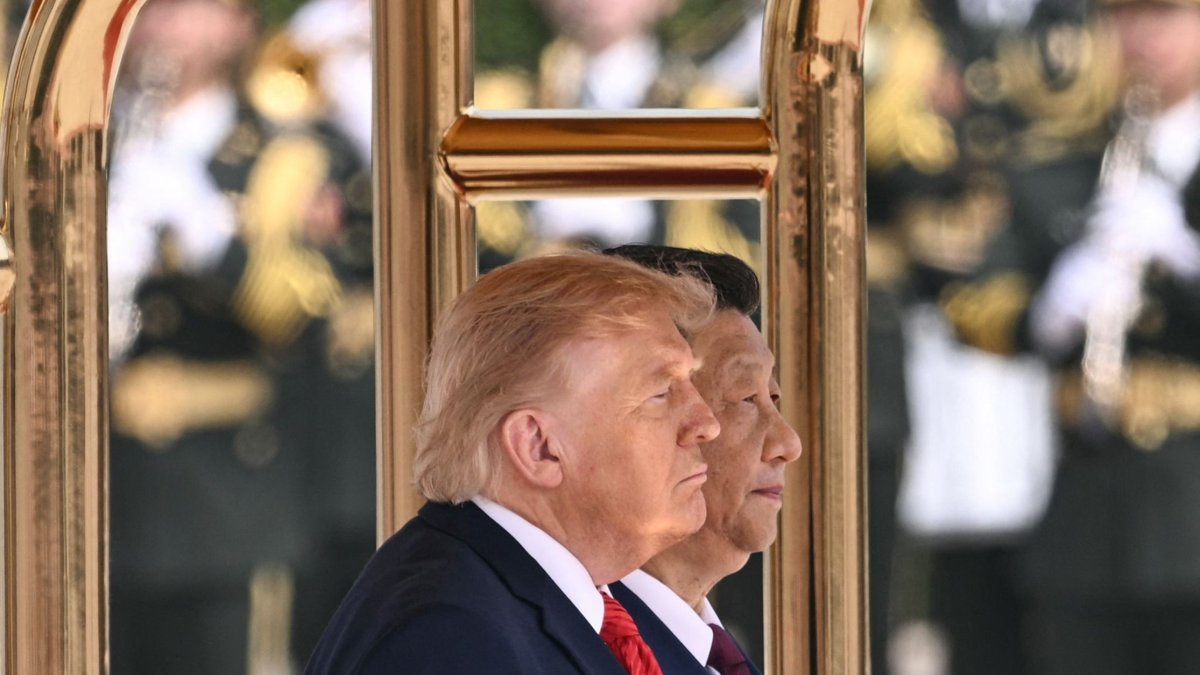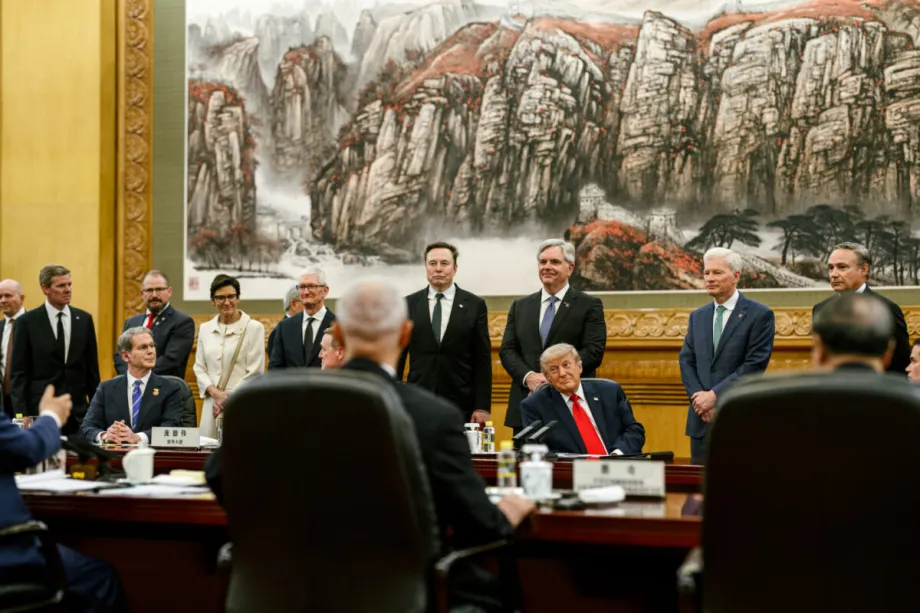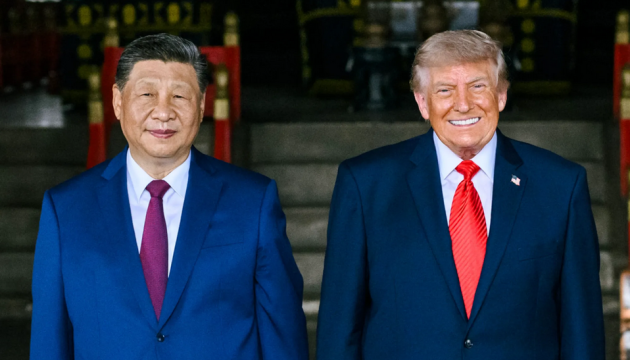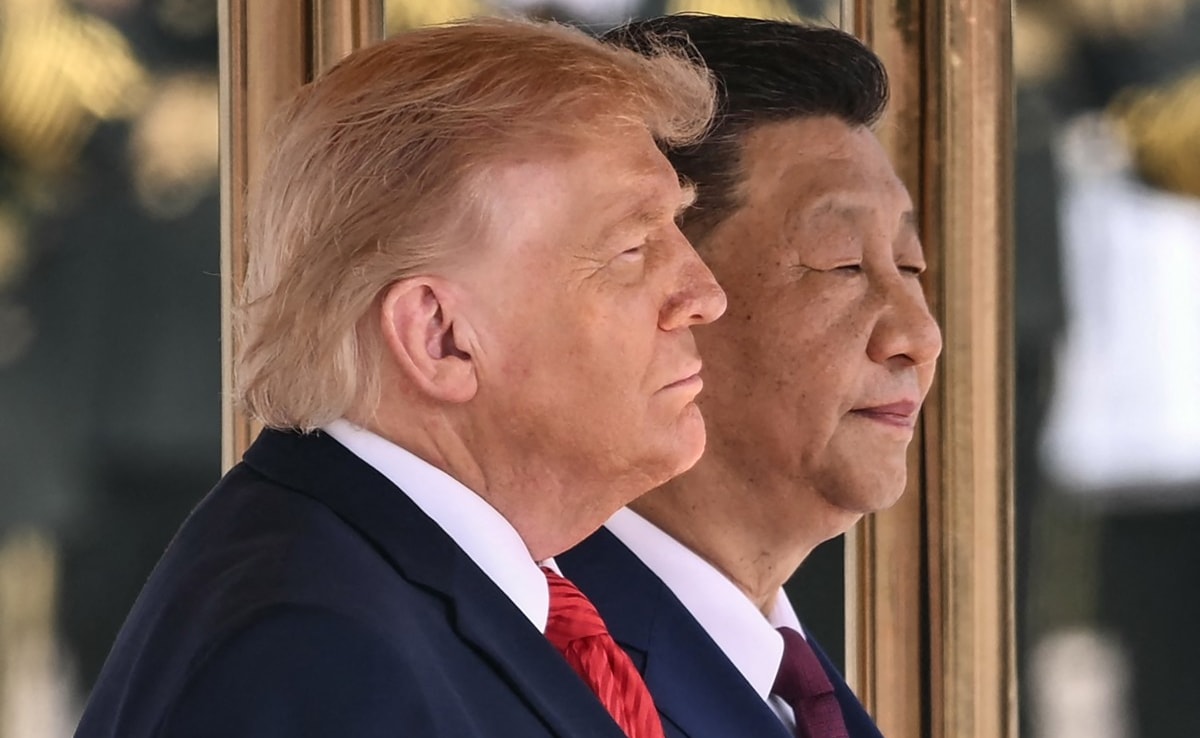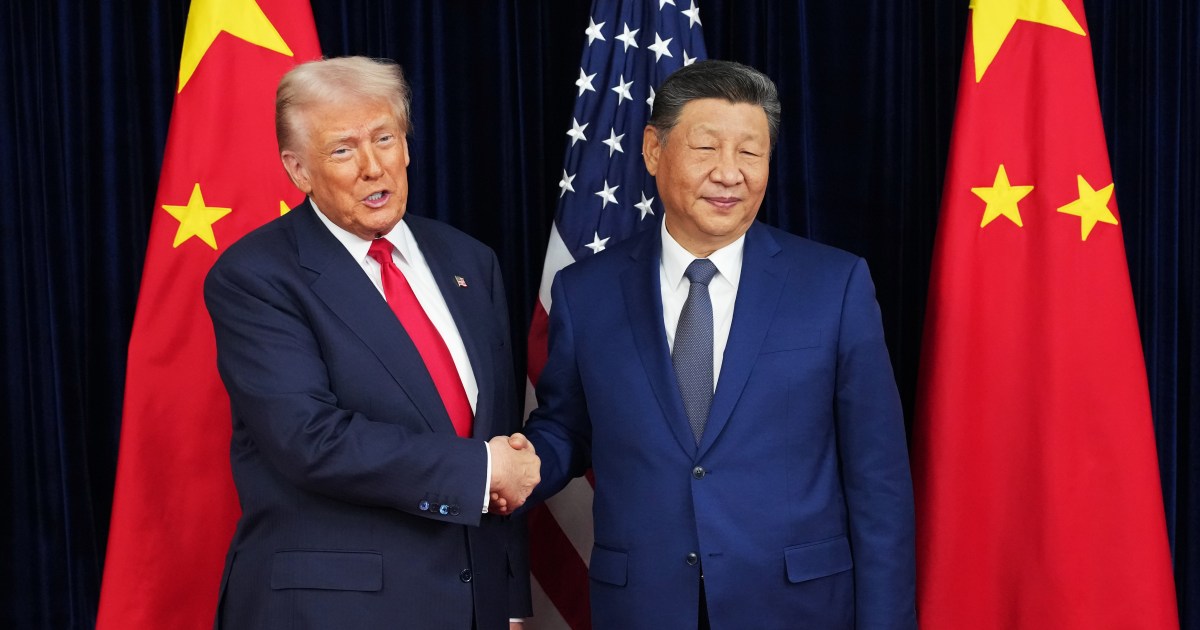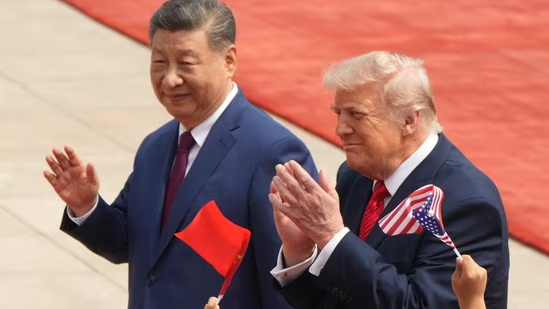
Although geopolitics and international relations are European in origin, they are heavily shaped and dominated by the US, as they are primarily considered an American discipline. John Merschiemer considers economic power as latent power, which later becomes the basis for military power. The US, having the largest military industrial complex in the world, always prioritises its economic power over military power, strongly believing that economic power is a latent force that plays a foundational role in shaping its hegemonic image. US President Donald Trump participates in a welcome ceremony with China's President Xi Jinping at the Great Hall of the People, Thursday, May 14, 2026, in Beijing. (AP)Today, geopolitical experts and commentators worldwide study international relations (an American discipline) by heavily relying on opinions shaped by American political thinkers. These experts, who often comment on the failure of the US’s foreign policy, are only deluding themselves. It would be wrong to assume that the US was unaware of the fact that it’s not possible to defeat Iran, as its geography does not allow it to do so. Even after knowing the consequences, Trump still ordered to wage war against Iran largely to check China’s rising influence globally. It’s part of the US’s national security strategy, where the Iran war plays an offshore balancing role for the US against China in a broader sphere. Geopolitics is not as simple as it may appear on the surface. Though it is not visible on the ground, this war is meant to benefit the US both geopolitically and economically. Given that China is an export-oriented country, stopping China from competing with the US economy is only possible through global supply chain disruption, and this is exactly what is happening through the crisis in the Strait of Hormuz, through which China imports the most in Asia.Winning a war is not the sole objective of war. In the words of Carl von Clausewitz’s Theory of War, war is also a form of politics and a mere continuation of policy by other means. Sometimes, it is also used to maintain the idea of offshore balancing, in which one country, by keeping itself geographically distant from the actual ground, targets another with the help of a third country in a larger regional context. If we look at the US’s National Security Doctrine, 2025, the Iranian war is not just a war, but certainly a form of politics, where the US, in a larger context, may be seen to be targeting China’s regional influence in Asia or West Asia, as China is gradually emerging as the biggest challenge to US hegemony. Since the US may not afford to get engaged in a direct war with China at this time, the Trump administration is possibly trying to neutralise the influence of China by other means.Trump’s recent visit to China may also have been be part of the US’s diplomatic strategy to contain China in the economic sphere. This visit by President Trump was more of an economic power projection, with the delegation comprising 16 CEOs of American companies whose net worths are more than 80% of China’s total GDP. Given that the US is fearful of de-dollarisation and the possible replacement of the petrodollar with the petroyuan in the future, Trump’s visit to China can be interpreted as purely an economic show of strength. Thomas Schelling, in his book The Strategy of Conflict, mentions the theory of chicken games in international politics, which says that for a country, international prestige does not matter to the extent that the core national interests of that country matter. And here, the US’s core national interest is maintaining its global hegemonic image. There are two ways to maintain hegemony: Either you maximise your own power, or you prevent others from maximising theirs. In recent times, although the US has not lost its power to that extent, China has relatively increased its power considerably, be it military or economic. The Thucydides Trap referred to by President Xi Jingping alludes to the emerging power challenging the ruling power. In this context, Martin Dempsey, a retired American general, once said that we must ensure that the US does not fall into Thucydides Trap.However, China must be commended for its response to the US’s economic show of strength. China made the Taiwan issue a priority over economic concerns, making its stand very clear: Taiwan is an integral part of China, and any intervention by the US is unacceptable to China. President Xi made it very clear in his initial address itself that the Taiwan issue must not come in between if the US and China really want to better their bilateral relations in the future, giving a clear and strong warning to the US, which has recently signed a massive $ 11-billion arms deal with Taiwan. Drawing on President Trump’s electoral campaign strategy, he further said the need of the hour is to make America Great Again, which contrasts with his earlier statement that the need of the hour is to build a stronger China. He combined these two statements into one sentence in his presidential address, underscoring the gravity of global importance of China with respect to the US. The statement Making America Great Again emphasises the lost glory of the US, which once existed, whereas the same may never have happened in China. China has always been strong and continues to grow stronger. The History of the Peloponnesian War, written by the Greek historian Thucydides in the late 5th century BC, describes how the rise of Athens instilled a sense of hegemonic fear in Sparta, which later sparked the Peloponnesian War. Tracing Thucydides’ work, Graham Allison, an American political scientist, came up with the concept of the Thucydides Trap, which emphasises that the root cause of war in the international sphere is generally driven by a tension arising from a shifting balance of power. Drawing on several historical references, Allison further emphasised in his book Destined for War that the rising powers have a natural tendency to challenge the ruling or hegemonic power, which generally results in war, directly or indirectly. For example: Athens vs Sparta or Great Britain vs Germany. In this context, Allison has made it very clear that such situations always push rival actors to form alliances with the hope of gaining strategic advantages over one another. (The views expressed are personal)This article is authored by Sanjay Turi and Shadia Khan, doctoral candidates, Centre for West Asian Studies, School of International Studies, Jawaharlal Nehru University, New Delhi.
Implications of Trump’s China visit
This article is authored by Sanjay Turi and Shadia Khan.
1,084 words~5 min read